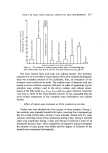
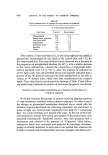
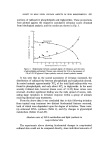
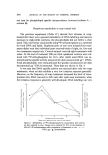
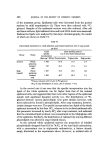
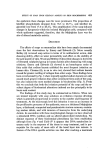
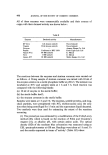
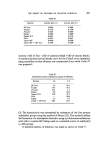
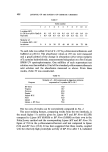
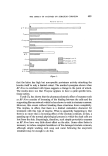
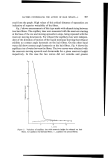
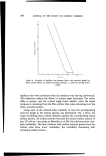
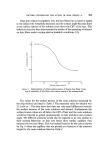
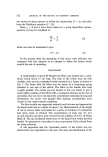
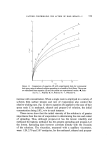
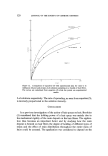
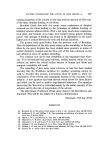
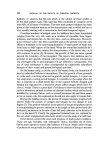
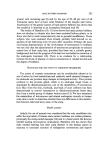
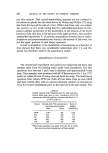
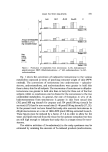
FACTORS CONTROLLING THE ACTION OF HAIR SPRAYS--1 519 i I i I 6 I0 16 20 t(s) Figure ll. Comparison of equation (5) with experimental data for commercial hair spray resins in ethanol solution spreading in a bundle of hair fibres. The curves are calculated from equation (5) and the points are experimental results. O, Poly- mer A X, Polymer B O, Polymer F +, Polymer G. increase with concentration. When a single resin is employed in a variety of solvents then surface tension and rate of evaporation also control the relative wicking rate. Fig. 12 shows equation (5) applied to the case of hair spray resin C in methanol, ethanol and propan-2-ol solution, the initial concentration being 5.0• w/w in each instance. These curves show that the initial viscosity of the solution is of greater importance than the rate of evaporation in determining the rate and extent of spreading. Thus, although propan-2-ol has the lowest volatility and methanol the highest, methanol has the greatest spreading and propan-2-ol the lowest. Spreading does however correlate directly with the viscosity of the solutions. The viscosities, measured with a capillary viscometer, were: 1.29, 2.70 and 3.87 centipoise, for the methanol, ethanol and propan-

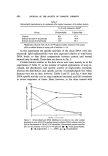
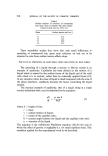
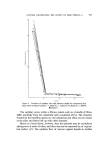
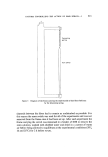
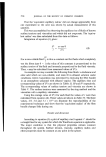
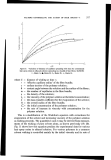
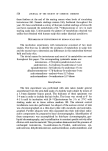
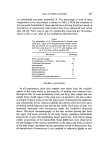
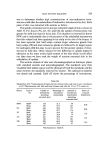
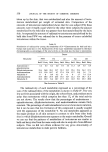
520 JOURNAL OF THE SOCIETY OF COSMETIC CHEMISTS 6- E • 3 Methanol Efhanol o iso-propanol Resin C I I I I I I 5 15 25 t (s) Figure 12. Comparison of equation (5) with experimental data for resin C in methanol, ethanol and propan-2-ol solutions spreading in a bundle of hair fibres. The curves are calculated from equation (5) while the points are experimental results. 2-ol solutions respectively. The rate of spreading, as seen from equation (5), is inversely proportional to the solution viscosity. CONCLUSIONS In a previous investigation of the action of hair sprays on hair, Brookins (1) considered that the holding power of a hair spray was mainly due to the mechanical rigidity of the resin deposit on the hair fibres. The applica- tion thus becomes an important factor and by studying how the resin deposit is formed on hair fibres the degree of holding of different types of resins and the effect of resin distribution throughout the entire mass of hairs could be assessed. The application was considered to depend on the
Purchased for the exclusive use of nofirst nolast (unknown)
From: SCC Media Library & Resource Center (library.scconline.org)