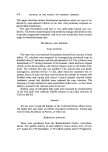
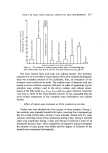
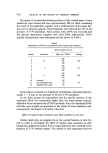
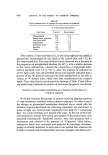
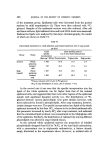
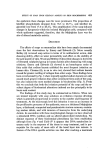
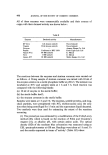
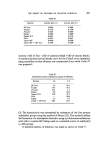
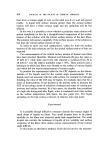
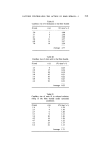
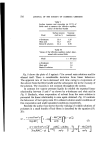
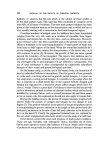
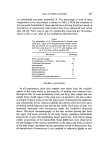
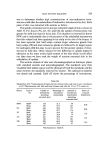
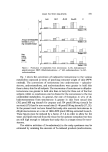
MALE PATTERN BALDNESS 529 was to determine whether high concentrations of non-radioactive testo- sterone could alter the metabolism of radioactive testosterone by skin. Each piece of skin was extracted with acetone as before. The uptake oftestosterone by skin per extracted weight of skin is shown in Table II. For donors PA, JZ, AC, and CB, the uptake of testosterone was greater for bald skin than for hairy skin. This situation is reversed for donor PFW and is undoubtedly due to the presence of the unlabelled testosterone that this subject had been applying to his scalp at the site o•' the biopsy. It has been reported that bald scalps contain larger sebaceous glands than hairy scalps (19) and since sebaceous glands are believed to be target organs for androgens (20) this may in part account for the greater uptake of testo~ sterone by bald skin. Other reasons for this difference in uptake might be alteration in the water and/or lipid content of the skin which would affect our data since we have used the weight of acetone extracted skin in the calculation of uptake. The acetone extracts of skin were chromatographed on thin-layer plates with standard steroids and autoradiographed. The standards were then visualized with iodine vapour and the silica gel of both the standards and the areas macenat was eluted and counted. Table III shows the percentage of testosterone, Table III. Metabolism of [4-uC]testosterone by bald and hairy human male scalp skin in vitro. Incubation of [4-xaC]testosterone with bald and hairy human scalp skin for 1 h at 37øC under air. Donor Type of Uptake of Percentage of Amount of Ratio of site testosterone testosterone testosterone amounts (pmol/mg metabolized metabolized (bald/hairy) extracted skin) (pmol/mg extracted skin) PFW Bald* 318 21.5 68 0.48 Hairy 381 37.6 143 PA Bald 344 50.4 173 0.98 Hairy 299 58.7 176 JZ Bald 398 24.8 98 1.32 Hairy 257 28.9 74 AC Bald 461 42.0 193 1.91 Hairy 282 36.1 101 CB Bald 288 68.9 199 2.14 Hairy ! 85 50.3 93 *See footnote to Table II.

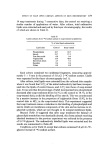
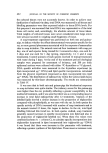
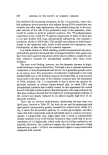
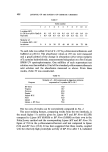
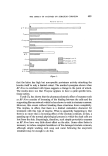
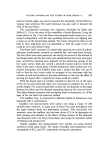
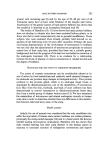
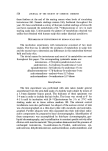
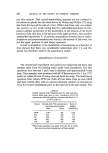
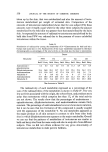
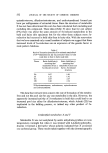
530 JOURNAL OF THE SOCIETY OF COSMETIC CHEMISTS taken up by the skin, that was metabolized and also the amount of testo- sterone metabolized per weight of extracted skin. Comparison of the amounts of testosterone metabolized shows that for one subject (PA) these amounts were virtually equal while for the other three subjects the amount metabolized by the bald skin was greater than that metabolized by the hairy skin. As expected the amount of radioactive testosterone metabolized by the bald skin from PFW was reduced due to the presence of excess unlabelled testosterot•e within the tissue. Table IV Distribution of radioactivity among the metabolites of [4-x•C]testosterone by bald and hairy human male scalp skin invitro. Radioactivity of the major metabolites separated by thin-layer chromatography as percentages of the total activity on the plate less that due to testosterone. Donor Metabolite PFW PA JZ AC CB Bald* Hairy Bald Hairy Bald Hairy Bald Hairy Bald Hairy Androsterone + 6.2 4.5 6.2 5.0 5.9 5.5 11.3 6.9 5.8 6.9 epiandrosterone Dihydrotestosterone 20.6 26.0 20.3 22.7 23.2 22.5 25.6 25.4 26.2 17.9 Androstenedione 15.5 15.0 10.7 8.7 17.4 12.4 12.7 13.8 3.6 7.5 Metabolite Y 0 0 0.9 4.2 0 0 0 1.7 7.4 12.4 Androstanedione 19.5 20.4 27.4 24.8 16.6 14.7 22.2 17.5 18.7 21.5 Metabolite X 18.2 19.9 8.4 10.7 17.7 26.1 14.8 19.1 25.5 20.0 *See footnote to Table II. The radioactivity of each metabolite expressed as a percentage of the sum of the radioactivities of the metabolites is shown in Table IV. The very low activities associated with the origin, the solvent front, and products more polar than testosterone which comprise less than 1 •o of the total activity are not shown. The results show that the percentages of androsterone + epiandrosterone, dihydrotestosterone, and androstanedione remain fairly constant. The percentage of androstenedione however shows more variation, but it can be seen that low formation of this compound is usually coupled with the appearance of the metabolite Y. No one metabolite appeared as the major product in all skin extracts in contrast to skin from other body sites in which dihydrotestosterone appears as the major metabolite. Overall we can say that the patterns of metabolism of testosterone are similar in bald and hairy sites from the same scalp and also in scalp skin from different subjects. Thus we did not obtain evidence for any gross abnormality of testosterone metabolism in male pattern baldness.
Purchased for the exclusive use of nofirst nolast (unknown)
From: SCC Media Library & Resource Center (library.scconline.org)