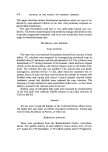
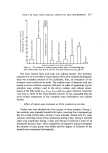
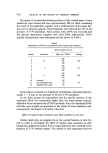
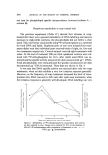
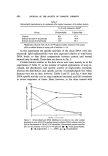
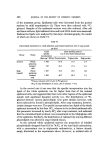
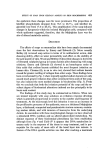
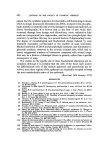
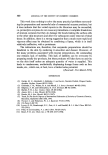
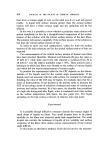
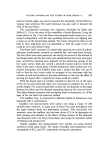
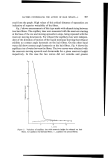
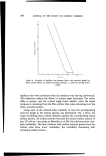
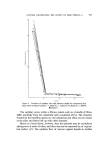
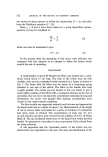
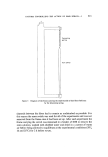
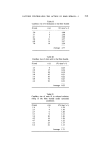
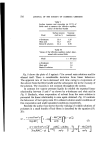
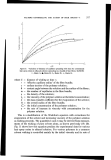
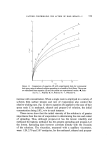
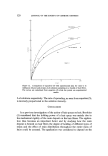
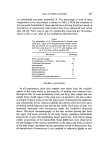
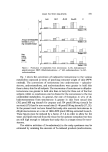
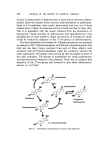
FACTORS CONTROLLING THE ACTION OF HAIR SPRAYS--I 507 read from the graph. High values of this critical distance of separation are indicative of superior wettability of the fibres. Fig. 3 shows measurements of this type made with ethanol rising between two hair fibres. The capillary rises were measured with the reservoir starting at the base of the vee and moving upwards in steps, being repeated with the reservoir moving downwards. For ethanol the capillary rises were indepen- dent of the direction of motion of the liquid meniscus showing that ethanol exhibits no contact angle hysteresis on the hair fibres. On the other hand water did show contact angle hysteresis on the hair fibres. Fig. 4 shows the capillary rise of water between the fibres. The two curves were obtained with the reservoir moving upwards and downwards for a given reservoir height respectively. In this case the two curves did not coincide and greater X.._.x•X__ X I I I 5 io I,.5 /• (ram) Figure 3. Variation of capillary rise with reservoir height for ethanol on hair fibres. O, Capillary rise between fibres X, capillary rise around fibres.

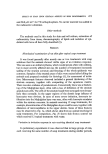
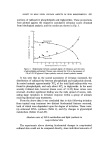
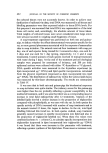
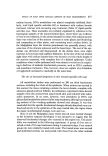
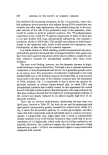
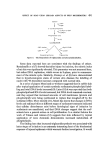
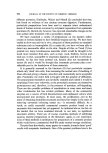
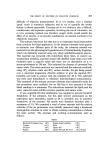
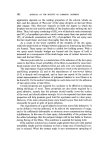
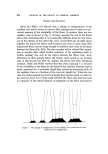
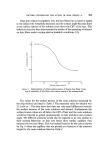
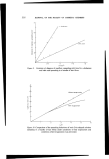
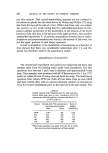
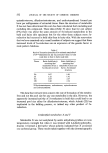
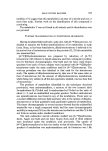
508 JOURNAL OF THE SOCIETY OF COSMETIC CHEMISTS (mr'n) _Figure 4. Variation of capillary rise between fibres with reservoir height for water on hair fibres. O, reservoir moving upwards x, reservoir moving down- wards. capillary rises were produced when the meniscus was moving downwards. This behaviour reflects the effects of contact angle hysteresis. The wetta- bility is greater, and the contact angle hence smaller, when the liquid meniscus is retreating from the fibre surface than when advancing over the fresh, unwetted surface. Using each of the ethanol-water solutions in turn the corresponding reservoir height at the critical spacing was determined. Fig. 5 shows the result of plotting these critical distances against the corresponding liquid surface tension. At surface tensions less than the critical surface tension of hair (27 mN m 4 according to Mutchler et al (9)) the solutions show com- plete wettability. The four solutions with surface tensions greater than the critical value show lower wettability, the wettability decreasing with increasing surface tension.
Purchased for the exclusive use of nofirst nolast (unknown)
From: SCC Media Library & Resource Center (library.scconline.org)