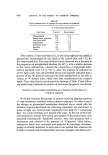
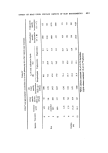
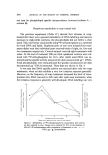
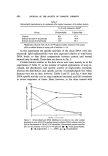
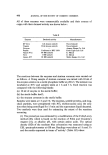
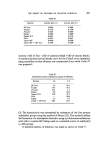
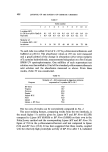
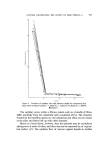
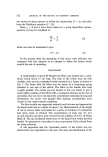
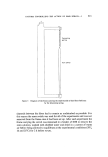
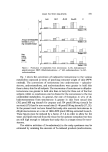
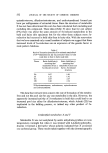
MALE PATTERN BALDNESS 533 mobility of X suggest that this metabolite is an ester of asteroid and one or more fatty acids. Further work on the identification of this compound is continuing. The metabolite Y was not found in all extracts and its identification was not pursued. FURTHER TRANSFORMATIONS OF TESTOSTERONE METABOLITES Having incubated bald and hairy scalp skin with [4-x4C]testosterone, we decided to examine the further transformations of its metabolites in scalp tissue. Since, as has been stated above, dihydrotestosterone is believed to be the active form of testosterone at least in the prostate (12, 23) this metabolite was examined first. [4-x4C]Dihydrotestosterone was prepared by reduction of [4-x•C] testosterone with lithium in liquid ammonia and then subsequent purifica- tion by thin-layer chromatography. One bald and one hairy scalp biopsy specimen from each of three subjects were incubated with [4-x•C]dihydro - testosterone under the same conditions used for [4-•C]testosterone. The work-up procedure was also identical to that used for the testosterone study. The uptake of dihydrotestosterone by skin was of the same order as that of testosterone but the amount of dihydrotestosterone metabolized, whilst being very similar in all the skin specimens studied, was less than that of testosterone. The products of metabolism (identified by the techniques described previously), were androstanedione, a mixture of the two isomeric diols 5a-androstane-3•,17•-diol and 5a-androstane-3a, 17•-diol in the ratio of about 3: 2, and an unidentified non-polar product. Neither androsterone nor epiandrosterone was found in any of the incubations. There were no consistent differences between bald and hairy sites in the uptake of dihydro- testosterone or in their qualitative and quantitative patterns of metabolism. Thin-layer chromatography in several systems showed that the unidentified metabolite was a single compound which had the same chromatographic mobilityas compound X from the testosterone incubations and like X it did not form an acetate under standard conditions. The next radioactive steroid substrate studied was [4-x•C]androstene - dione. Again one bald and one hairy biopsy from each of three subjects were incubated under the conditions used previously. The uptake of [4-•4C]androstenedione by skin was similar to that of testosterone. The main product of metabolism was androstanedione and its formation was 1.06,

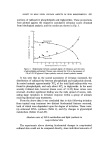
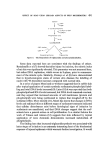
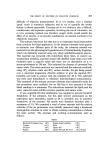
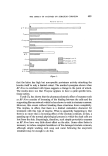
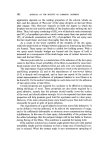
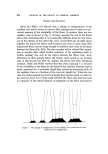
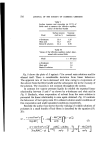
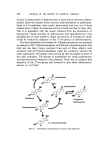
534 JOURNAL OF THE SOCIETY OF COSMETIC CHEMISTS 2.8 and 3.2 times greater in bald skin than in hairy skin for the three subjects studied. Since the enzyme which converts androstenedione to androstane- dione is a 5a-reductase, these results demonstrate that two out of three subjects have a higher 5a-reductase activity in bald skin than in hairy skin. This is in agreement with the results obtained from the incubations of testosterone. Small amounts of androsterone and epiandrosterone were identified but we were unable to detect the presence of testosterone which would be formed by reduction of the 17-oxo-group of androstenedione. The third metabolite to be studied, [4- x4C]androstanedione, was prepared by reduction of [4-x•C]androstenedione with lithium in liquid ammonia. One bald and one hairy biopsy specimen from each of three subjects were incubated with [4-•C]androstanedione under the conditions used for the other experiments. The uptake of this steroid by skin was similar to those of the other androgens. The amount of metabolism was small, androsterone and epiandrosterone being the only products. There was no evidence that reduction of the 17-oxo-group had occurred to give either dihydrotesto- sterone or a 3,17-diol. O • , • Ar•rostendione ! I . ( }H •1• 0 Androstanedione i0 I Testosterone • '• And•sterone •1.• H .••B Epiandroste • OH HO•••o-+ 31•-Androstan H Figure 2. Metabolism of testosterone in human male scalp skin.
Purchased for the exclusive use of nofirst nolast (unknown)
From: SCC Media Library & Resource Center (library.scconline.org)