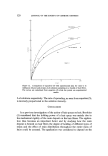
492 JOURNAL OF THE SOCIETY OF COSMETIC CHEMISTS appear that the synthetic apparatus for this lipid is still functioning in tissues which no longer incorporate thymidine into DNA, or glycerol into phospho- lipids, and this is situated in the severely damaged or degenerate epidermis, as shown histologically. It is known that in the liver of rats which have sustained damage from dosage with chloroform, more radioactive fatty acids are incorporated into triglycerides, and less into phospholipids than control (13), and thus this may be a general feature of degenerating tissues. The degree of morphological and biochemical change induced by soap treatment essentially corresponded to the number of soap treatments. Marked inhibition of DNA and phospholipid synthesis, and stimulated tri- glyceride synthesis, observed in the severely irritated skin, which had re- ceived exaggerated numbers of treatments compared with normal usage, thus may be a feature of damaged tissues in general, rather than a specific consequence of soap. Our studies on the specific site of these biochemical alterations are in- complete, although it is probable that the cells of the basal layer and/or the differentiated cells of the stratum spinosum and granulosum are in- volved, since these regions of the epidermis are classically accepted as being the most metabolically active of the epidermis. (Received: 18th January 1972) REFERENCES (1) Protrey, C., Hartop, P. J. and Ferguson, T. F. M. Lipid synthesis in rat skin. Brit. Z Derma- tol. 87 586 (1972). (2) Nicolaides, N. Skin Lipiris IV. Biochemistry and function. Z Amer. OilChem. $oe. 42 708 (1965). O) Emery, B. E. and Edwards, L. D. The pharmacology of soaps. at. Amer. Pharm. Ass. 29 251 (1940). (4) Bettley, F. R. Some effects of soap on the skin. Brit. Med. at. S187 1675 (1960). (5) Wood, D.C. F. and Bettley, F. R. The effect of various detergents on human epidermis. Brit. at. Dermatol. 84 320 (1971). (6) Choman, B. R. Determination of the response of skin to chemical agents by an in vitro procedure. at. Invest. Dermatol. 40 177 (1963). (7) Bertalanaffy, F. D., Pusey, V. and Abbot, M. O. Mitotie rates of rat epidermis. Arch. Dermatol. 92 91 (1965). (8) Penneys, N. S., Fulton, $. E., Weinstein, (3. D. and Frost, P. Location of proliferating cells in human epidermis. Arch. Dermatol. 101 323 (1970). (9) Mezei, M. and Sager, R. W. Dermatitic effect of nonionic surfactants II. Changes in phospholipid and deoxyribonucleic concentration of rabbit epidermis in vivo. J. t'harm. Sci. 56 1604 (1967). (10) Mezei, M. and White, G. N. Dermatific effect of nonionic surfactants III. Incorporation of a•p into phospholipids and acid soluble material of normal and surfactant-treated rabbit skin in vitro. J. Pharm. Sci. 58 1209 (1969). (11) Mezei, M. Dermatitic effect of nonionic suffactants V. The effect of nonionic suffactants on rabbit skin as evaluated by radioactive tracer techniques in vivo. J. Invest. Dermatol. 54 510 (1970). (12) Takasu, H. and Aizawa, Y. Studies on phospholipid metabolism in experimental inflam- mation of mouse skin. Amer. Perrum. Cosmet. 85 94 (1970). (13) Maling, H. M., Wakabayashi, M. and Homing, M. G. in Weber, G. Advances in enzyme re•,ulation 1 247 (1963) (Pergamon Press, Oxford).

J. Soc. Cosmet. Chem. 24 493-500 (1973) ¸ 1973 Society of Cosmetic Chemists of Great Britain The effect of enzymes on corneum stratum M. C. BIDMEAD and MITCHELL N. RODGER* Presented at the 7th Congress of the International Federation of Societies of Cosmetic Chemists, in Hamburg, Germany, 14th September 1972 Synopsis--This paper deals with the development of an in vitro screening method for the objective measurement of the effect of ENZYMES on STRATUM CORNEUM. The routine assessment of ENZYME ACTIVITY is well documented in the literature and utilizes such substrates as casein or denatured haemoglobin for PROTEOLYTIC ENZYMES, and olive oil for LIPOLYTIC ENZYMES. The results using these methods do not give an indication of the effectiveness of such enzymes on the SKIN and in vivo studies are difficult, cumbersome and expensive, involving the use of volunteers. A method is described whereby stratum corneum removed from the physiological HYPER- KERATOSIS of the fingertips is used as substrate. Details are given regarding the preparation of the substrate, and of instrumental methods for estimating the degree of proteolyses and keratinolysis. The results obtained indicate how apparent anomalies and disagreements in the literature may be resolved and explained. Various attempts have been made to use enzymatic preparations for the treatment of the skin. The rationale behind the products is usually loosely based on the effect of proteolytic enzymes on keratinaceous tissue and the claims for these enzymatic products are often along the lines that they provide 'deep physiological cleansing' (1) of the skin. It is also generally assumed that the enzymes are acting, if indeed they do have any action, on the stratum corneum. Although the whole epidermis has been used as an enzyme substrate on a variety of occasions, there has been little direct observation of the effect on stratum corneum. Indeed, in one study with six * Vick International Division, Richardson-Merrell Limited, 250 Bath Road, Slough, SL1 4DY. 493
Purchased for the exclusive use of nofirst nolast (unknown)
From: SCC Media Library & Resource Center (library.scconline.org)