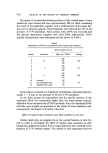
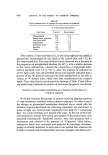
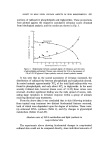
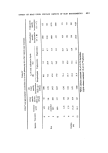
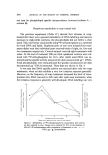
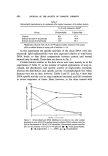
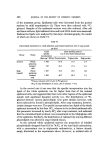
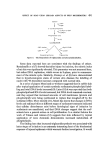
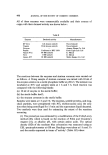
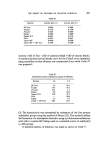
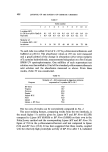
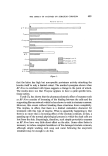
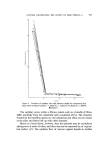
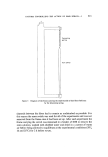
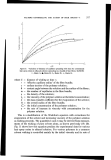
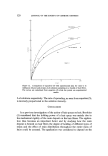
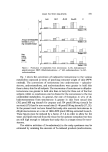
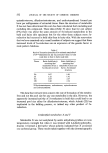
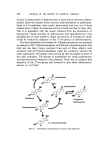
MALE PATTERN BALDNESS 535 The last steroid to be incubated was [4-•4C]epiandrosterone which was prepared in the radioactive form by the hydrogenation of [4-•4C]dehydro - epiandrosterone over Adam's catalyst. One bald and one hairy skin sample from each of two subjects were incubated under the standard conditions used previously. The uptake by skin of this steroid was higher than that for testosterone. The products of metabolism were androstanedione and a non- polar metabolite. This non-polar metabolite had a similar chromatographic mobility to the mobilities of the non-polar metabolites from the testosterone and dihydrotestosterone incubations. An unidentified non-polar metabolite has therefore been found in the incubation of steroids possessing a hydroxyl group (either in the 3- or 17-position) but not in those where the substrate is a diketone. This fact, coupled with the chemical and chromatographic properties of metabolite X, suggests that all three unidentified metabolites are steroid esters. The identification of these metabolites is continuing. The data from all the incubation studies reported here can best be summarized in the form of a metabolic scheme shown in Fig. 2. Although we have not incubated androsterone with scalp skin it seems likely that its metabolism will be as indicated in the figure. The unidentified metabolites have been omitted for the sake of clarity. (Received: 9 February 1973) REFERENCES (1) Byron, C. P. (translation) The papyrus ebers (1931) (Appleton & Co., New York). (2) Orentreich, N. Hair transplants. Arch. Otolaryngol. 92 576-582 (1970). (3) Papa, C. M. and Kligman, A.M. Stimulation of hair growth by topical application of androgens. J. Amer. Med. Ass. 191 81-85 (1965). (4) Shapiro, I. Premature baldness. Preliminary report on treatment with topically applied estrogen lotion. J. Med. Soc. N.J. 50 17-19 (1953). (5) Sunday Times, London, 31st May, p. 53 (1970). (6) Ebling, F. J. and Hale, P. A. The control of the mammalian moult. Mere. Soc. Endocrinol. 18 (1970). (7) Barman, J. M., Pecoraro, ¾. and Astore, I. Biological basis of the inception and evolution of baldness. J. Gerontol. 24 163-168 (1969). (8) Hamilton, J. B. The role of testicular secretions as indicated by the effects of castration in man and by studies of the pathological conditions and the short lifespan associated with malehess. Recent Progr. Hotre. Res. 3 257-322 (1948). (9) Snyder, L. H. and Yingling, H. C. Studies in human inheritance. XII. The application of the gene-frequency method of analysis to sex. Influence factors, with specific reference to baldness. Hum. Biol. ! 608-615 (1935). (10) Hamilton, J. B. Male hormone stimulationis prerequisite and an incitant in common baldness. Amer. J. Anat. 71 451-480 (1942). (11) Hamilton, J. B. Effect of castration in adolescent and young males upon further changes in the proportions of bare and hairy scalp. J. Clin. Endocrinol. Metab. 20 1309-1318 (1960).

536 JOURNAL OF THE SOCIETY OF COSMETIC CHEMISTS (12) (13) (14) (15) (16) (17) (18) (19) (20) (21) (22) (23) Bruchovsky, N. and Wilson, J. D. The conversion of testosterone to 5a-androstan-17 •-ol- 3-one by rat prostate in vivo and in vitro. J. Biol. Chem. 243 2012-2021 (1968). Sansone, G. and Reisner, R. M. Differential rates of conversion of testosterone to dihydro- testosterone in acne and in normal human skin--a possible pathogenic factor in acne. J. Invest. Dermatol. 56 366-372 (1971). Montagna, W. and Uno, H. Baldness in non-human primates. J. Soc. Cosmet. Chem. 19 173-185 (1968). Hamilton, J. B. A male pattern baldness in wattled starlings resembling the condition in man. Ann. N.Y. Acad. $ci. 83 429-447 (1959). Gomez, E. C. and Hsia, S. L. In vitro metabolism of testosterone-4-x4C and A 4-androstene - 3,17-dione-4-•4C in human skin. Biochemistry 7 24-32 (1968). Wilson, J. D. and Walker, J. D. The conversion of testosterone to 5a-androstan-1713-ol- 3-one (dihydrotestosterone) by skin slices of man. or. Clin. Invest. 48 371-379 (1969). Flamigni, C., Collins, W. P., Koullapis, E. N., Craft, I., Dewhurst, C. J. and Sommerville, I. F. Androgen metabolism in human skin. J. Clin. Endocrinol. Metab. 32 737-743 (1971). Ellis, R. A. Ageing of the human male scalp. The biology of hair growth 469- 485 eds W. Montagna and R. A. Ellis (1958). (Academic Press, New York). Calman, K. C., Muir, A. V., Milne, J. A. and Young, H. Survey of the distribution of steroid dehydrogenases in sebaceous glands of human skin. Brit. J. Dermatol. 82 567-571 (1970). Jenkins, J. S. and Ash, S. The metabolism of testosterone by skin in normal subjects and in testicular feminization. J. Endocrinol. 49 515-520 (1971). Adachi, K. and Kano, M. Adenyl cyclase in human hair follicles: its inhibition by dihydro- testosterone. Blochem. Biophys. Res. Commun. 41 884-890 (1970). Anderson, K. M. and Liao, S. Selective retention of dihydrotestosterone by prostatic nuclei. Nature (London) 219 277-279 (1968).
Purchased for the exclusive use of nofirst nolast (unknown)
From: SCC Media Library & Resource Center (library.scconline.org)