494 JOURNAL OF THE SOCIETY OF COSMETIC CHEMISTS different proteases, Einbinder, Walzer and Mandl (2) concluded that they had found no evidence of any stratum corneum digestion. Furthermore, proteolytic preparations have been used to separate intact undenatured sheets of human stratum corneum by enzymatic separation from epidermis specimens (3). Bartols (4), however, has reported remarkable changes in the skin surface after treatment with a proteolytic enzyme. We have examined a variety of preparations on the market--either creams or lotions claimed to have beneficial enzyme activity. We have been unable to show any activity in vitro, using any of these products on standard substrates such as haemoglobin (5) or casein (6) nor have we been able to detect any measurable effect on the skin. Despite all this, as Turek (7) has pointed out, many keratinaceous materials which would be thought to be much more resistant than skin, such as hair, wool, feathers, hooves and nails are, in fact, susceptible to enzymatic digestion, and this is well docu- mented. As has also been pointed out, keratin does not accumulate in nature (8) and it would be thought that enzymatic processes play a con- siderable part in the breakdown of these materials. It is generally assumed in the literature (9) that proteolytic enzymes attack only 'dead' skin cells, thus increasing the normal rate of shedding of these cells and giving a cleaner, smoother and cosmetically more acceptable skin. Practically, the entire field is fraught with the greatest of difficulties. The preparations themselves are inevitably unstable and indeed it would be surprising if they were otherwise, as the proteolytic enzymes are themselves proteinaceous and, therefore, in the presence of moisture, self-degrading. There are also possible problems of sensitization in some users and many other troublesome but less evident problems. Many of the commercial enzymes are a source of both discolouration and unpleasant odours when incorporated into products. In most cases, the purification--not in the sense of obtaining crystalline enzymatic products but simply in the sense of removing unwanted colouring matter etc.--is extremely difficult. As a result, no really successful commercial cosmetic product based on an enzymatic skin treatment has yet appeared. As indicated above, the few on the market that we have examined showed, in our tests, no significant enzymatic activity. There are, of course, countless methods of stabilizing aqueous enzyme preparations in the literature again, in our experience, none of these methods is satisfactory for preparation of a cosmetic product which would have a commercial shelf-life under normal storage conditions. Despite these drawbacks, many papers in cosmetic journals claim 'good' results with enzymatic treatments. One of the greatest problems here is the

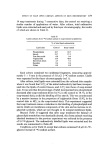
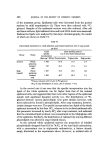
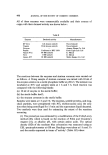
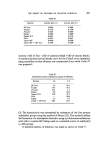
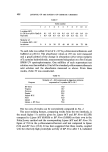
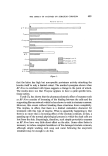
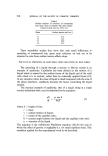
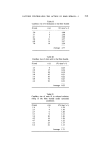
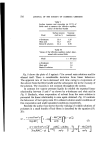
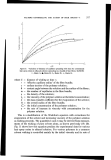
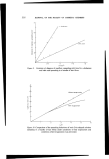
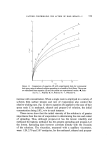
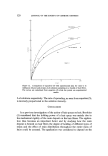
THE EFFECT OF ENZYMES ON STRATUM CORNEUM 495 difficulty of objective measurements. In in vivo studies, even a claimed 'good' result is somewhat subjective and to try to quantify the results further is almost impossible. Carrying out in vivo studies is also a difficult, cumbersome, and expensive operation, involving the use of volunteers. An in vitro screening method was therefore sought which would enable the effect of an enzyme or an enzyme combination on stratum corneum to be objectively measured. The primary interest at this time was in an enzymatic hand cream rather than a product for facial application. As the stratum corneum varies greatly in character over different parts of the body, the substrate selected was material from the physiological hyperkeratosis of normal healthy fingertips, which was delicately removed using very sharp ophthalmosurgical scissors. This material was extracted with chloroform three times, to remove un- wanted fatty materials, and then rinsed with distilled water until a test with ninhydrin gave a negative result and there was no absorption on a uv spectrophotometer at 280 nm. This indicated the absence of unwanted free amino acids. The excess moisture was removed and the substrate sterilized, using 10•o ethylene oxide and 90•o carbon dioxide, the gas being passed over a saturated magnesium chloride solution to give the required 30• humidity and held in contact with the substrate for 48 h. The substrate was then used immediately to minimize microbiological contamination. This treatment of the stratum corneum substrate does admittedly make the test procedures more artificial, but we felt that it was necessary to keep blank readings to a minimum. The chloroform removed the lipids and the water removed water soluble proteins, peptides and amino acids. It was originally felt that sterilization was required to prevent bacterial breakdown of the substrate, but this later proved unnecessary as the experiment gave anomalous results at 24 h, probably due to autolyric breakdown of the enzymes. All results were therefore recorded after a maximum of 3 h. We examined a total of seven enzymes and the relative activities of the six proteinases were initially measured using a denatured haemoglobin substrate in order to obtain working concentrations of about the same activity. The enzymes and working concentrations were as follows: Bacterial Proteinase Novo 1.0 5/o Papain (water soluble) 1.0 •o Trypsin 0.1% Ficin 2.0 •o Prozyme 2.0•o Lipase MY 1.0•o Papain 1.0 •o Lipase MY and BP Novo 1.0 5/o of each
Purchased for the exclusive use of nofirst nolast (unknown)
From: SCC Media Library & Resource Center (library.scconline.org)