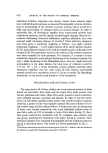
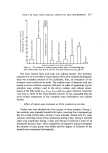
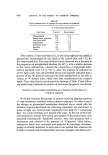
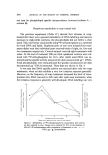
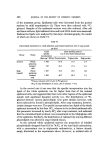
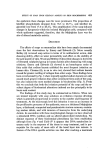
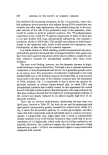
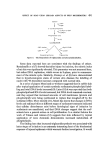
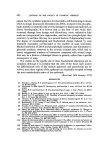
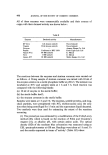
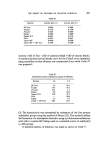
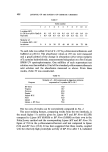
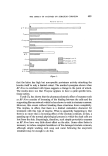
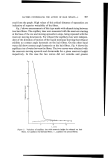
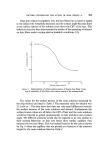
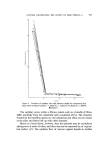
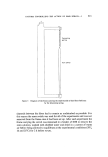
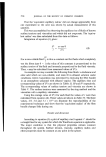
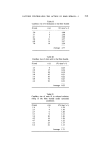
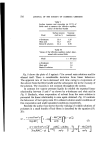
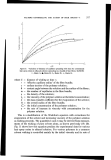
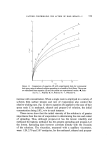
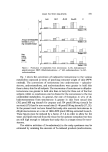
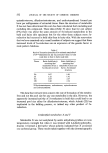
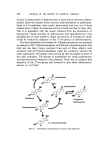
FACTORS CONTROLLING THE ACTION OF HAIR SPRAYS--I 517 (t)• Figure B. V•i•on o[ d/st• o[ h•r spm• I }o where S = ¾ = 0 = m = p = R= o distance of wicking at time t 'effective capillary radius' of the fibre bundle surface tension of the polymer solution contact angle between the solution and the surface of the fibres the number of capillaries in the fibre bundle the density of the solution the viscosity of the polymer solution at the initial concentration the mass transfer coefficient for the evaporation of the solvent the overall radius of the fibre bundle the initial concentration of the polymer solution the rate of increase in viscosity with concentration for the polymer solution. This is a modification of the Washburn equation with corrections for evaporation of the solvent and increasing viscosity of the polymer solution as wicking proceeds. The quantities k and m may be derived from measure- ments of the wicking of pure solvent alone, as shown previously (19, 20). Fig. 11 shows how this equation predicts the experimental data for various hair spray resins in ethanol solution. For various polymers in a common solvent wicking is controlled mainly by the initial viscosity and its rate of

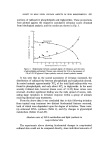
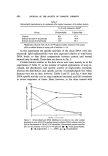
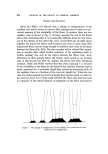
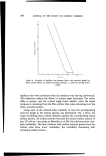
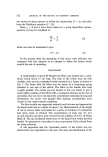
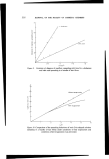
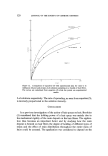
518 JOURNAL OF THE SOCIETY OF COSMETIC CHEMISTS • 2 •5 2.5 5 7-5 io (time)•/2 Figure 9. Variation of distance of capillary spreading with time for n-dodecane and oleic acid spreading in a bundle of hair fibres.
Purchased for the exclusive use of nofirst nolast (unknown)
From: SCC Media Library & Resource Center (library.scconline.org)