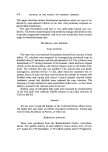
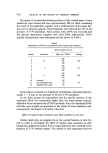
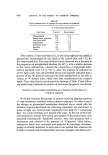
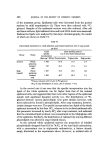
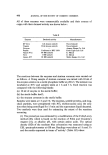
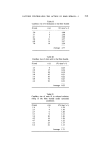
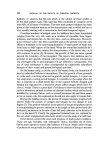
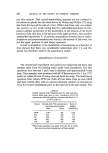
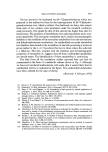
478 JOURNAL OF THE SOCIETY OF COSMETIC CHEMISTS By means of an electrokeratotome portions of the treated areas of each treated rat were excised and were approximately 200 pm thick, containing the whole of the epidermis, together with a small amount of the upper der- mis, but no sebaceous glands. These fragments were cultured for 24 h in the presence of 2-•4C-thymidine. After culture, total DNA was extracted and the amount determined, together with total DNA radioactivity. DNA specific radioactivities were calculated and are shown in Table I. Table I Metabolism of DNA in rat epidermis after topical soap treatment DNA specific activity Animal Treatment (dpm [zg -x DNA) Average 1 308 2 12 151 196 3 129 4 189 5 8 154 173 6 176 7 193 8 4 141 160 9 174 10 Controls 92 11 (12 treatments with 35 70 12 distilled water only) 83 Each culture contained two fragments of epidermis, measuring approxi- mately 5 x 8 mm, in the presence of 5.0 •tCi 2-•4C-thymidine. In the three groups of soap-treated rats the specific acitivity of the epidermal DNA was consistently higher than the water-treated controls, indicative of an increased rate of DNA synthesis. Also, the stimulated DNA activities were roughly proportional to the extent of soap treatment, and, consequently, the degree of irritation observed. Effect of topical soap treatment upon lipid synthesis in rat skin Certain lipids play an integral role in the normal function of skin (2), and in order to investigate the effect of topical soap treatment on skin lipogenesis, epidermal sections from a soap-treated rat were cultured in the presence of 2-x•C-sodium acetate. The animal in this experiment received

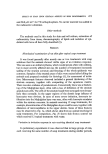
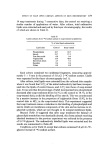
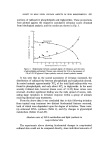
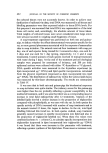
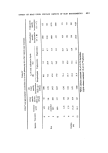
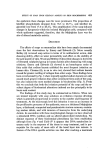
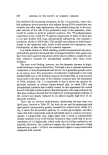
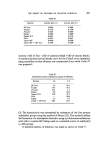
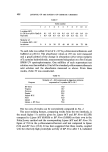
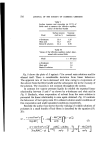
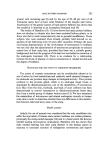
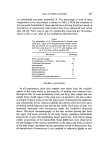
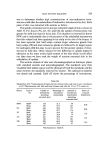
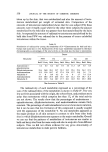
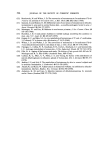
EFFECT OF SOAP UPON CERTAIN ASPECTS OF SKIN BIOCHEMISTRY 479 14 soap treatments during 7 consecutive days, the control rat receiving a similar number of applications of water. After culture, total radioactive lipids were extracted and analysed by thin-layer chromatography, the results of' which are shown in Table H. Table II Lipid synthesis from x4C-sodium acetate in soap-treated rat epidermis % of total lipid radioactivity Lipid class Control Soap treated Phospholipids 32.7 18.7 SteroIs 35.7 17.5 Free fatty acids 6.6 9.4 Triglycerides 15.9 40.0 Sterol/wax esters 2.7 5.3 Squalene 0.4 2.4 Others 6.0 6.8 Each culture contained two epidermal fragments, measuring approxi- mately 5 x 8 mm in the presence of 5.0 [tCi 2-•C-sodium acetate. Lipids were separated by thin-layer chromatography (ref. 1). After culture, total lipids were extracted from the cultured skin samples when it was found that 5.35/0 of the initial radioactivity had been incorpor- ated into the lipids of control tissues, and 3.3•o into those of soap-treated skin. It was seen that the percentage of label incorporated into phospholipid decreased after soap treatment (from 32.7•o in the control to 18.7•o in the soap-treated skin), as did the labelling of free sterols. This was counteracted by a massive increase in the proportion of triglyceride (from 15.9•o in the control skin to 40•o in the soap-treated skin). This experiment suggested that soap treatment causes a reduction in the labelling of phospholipids ar/d sterols which are membrane components of the skin and an increase in tri- glyceride synthesis, which are not thought to be integral membrane lipids. Because Table H suggested that after soap treatment the balance of glycerolipid metabolism was drastically altered, skin from animals receiving identical treatment to the previous experiment was cultured in the presence of U-•C-glycerol. The radioactively labelled lipids were extracted and the results are summarized in Table III. Conditions as for Table II, except that cultures contained 5.0 •Ci U-•C - glycerol instead of •C-sodium acetate.
Purchased for the exclusive use of nofirst nolast (unknown)
From: SCC Media Library & Resource Center (library.scconline.org)