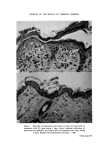
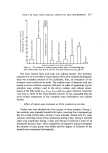
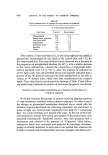
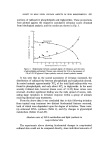
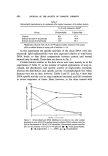
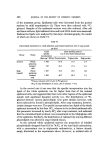
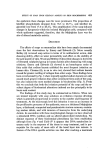
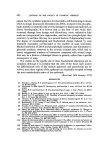
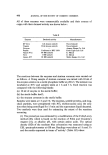
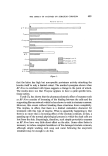
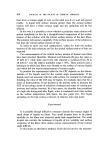
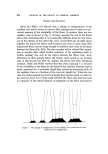
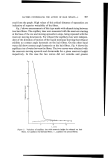
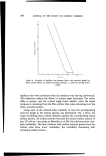
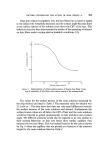
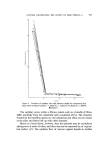
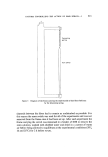
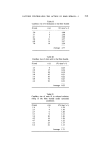
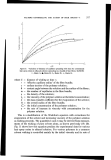
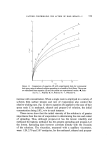
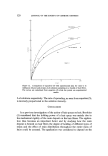
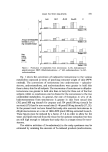
MALE PATTERN BALDNESS 531 Amount of metabolite• formed in pmol/ rng extracted tissue Key: Bald A+E DHT A•-AD 5(x-AD Subject JZ Subject AC- Subject CB Figure I. Formation of metabolites from testosterone. A-t-E, Androsterone-l- epiandrosterone DHT, dihydrotestosterone A 4-AD, androstenedione 5•-AD, androstanedione. Fig. 1 shows the conversion of radioactive testosterone to the various metabolites expressed in terms of pmol/mg extracted weight of skin (PFW omitted). The conversions of testosterone into androsterone + epiandro- sterone, androstenedione, and androstanedione were greater in bald skin than in hairy skin for all subjects. The conversion of testosterone to dihydro- testosterone was greater in bald skin than in hairy for three out of the four subjects whilst no conclusions can be drawn for the conversions to the two unidentified metabolites. In general, the rate of formation in vitro of di- hydrotestosterone from testosterone is greater in skin from sexual sites (382 pmol/100 mg tissue/h for prepuce and 534 pmol/100 mg tissue/h for scrotum) (17) than for non-sexual sites (1-46 pmol/100 mg tissue/h) (17, 21). In the present work we have found that scalp skin converts testosterone to dihydrotestosterone at a rate of 1660-4950 pmol/100 mg extracted tissue/h. These figures must be reduced by a factor of 3-4 in order to allow for the water and lipid removed from the tissue by the acetone extraction but they are still high enough to indicate that scalp skin is a target tissue for testo- steroBe. The relative activities of 5e-reductase(s) in the scalp specimens can be estimated by summing the amounts of 5e-reduced products (androsterone,

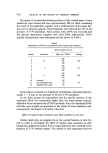
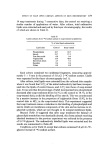
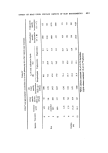
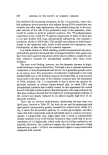
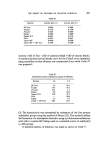
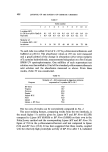
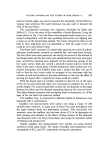
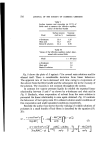
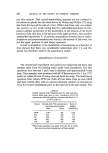
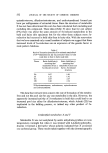
532 JOURNAL OF THE SOCIETY OF COSMETIC CHEMISTS epiandrosterone, dihydrostestosterone, and androstanedione) formed per hour per milligramme of extracted tissue. Since the structure of metabolite X has not been determined this sum has been calculated both including and excluding this compound. These data (Table V) show that for one subject (PA) there was about the same amount of 5a-reduced metabolites in the bald and hairy skin specimens but for the other three subjects more 5a- reduction had occurred in bald skin than in hairy skin. With the reservation that we have examined only a small number of subjects we suggest that these increased levels of 5a-reductase are an expression of the genetic factor in male pattern baldness. Table V Ratio of formation (pmol/h) of 5a-reduced metabolites* of [4-•C]testosterone per mg extracted tissue in bald scalp skin to that in hairy scalp skin Donor Ratio (bald/hairy) Ratio (bald/hairy) assuming that assuming that metabolite X has a metabolite X does not 5a-reduced structure have a 5a-reduced structure PA 0.97 1.01 JZ 1.22 1.42 AC 2.05 2.27 CB 2.46 2.34 *Dihydrotestosterone, androsterone, epiandrosterone and androstanedione. The data that we have here concern the rate of formation of the metabo- lites and not the pool size for any one metabolite in the skin. However, the apparently increased activity of 5a-reductase in bald skin could lead to an increased pool size either for dihydrotestosterone, which Adachi (22) has implicated in the balding process, or indeed any other product of 5a- reduction. Unidentified metabolites 3[ and Y Metabolite X was not acetylated by acetic anhydride-pyridine at room temperature overnight but when it was treated with 2,4-dinitrophenylhy- drazine it formed a derivative whose polarity indicated that X possessed one carbonyl group. These results taken together with the chromatographic
Purchased for the exclusive use of nofirst nolast (unknown)
From: SCC Media Library & Resource Center (library.scconline.org)