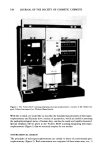
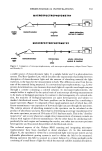
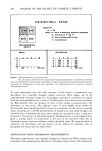
534 JOURNAL OF THE SOCIETY OF COSMETIC CHEMISTS cream necessary to sparingly cover the entire body when self-applied by a panel of volunteers (12). The amounts varied enormously ranging from 4.3 to 63.8 gm/m 2 with an average of 24.2 g/m 2 (or 2.4 mg/cm=). There was no difference between the weights of ointment and cream applied. We conducted a similar, though more limited, study to compare a liquid, cream and ointment (unpublished observations). Five adult males applied petrolatum, cold cream U.S.P. and 25% aqueous propylene glycol to their entire bodies except the scalp. The sequence was first the solution, then the cream.and finally the ointment at weekly intervals. The differences between the sub- jects using the same preparation were not great. Everyone, however, used considerably more of the solution (average 17.5 g/m • range 15 to 20 g) than the cream or ointment (average 9.1 range 6.5 to 11.5 g and 8.4 g/m • range 7.0 to 9.5 g, respectively). It is im- portant to secure harder data concerning the amounts applied by the average consumer. It is hardly surprising that the S.P.F.'s of commercial sunscreens differed so greatly, sometimes by as much as a factor of three. Clearly, consumers should be appraised of these differences so that persons at high risk can choose those which offer the greatest protection. In certain European countries the S.P.F. is printed on the label. This is very desirable provided the meaning of the value is adequately clarified. We find widespread misunderstanding in this regard even among specialists. A formulation with an S.P.F. of two will enable the user to stay out twice as long before developing a sunburn in the average case, this might be 40 min. Suppose the sunscreen is then reapplied, will there be protection for another 40 min? Certainly not! During the first 40-min interval the subject would have received a certain subthreshold dose of UV. With reapplication, this threshold will be exceeded by the end of 2 hr and a sunburn will result. Complete protection cannot be afforded by reapplying the sunscreen every 40 min. The failure to develop redness does not signify that no radiation has reached the skin. Sunscreens are not perfect absorbers. Among the UV-B absorbers some preparations were very good, some unimpressive. Previous studies have shown that PABA is superior to its ester derivatives (10, 13). Efficacy, however, depends on many factors such as concentration and vehicle design. An inappropriate base can vitiate efficacy, just as skillful formulation can greatly enhance activity. Previous investigators have often reported greater S.P.F.'s than those given here. For the most part this is due to our having used lower dosages but there are other reasons, too, such as the use of monochromatic radiation. Cripps and Hegedus (11) studied several preparations using monochromatic radiation at 305 nm. At a dose of 30/•l/crn z, they found that an alcoholic solution of 5% PABA (I) was the most effective, with a S.P.F. of 17.6. Esters of PABA were less so and were comparable to benzophenones. However we obtained much better protection with red veterinary petrolatum (R.V.P.) for which they reported the astonishingly low S.P.F. of 3.2, compared to our 12.6. Mc- Cleod and Frainbell (14), also using monochromatic radiation at 305 nm and a dose of about 4.0 mg/cm z, found that the S.P.F. for R.V.P. ranged between two and ten. With 5% PABA in 70% ethanol (2.5/xl/cm2), their S.P.F. ranged from 8 to 17. Willis and Kligman, using a solar simulator, also reported an excessively high S.P.F., 23, for 5% ethanolic PABA solution, probably because of higher dosage (10). The results of the sweating and water immersion tests were very informative. In general, physical blockers provided little protection while the chemical sunscreens

EFFICACY OF SUNSCREENS 535 were much better owing to diffusion into the horny layer. The performance of F in the immersion test was outstanding, understandably so because it contains an acrylate polymer which forms an invisible film on the surface. It should be pointed out, however, that the film has little abrasion resistance: a few Scotch-tape strippings will remove it. It is generally assumed that immersion and sweating are comparable tests, the former being merely more severe. We found important discrepancies, however. For example, postsweating protection with I was substantially higher than after water immersion, while the reverse was true, though to a lesser extent, for C suntan lotion. Also, the results with sweating are more variable, as expected. The three-day cumulative assay clearly identified those sunscreens that have the capacity to form a reservoir in the skin. This was especially true for chemical sunscreens containing PABA and its esters. The resistance to water wash-off after only three daily applications was impressive. This finding has significant clinical implications and can be utilized to advantage by sunsensitive, fair-complexioned individuals. As for protection against UV-A, both the benzophenone absorbers and physical blockers containing titanium dioxide offer moderate protection. More effective preparations are needed against these wavelengths as they can no longer by considered harmless. Not only is long ultraviolet radiation responsible for most photoallergic and phototoxic reactions, but UV-A is also carcinogenic to laboratory animals in large doses (15, 16). These rays penetrate to a far greater extent than UV-B (17, 18) and probably play a role in the induction of the deep dermal elastosis so typical of actinically damaged skin. UV-A also potentiates the harmful effects of UV-B (19). Un- like the latter, long UV wavelengths are present all year round, both in early morning and late afternoon (20). Protection against the dreadful, delayed effects of decades of mindless exposure to sunlight will require the development of better broad-spectrum sunscreens than are now available. REFERENCES (1) J. M. Knox, J. Guin and E.G. Cockerell, Benzophenones. Ultraviolet light absorbing agents, J. Invest. Dermatol., 29,435 (1957). (2) I. Willis and A.M. Kligman, Evaluation of sunscreens by human assay, J. Soc. Cosmet Chem., 20, 639 (1969). (3) D. S. Berger, Specification and design of solar ultraviolet simulators, J. Invest. Dermatol., 53, 192 (1969). (4) Tentative findings of the topical analgesic, antirheumatic, otic, burn, sunburn treatment and prevention panel. OTC topical sunscreens. Reproduced by The Proprietory Association, November ! 977. (5) R. M. Sayre, E. Marlowe, L. Desrochers and F. Urbach, The correlation of indoor solar simulator test- ing with natural sunlight, Proceedings of the IV Annual Meeting of the American Society for Photobiology, Page ! 08, February ! 976 (Abstract). (6) P. B. Rottier, Untersuchungen mit einem kleinen spektographen zur bestimmung der hautemp- findlichkeit gegenuber 300 and 250 mu, Strahlentherapie, 119, 591 (1962). (7) M. A. Pathak, F. C. Riley and T. B. Fitspatrick, Melanogenesis in human skin following exposure to long-wave ultraviolet and visible light, J. Invest. Dermatol., 39, 435 (1962). (8) I. Willis, A.M. Kligman and J. Epstein, Effects of long ultraviolet rays on human skin: photoprotective or photoaugmentative?, J. Invest. Dermatol., 59,416 (1973). (9) A. Langner and A.M. Kligman, Further sunscreen studies of aminobenzoic acid, Arch. Dermatol., 105, 851 (1972).
Purchased for the exclusive use of nofirst nolast (unknown)
From: SCC Media Library & Resource Center (library.scconline.org)