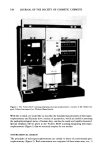
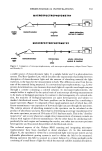
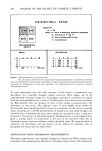
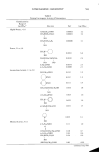
526 JOURNAL OF THE SOCIETY OF COSMETIC CHEMISTS farmers, sailors, skiers, bathers, fishermen, workers, vacationers, retirees, playboys, etc. This is especially true for light-skinned persons who sunburn easily and tan poorly, notable examples of whom are persons of Celtic ancestry (Scotish-Irish-Welsh). Laboratory assays are invaluable for appraising the efficacy of sunscreens prior to field trials. Unlike field studies, the conditions of exposure can be rigorously controlled. Sunlight is not only inconsistent from day to day but from hour to hour. In our experience, tests with sunlight give results which are far more variable than the solar simulator. We ourselves look to the laboratory for definitive study and resort to the outdoors for confirmation. Field studies are a final and necessary stage to show efficacy in real settings that impose rigors not present in the laboratory. The methods (2) reported previously from this laboratory for assessing sunscreens are no longer adequate in view of the diversity of formulations and the demand for greater quantitative knowledge of their merits and limitations. This paper updates the meth- odology taking as examples some of the better known proprietory products. Needless to say, the sampling is small and arbitrary, though hopefully representative of the dif- ferent types ranging from physical blockers to chemical absorbers of UV-B and UV-A. MATERIALS AND METHODS SUBJECTS These were healthy Caucasian college students between the ages of 19 and 26 years. The untanned mid-back or flexor aspect of the forearm were used for testing. Informed consent was obtained. Panels often subjects were used for each test. LIGHT SOURCE This was a 150-W xenon solar-simulator. With the Schott WG-320, the emission in the sunburn range resembles the ultraviolet portion of mid-day summer sunlight in North temperate latitudes (3). With the Schott WG-345 filter, sunburning radiation is eliminated and the emission consists primarily of long ultraviolet radiation (UV-A) and some visible light. Intensity measurements at skin level were made with a calibrated Eppley thermopile (Eppley Laboratories, Newport, Rhode Island). The UV-B flux was 14.0 mW/cm 2 and UV-A 22.5 mW/cm 2. THE MINIMAL ERYTHEMA DOSE A series was given in which each exposure was 15 sec greater than the previous one. The minimal erythema dose (MED) was the least exposure which produced a uniform, mild erythema with a sharp border 24 hr later. The test agents were delivered to 2 cm squares of skin outlined by adhesive tape at a dose of 5/xl/cm •, using either micro- pipettes (lotions and liquids) or 1 ml plastic tuberculin syringes (creams and oint- ments). The materials were spread evenly with thin glass rods. THE SUN PROTECTION FACTOR (S.P.F.) IMMEDIATE PROTECTION The S.P.F. is the ratio of the MED's on treated and untreated skin. Exposures were given 5 min after application. The sites were read 24 hr later.

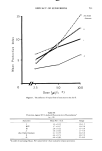
EFFICACY OF SUNSCREENS 527 RESISTANCE TO WASH-OFF Treated forearm sites were covered by perforated plastic cups for 2 hr to enable diffu- sion into the horny layer. The forearm was then immersed in a tub of tap water at room temperature for 10 min, followed by air drying for 10 to 15 min. The challenge ex- posure was three MED's with reading of the degree oferythema on a 0 to 3 scale 24 hr later, as follows: 0, normal skin 1 +, minimal redness equivalent to one MED 2 +, more intense erythema 3 +, intense erythema and edema. This was found suitably dis- criminating and entailed considerably less effort than giving a series of exposures to de- termine the postimmersion S.P.F. RESISTANCE TO SWEATING The test agents were applied to the mid-back and the sites protected with perforated cups for 2 hr while the subjects remained inactive in an air-conditioned room. Sweating was then induced in an environmental chamber at 110øF and 65% R.H. for 30 min while the subjects sat upright. After leaving the chamber, the skin was air dried for 10 to 15 min and the sites challenged with three MED's. CUMULATIVE EFFECT This test measures the capacity of the material to form a horny layer reservoir. The agents were applied once daily each morning to the same forearm site for three consecutive days. The sites were not protected during this time the subjects engaged in their usual activities. On the morning of the fourth day the arms were immersed in a tub of tap water at room temperature for 10 min, allowed to air dry and challenged with three MED's. SCOTCH-TAPE STRIPPING This test establishes whether the sunscreen is of the external type (on the surface) or internal (within the coherent portion of the stratum corneum). Practically speaking, this test corresponds to abrasion resistance and is preferred because of greater con- trollability. The test agents were applied as above to the same site once daily each morning for three consecutive days. On the fourth day the forearms were washed with soap and water and lightly dried with a towel. Each site was then stripped five times with scotch tape and challenged with three MED's. DOSE-RESPONSE S.P.F. values were determined immediately after application at three dosage levels: 2.5 /zl/cm2 5.0/zl/cm 2 and 10.0/zl/cm •. PROTECTION AGAINST UV-A This was assessed by determining the protective factor in skin pretreated with fluoranthrene, a polycyclic hydrocarbon photosensitizer. A solution of 20/zl of 0.5% fluoranthrene in 95% ethanol was applied to 2 cm squares of skin outlined by white ad- hesive tape, providing a dose of 5.0/zl/cm •. After drying, the sites were covered with equal square patches of nonwoven cotton cloth (Webril, Curity) and fastened to the
Purchased for the exclusive use of nofirst nolast (unknown)
From: SCC Media Library & Resource Center (library.scconline.org)