J. Soc. Cosmet. Chem., 29, 581-606 (September 1978) The chemistry of nitrosamine formation, inhibition and destruction M. L. DOUGLASS Colgate-Palmolive Company, 909 River Rd., Piscataway, NJ 08854 B. L. KABACOFF Revlon Research Center, 945 Zeraga Ave., Bronx, NY 10473 G. A. ANDERSON The Dow Chemical Company, 1710 Building, Midland, M148640, and M. C. CHENG, The Procter and Gamble Company, Ivorydale Technical Center, 5299 Spring Grove Ave., Cincinnati, OH 45217. Received June 29, 1978. Authors represent the Nitrosamine Task Force of the Cosmetic, Toiletry and Fragrance Association, 1133 15th St., N.W., Washington, D.C. 20005. Synopsis N-Nitroso compounds are formed from the interaction of many types of organo-nitrogen compounds and nitrosating agents. Ease of nitrosation is determined by compound structure, nature of the medium and the presence of catalysts. The two categories, nitrosamines and nitrosamides, differ mainly in their CHEMICAL stability and mechanism of biological activity. NITROSAMINES are more stable and difficult to DESTROY, but their FORMATION can be INHIBITED by substances which react preferentially with the nitrosating agent. The carcinogenic activity of these compounds in laboratory animals varies widely from highly potent to innocuous. I. INTRODUCTION Advances in analytical techniques allow modern industrial society to detect trace amounts of undesirable substances in its physical environment. There has been legiti- mate concern that we are creating conditions that have serious adverse effects on human health. Recently, minute levels of nitrosamines have been found in some consumer products, including cosmetics (1). While not attempting to judge whether these substances at parts-per-billion levels have a significant physiological effect, we are presenting a review of nitrosamine chemistry to aid workers in the cosmetic and allied industries in their research on the subject. 581

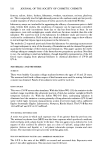
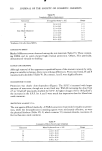
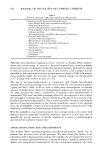
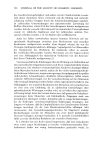
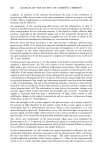
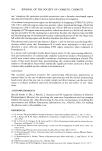
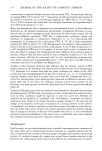
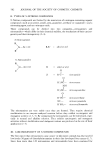
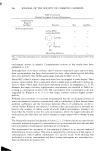
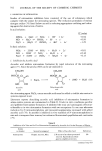
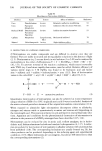
582 JOURNAL OF THE SOCIETY OF COSMETIC CHEMISTS II. TYPES OF N-NITROSO COMPOUNDS N-Nitroso compounds are formed by the interaction of a nitrogen-containing organic compound--such as an amine, amide, urea, guanidine, urethane or cyanamide--and a nitrosating agent, such as a nitrogen oxide. These compounds can be divided into two categories--nitrosamines and nitrosamides--which differ in their chemical stability, the mechanism of their carcino- genicity and their mutagenicity (2-4). N-Nitrosamines R N--N=O / R' R,R' = alkyloraryl N-Nitrosamides R N--N•O / z = alkyloraryl O O R',2NC-- NH II R',.,NC-- 0 R'OC-- NC l R'SO2-- nitrosamide nitrosourea nitrosoguanidine nitrosourethane nitrosocyanamide nitrososulfonamide The nitrosamines are very stable once they are formed. They require chemical modification in an enzyme-catalysed reaction before they exhibit carcinogenic and mutagenic activity (2, 3, 5). By comparison the nitrosamides can be hydrolysed, espe- cially in neutral and alkaline solution. They exhibit carcinogenic and mutagenic activities without modification and malignant tumors are produced at the site of their application (2-5). III. CARCINOGENICITY OF N-NITROSO COMPOUNDS The first report that nitrosamines cause cancer in laboratory animals was that rats fed low levels (50 ppm) of dimethylnitrosamine in their diet developed liver cancer (6, 7). Since then more than 120 nitrosamines and nitrosamides have been examined for
Purchased for the exclusive use of nofirst nolast (unknown)
From: SCC Media Library & Resource Center (library.scconline.org)