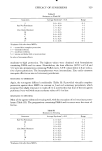
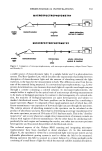
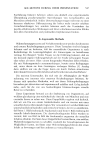
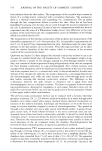
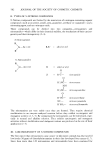
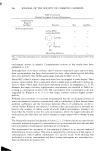
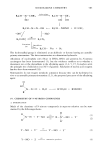
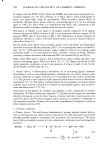
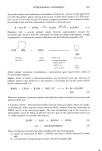
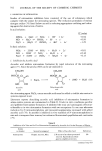
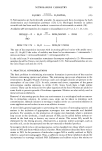
NITROSAMINE CHEMISTRY 585 R•CH-- N--CHR',, NO hydroxylasc • . R•CH--N=N--OH ( -H + R2CHN• + ' R2CN2 R•CH--N--CR'• ON OH R.,CH- NHNO + O:CR'2 diazonium diazoalkane ion N'---•3 R2CH-- Nuc + N2 The hydroxyalkyl group is eliminated as an aidehyde or ketone leaving an unstable primary nitrosamine. The latter tautomerizes to a diazonium hydroxide. Alkylation of nucleophilic sites (Nuc) in DNA, RNA and proteins by N-nitroso carcinogens has been demonstrated (5), but the evidence conflicts as to whether a diazonium ion or the diazoalkane is the alkylating agent (2, 4, 5, 17). In nucleic acids the principle site of alkylation is at N(7) ofguanine. Alkylation of nucleic acid oxygens has also been demonstrated (18). Nitrosamides do not require metabolic activation because they can be hydrolysed in vivo to an unstable primary nitrosamine (2, 3), the proposed precursor of the alkylating agent. O II R'C N--N:O + H20 ) R'COzH + RNHNO IV. CHEMISTRY OF N-NITROSO COMPOUNDS A. INTRODUCTION Much of the chemistry of N-nitroso compounds in aqueous solution can be sum- marized by the following scheme. H R N (l) N[+_NO + Y- /N--H + Y--NO ( ' R-- (1) R' (2) I (2) R' (3) Y--NO + Y'- • Y'--NO + Y- (3) Y--NO + Z (4)) unreactiveproducts (4)

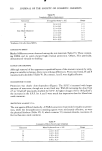
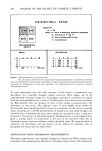
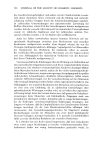
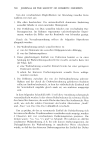
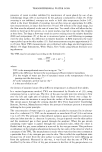
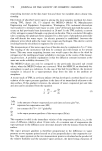
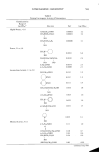
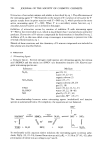
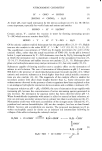
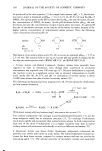
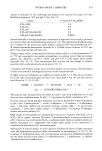
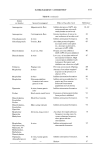
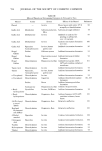
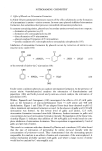
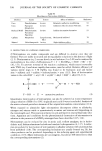
586 JOURNAL OF THE SOCIETY OF COSMETIC CHEMISTS Nitrosation of secondary amines and amides is described by eq 1. The effectiveness of the nitrosating agent Y--NO depends on the nature of Y. Catalysis ofnitrosation by Y' species results from its prior reaction with Y--NO (eq 3), which produces the more active nitrosating agent Y'--NO. When Y is a secondary amine function, eq 1 describes transnitrosation as it is defined in this paper. Inhibition of nitrosation occurs by reaction of inhibitor Z with nitrosating agent Y--NO in the irreversible eq 4, which is much faster than 1 and produces unreactive products. Destruction of N-nitroso compounds by denitrosation is described by eq 2. Addition of Z, in this case called a trap or scavenger, is necessary to prevent via 4 the reversal of denitrosation, eq 1. Details of these reactions and the chemistry of N-nitroso compounds not included in this scheme are described below. B. FORMATION 1. Nitrosating Agents a. Inorganic Species. Several nitrogen oxide species are nitrosating agents, but nitrous acid (HONO) and the nitrite ion (ONO-) are themselves inactive (19). Known inor- ganic nitrosating species are: Substance Medium N2Oa gas (20, 21) water (19, 22-27) organic solvent (2) NO2/N204 water (25-27) organic solvent (28, 29) gas (21, 30) YNO water ( 19, 22, 23, 31- 37) H2ONO + water (19, 22, 38-40) NO plus O2 (25, 27, 36) anaerobic, M n+ (19, 27) The interrelationship between active nitrosating agents (underlined) and inactive species is summarized below. For simplicity, the equations are not balanced. --H + --H•O H•ONO + • HNO• - ' N•Oa YNO + H20 NO•- + H20 NO + Mn+ ß NO + NO• Io_ In moderately acidic aqueous nitrite solutions the nitrosating agent is nitrous anhy- dride, N2Oa (19, 22-24), formed from nitrous acid, pK• = 3.138 at 25 ø (41, 42), after protonation of nitrite ion according to eqs 5 and 6.
Purchased for the exclusive use of nofirst nolast (unknown)
From: SCC Media Library & Resource Center (library.scconline.org)