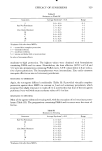
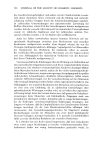
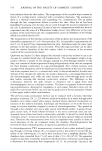
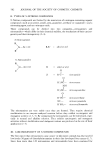
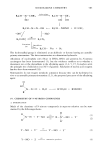
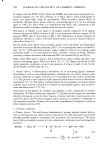
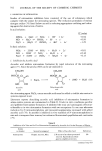
NITROSAMINE CHEMISTRY 587 H + + ONO- • HONO (5) 2HONO --' ONNO2 + H20 (6) At lower pH, more rapid nitrosation by the nitrous acidium ion (19, 22, 38-40) be- comes important, especially for weakly basic aryl arnines and amides. HONO + H + -'-' H2ONO + (7) Certain anions, Y-, catalyse the reaction in water by forming nitrosating species Y--NO which are more reactive than NzOa. HONO + Y- + H + •- Y--NO + H•O (8) Of the anionic catalysts studied thiocyanate has the greatest effect (23, 31-37). Halide ions are also catalytic in the order SCN-, 1- Br- Ci- (19, 22, 23, 31, 33, 35). The equilibrium concentration of YNO (eq 8) mainly determines the order of the catalytic effect, rather than the actual reactivities of YNO (36). As the pH is lowered below 2, rapid nitrosation by Y--NO dominates over that by NzOa, lowering the pH at which the nitrosation rate is maximum compared to the uncatalysed reaction (23, 32-34, 37). Perchlorate and sulfate ions are not catalytic (22, 31, 33). Hydrogen phos- phate and carboxylate anio ns may catalys e nitros atio n (31), but only weakly ( 19, 33). Substances capable of forming micelies exert a catalytic effect on the nitrosation of amines in acid solution. The rate of nitrosation of dihexylamine at pH 3.5 increases 800-fold in the presence of decyltrimethylammonium bromide micelies (43). Other cationic and nonionic substances at levels higher than their critical micelie concentra- tions are also catalytic (43, 44). The magnitude of the catalytic effect is smaller for secondary amines with alkyl chain lengths shorter than C6. Some nitrosation rate enhancements observed in the presence of microorganisms have been explained as due to an analogous hydrophobic interaction between amine and a cellular constituent (45). In aqueous solution at pH pKa of HNO2 the rate of nitrosation drops rapidly with increasing pH, because the concentrations of active nitrosating species generated in situ decrease. No nitrosation by aqueous nitrite has been observed above pH 7.5. When formaldehyde (equimolar with amine) is added to neutral or basic solutions, ni- trite can nitrosate secondary amines, but at a slower rate than in acid solutions (46, 47). Nitrosamine yields vary with steric accessibility of the nitrogen atom. Chloral (46, 47), pyridoxal and various benzaldehydes (48) are also catalytic, but less so than formal- dehyde. Acetone and acetaldehyde are inactive. The proposed mechanism (eq 9) in- volves nucleophilic attack by nitrite on an iminium ion intermediate following by collapse of the adduct releasing the carbonyl catalyst. --OH- + + - ' R•N•CHR' ( ) R•N--CHR' .. RzN-- CHR' " I R=N--NO + O•---CHR' * N--O ReNH + O-•-CHR' (9)

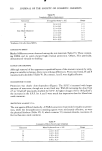
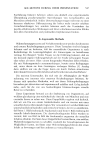
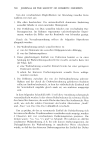
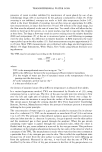
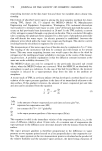
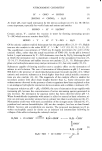
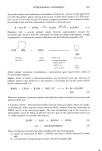
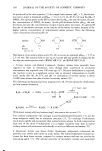
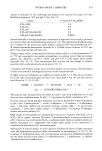
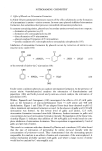
588 JOURNAL OF THE SOCIETY OF COSMETIC CHEMISTS In organic solvents NOCI, N2Oa, N204 and NOBF4 have been used as preparative ni- trosation reagents (23, 25). Use of N•Oa (2) or NzO4 (28) in carbon tetrachloride or acetic acid gives high yields of nitrosamides. With secondary amines NzO4 in methylene chloride reacts cleanly either as a nitrosating agent at 0 ø or as a nitrating agent at -80 ø (29). Since NO2 is in equilibrium with N204 (49), statements in the literature on effects of either substance must be critically viewed. Nitrosation of amides occurs faster in two-phase systems composed of an organic solvent and aqueous HNOz solution at pHi or in methylene chloride extracts of 2 M aqueous HNO2 than in water alone at pHi (50). Nitrosation of amines dissolved in methylene chloride in contact with solid sodium nitrite occurs by a reaction which in- volves the solvent (51). Recent studies have shown that secondary amines react with NzOa and NzO4 gases dissolved in aqueous alkaline solutions (pH 6-14) at a rate greater than in acidified ni- trite (25-27). Although both nitrogen oxides might be expected to undergo rapid hydrolysis at pH 5 to yield unreactive NOz- and NOa-, amines of widely different reactivity compete effectively with water and OH- for dissolved NzOa and N204. Nitric oxide (NO) alone is inactive but is oxidized by oxygen to NOz and thus to the reactive nitrosating agents NzOa and N204 (25, 27, 36). Rapid nitrosation by NO under anaerobic conditions occurs in the presence of iodine or Ag(I), Cu(I), Cu(II), Zn(II), Fe(III) or Co(II) salts (19, 27). b. Organic Species. N-Nitrosamines themselves act as nitrosating agents. Aromatic nitrosamines, such as nitrosodiphenylamine, transnitrosate secondary amines under neutral conditions in organic solvents (52, 53) probably by a free radical mechanism (53). The process is more rapid in acidic aqueous solution and occurs by a heterolytic mechanism (53, 54). The slower transnitrosation between aliphatic secondary amines requires more extreme conditions or catalysis by nucleophilic agents, such as thiocy- anate and halide ions (23, 55, 56). Nitrosation of morpholine by aromatic and aliphatic C-nitro compounds in tetrahy- drofuran at 70øC has recently been reported (57). Further work is required to ascertain whether nitrosation occurs by direct reaction of amine with the C-nitro function or is caused by agents derived from inorganic nitrite present as a synthetic contaminant or decomposition product. Primary and secondary nitroalkanes decompose to nitrite in dilute alkaline solutions (58). 2. Nitrogen Compounds a. Primary Amines. The well-known deamination of primary aliphatic amines with ni- trite in cold aqueous acid yields a variety of products (22). The rapid reaction proceeds through unstable primary nitrosamine and diazonium ion intermediates. The latter reacts with nucleophiles present to form substitution, elimination and rearrangement products. RNH2 + NO•-,H + • R--•--N=O I H R•I=N--OH Nuc N + alcohols, alkenes ( R--N• + H•O (lO)
Purchased for the exclusive use of nofirst nolast (unknown)
From: SCC Media Library & Resource Center (library.scconline.org)