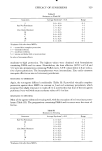
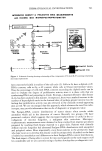
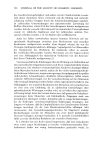
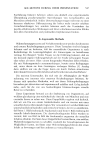
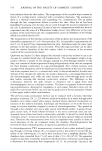
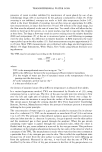
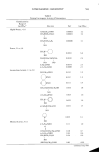
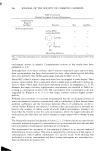
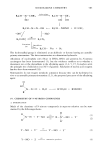
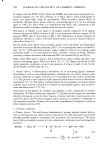
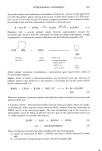
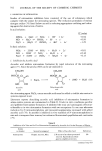
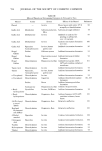
NITROSAMINE CHEMISTRY 597 Table V In Vitro Inhibition of Nitrosamine Synthesis by Sulfur Compounds Sunur Compound Amine System Effect of Sulfur Compound Reference Sodium Dimethylamine Model food systems Inhibits nitrosamine formation. 93 Bisulfite Ammonium 93 Sulfamate Sulfamic Acid 108 Cysteine Cysteine Glutathione Glutathione Dimethylamine, mor- Invitro pholine, piperazine Piperazine Aminophenazone Dimethylamine Piperazine Aminophenazone Dimethylamine Piperazine Methionine Dimethylamine Inhibits nitrosamine formation. Human gastric juice, Inhibits nitrosamine formation. in vitro In vitro Inhibits nitrosamine formation. 93 Human gastric juice, Inhibits nitrosamine formation. 108 in vitro In vitro Inhibits nitrosamine formation. 93 Human gastric juice, Inhibits nitrosamine formation. 91 in vivo In vitro Inhibits nitrosamine formation. 93 The thioIs cysteine and glutathione also inhibit nitrosamine formation. The thioether methionine is less effective. It is postulated that nitrite oxidizes methionine to the sulfoxide or sulfone and is in turn reduced to nitric oxide (93). ThioIs react with nitrite to form S-nitroso compounds (109). In the absence of nitrite preformed nitrosocysteine reacts with N-methylaniline, morpholine and pyrrolidine to form N-nitrosamines (105). In contrast catalysis of nitrosation by p-nitroso-0-cresol does not occur in the absence of nitrite. One would suggest transnitrosation of secon- dary amines by nitrosothiols, except that molecular oxygen appears to be necessary (105). 4. Miscellaneous Inhibitors The ammonium ion reacts with nitrite to form molecular nitrogen (107) by the follow- ing sequence: NH4 + • NHa + H + 2H + + NO2- • H2ONO + H2ONO + + NHa --- H20 + NHaNO + • N= + H + + H20 (24) Hydroxylamine reduces nitrite to nitrous oxide (107). NH2OH + HNO2 -- N20 + 2H20 (25) Vitamin A reacts with nitrite in acid solution but not under neutral conditions (108). Presumably oxidation of the vitamin involves its double bonds. Table VI summarizes literature indicating that urea, caffeine and ethanol are relatively ineffective inhibitors, but reduced nicotinamide adenine dinucleotide (NAD) is effec- tive. In alkaline solution even weak oxidants such as O2 convert nitrite to nitrate (110).

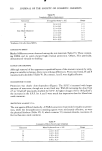
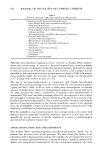
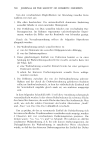
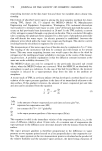
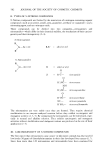
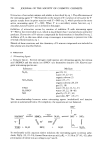
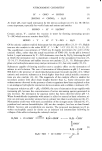
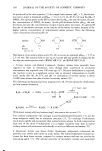
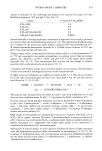
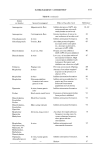
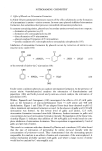
598 JOURNAL OF THE SOCIETY OF COSMETIC CHEMISTS Table VI Miscellaneous Nitrosamine Inhibitors Inhibitor Amine System Effect of Inhibitor Reference Urea Dimethylamine Urea Piperazine Morpholine Reduced NAD Dimethylamine Pyrrolidine Piperidine Caffeine Morpholine Ethanol In vitro In vitro In vitro Chlordiazepoxide In vitro Relatively ineffective in inhibiting. 93 Inhibitory effect decreases with time. 95 Inhibits nitrosamine formation. 93 Lungadenoma, Moderately inhibited. 78 Mice Slight inhibitory effect. 99 D. DESTRUCTION OF N-NITROSO COMPOUNDS N-Nitrosamines are stable compounds and are difficult to destroy once they are formed. They are stable in neutral and strong alkaline solutions in the absence of light (2, 5). Denitrosation (eq 2) occurs slowly in acid solution (1 to 5 M) and is catalysed by nucleophiles in the order of effectiveness Y = I- SC(NH2)2 SCN- Br- C1- (36, 111). To prevent reversal of the reaction a substance, which reacts irreversibly with YNO (eq 4) and more rapidly than amine, must be added. Relative efficiency of various nitrite traps in 5 M H2SO4 was found to be hydrazoic acid and hydra- zine sulfamic acid aniline hydroxylamine urea (112). Ease of denitrosation varies in the order R,R' = aryl R = aryl,R' = alkyl R,R' = alkyl (53,113). H R--N[ +--NO + I R' R Y- • N--H + Y--NO (2) / R' Y--NO + Z -- unreactiveproducts (4) Quantitative denitrosation of nitrosamines can also be achieved at room temperature using a solution of HBr (5 to 10%) in glacial acetic acid if water is excluded. Analysis of the nitrite released provides a measure of the original nitrosamine concentration (114). When exposed to ultraviolet light nitrosamines decompose either to aldehydes, nitrogen and nitrous oxide or quantitatively to amine and nitrous acid depending on the wavelength used. The reaction is fastest in acid and faster in neutral than basic solu- tions. Apparatus and conditions for the photochemical destruction of nitrosamines in solution in the presence ofa HNO• scavenger have been described (115, 116). Nitrosamines can be reduced by zinc in acetic acid, sodium amalgam, tin in hydro- chloric acid, lithium aluminum hydride and catalytic hydrogenation (4, 117). A reduc- tion procedure for destruction of nitrosamines in alkaline solution with aluminum has been published (118). The corresponding hydrazines are usually formed (eq 26), but other products can be produced depending on the reducing agent and experimental conditions (119). Many hydrazines are carcinogenic, but about 100 times less so than the corresponding nitrosamines (2).
Purchased for the exclusive use of nofirst nolast (unknown)
From: SCC Media Library & Resource Center (library.scconline.org)