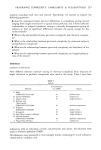
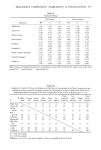
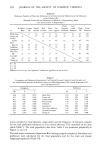
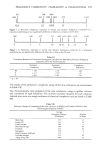
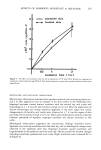
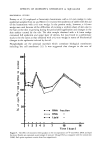
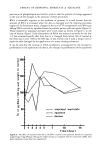
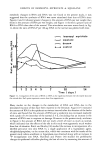
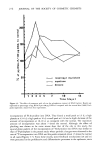
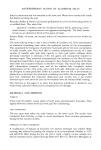
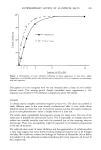
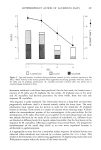
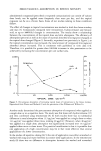
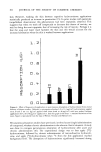
EFFECTS OF ISOPROPYL MYRISTATE & SQUALANE 271 200 150 ß ß / E o 50 ß _- RNA fraction ß ß DNA ,, ß = Lipid ,, m m ß ß I 4 5 7 10 14 Time (days) Figure 7. The effect of treatment with decane on the incorporations of 32p into RNA, DNA and lipid fractions. Results are expressed as percentage of cpm per 100 btg DNA as compared with the normal skin (100%). Each point represents a mean from four experiments. Prottey et al. (2) found that phospholipid metabolism in the epidermis of rats was stimulated in mildly irritated cases but diminished in severely irritated conditions when rats had been topically treated with soap solutions. They suggested that some systems required for the phospholipid synthesis were impaired by increased irritation. On the basis of their criteria, squalane and isopropyl myristate were judged to be mild irritants while decane was a severe one, results which were consistent with both macroscopic and histological observations. Mezei (11) described an increase in the biosynthetic rate of epidermal phospholipids by the application of polysorbate 85 or polyethylene ether 96 on rabbit skin and suggested that this increase was due to repair of the biological membrane which was damaged by the surfactant. Some periodic changes in the biosynthetic rate could be seen in his data, which were also found in the present study. Rohrschneider et al. (13) studied the changes in the metabolism of phospholipids in

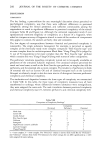
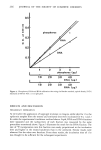
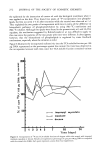
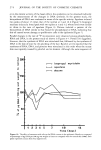
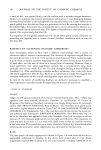
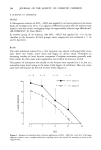
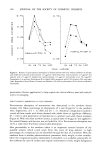
272 JOURNAL OF THE SOCIETY OF COSMETIC CHEMISTS the epidermis by the interaction of croton oil with the biological membrane when it was applied on the skin. They found two peaks of 32p incorporation into phospho- lipids, the first occurred 4-6 hr after treatment while the second was observed at 2 d. They explained the two peaks of incorporation with time in terms of the difference in biosynthetic pathways of phosphatidylcholine by using (Me-X4C) methionine and (Me-•4C) choline. Although two peaks were found in the present study at 3 and 10 d for squalane, the mechanism suggested by Rohrschneider et al. was difficult to apply to this case since the patterns of the two peaks with time were different. It does appear, however, that the biosynthesis of phospholipids is regulated by some feedback mechanisms, especially when the irritation is mild. Figure 8 illustrates the incorporated radioactivity into the TCA-soluble fraction per 100 /ag DNA represented as the percentage against the normal. No trend was observed in the incorporated amount with time, since the TCA-soluble fraction contained various 200 150 100 50 o o isopropyl o ,• squalane • • decane myristate ß ß ß ß I I I ß I 2 3 4 5 7 10 14 Time (days) Figure 8. Incorporation of •2p into TCA-soluble fractions of Angora rabbit skin treated with isopropyl myristate, squalane or decane. Results are expressed as percentage of cpm per 100/zg DNA as compared with the normal skin (100%). Each point represents a mean from four experiments.
Purchased for the exclusive use of nofirst nolast (unknown)
From: SCC Media Library & Resource Center (library.scconline.org)