298 JOURNAL OF THE SOCIETY OF COSMETIC CHEMISTS relevant to the clinical situation. This will include changes in topical concentration, a single daily topical dose versus daily divided doses, and the effect of chronic application of a topical compound. The final part of this paper will review a study involving topical application of a mixture (hydrocortisone and salicylic acid) and a study involving skin absorption in the newborn. METHODOLOGY Absorption was quantified on the basis of the percentage of radioactivity excreted in urine following application of a known amount of the labeled compound to the skin (1). Female rhesus monkeys (4 to 8 kg), trained for metabolic studies, were randomly selected from the colony. The only criteria for selection was that the animal was healthy and clear of any previously administered •4C-compound. Compound labeled with radioactive carbon (•4C) was applied to lightly clippered shaved skin. Previous experience with testosterone absorption showed that this light clipper shaving did not alter penetration in this animal (1). For topical application each dose contained approximately 5/•Ci of radioactivity. The area was not occluded and the application area was constant each study. Each monkey was placed in a metabolism chair for the first 24 hr of the study. The hands of the monkey were secured to the sides of the chair to avoid its wiping off the applied compound. The animals were not anesthetized during the study. Compound was applied to the skin in organic solvent or cream vehicle. Where an organic solvent was used, the solvent was quickly evaporated by gentle blowing. For the next 24 hr urine was collected in a container below the metabolism chair. Then the site of application was washed with soap and water. After the topical application period each monkey was returned to a metabolism cage to continue the urine collection. In the metabolism chair the site of application was totally separated with a barrier from the area of urine collection. This insured against any possibility of chemical falling off the skin and contaminating the urine. For each compound studied, an intravenous dose of the labeled compound was administered and urine collected. The percentage of dose excreted following intrave- nous administration was used to correct for excretion of radioactivity by other routes (feces, CO2) and for compound retained in the body (1). The above is a generalized summary of the procedures used. Individual studies contained some additional methods or adaptions to the general procedure. These changes are contained in the individual papers which are referenced. RESULTS AND DISCUSSION PERCUTANEOUS ABSORPTION IN THE RHESUS MONKEY COMPARED TO MAN The use of animal species which pharmacokinetically resemble man is most desirable in metabolic studies. In a previous comparative study Bartek, La Budde and Maibach (2) showed that the absorption of compounds differed between man and other species, with (for the few compounds examined) pig skin having the closest absorption to that of human skin. In our first comparative study between the rhesus monkey and man,

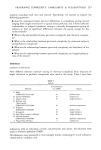
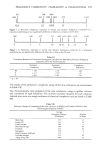
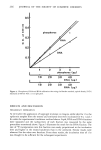
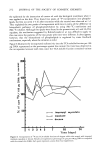
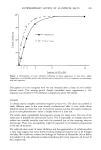
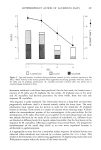
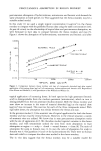
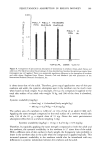
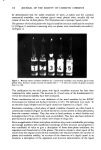
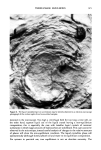
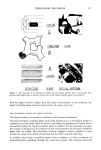
PERCUTANEOUS ABSORPTION IN RHESUS MONKEY 299 percutaneous absorption of hydrocortisone, testosterone and benzoic acid showed the same absorption in both species (1). This suggested that the rhesus monkey may be a suitable animal model. In this study (1) we used a single topical concentration (4 /zg/cm 2) in the rhesus monkey to compare with the published human data using the same concentration (3,4). As part of a study on the relationship of topical dose and percutaneous absorption, we were fortunate to have data to compare between the rhesus monkey and man (5). Figure 1 shows the absorption of hydrocortisone, testosterone and benzoic acid after •OOO 1(3 (3.3_ 0.03_ •ENZOIE REI] • /• TE•T•ST•NE • M•N • TOPIERL ]OSE UB/EH2 Figure 1. Comparison between rhesus monkey and man of compounds absorbed (/zg) after topical application of increasing doses (/zg/cm 2) of testosterone, hydrocortisone and benzoic acid. Reproduced from Wester and Maibach (5) with permission of the Williams & Wilkins Co. topical application of increasing doses. In both species the high penetrant (benzoic acid) is distinguishable from the medium penetrant (testosterone), which in turn is distinguishable from the low penetrant (hydrocortisone). Both the rhesus monkey and man show an increase in the mass of material absorbed (/zg) as the topical dose (/zg/cm 2) was increased. This was true for each of the three compounds tested. With equivalent doses, the absorption was similar between the rhesus and man. In the previous studies (1,5) the anatomic site of topical application for both the rhesus monkey and man was the ventral forearm. However, in the clinical situation a variety of anatomic sites are utilized. We know that in man percutaneous absorption varies with the site of application (6,7). We therefore studied regional variation in the rhesus monkey, and with testosterone ranked the sites from most absorption to least absorption as vagina scalp cheek = ventral forearm chest (8). The ratio of absorption for scalp to forearm was 2.3. In man the ratio of absorption for scalp to forearm was 3.7 for parathion (7) and 3.5 for hydrocortisone (6). There were no human data with which to compare the other sites studied in the rhesus monkey. The in vivo data suggest that the rhesus monkey may be a suitable model for
Purchased for the exclusive use of nofirst nolast (unknown)
From: SCC Media Library & Resource Center (library.scconline.org)