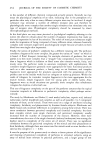
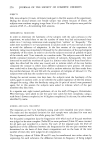
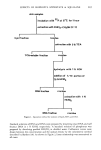
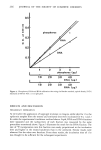
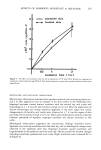
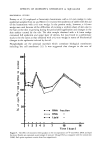
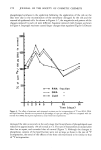
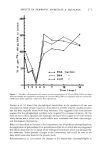
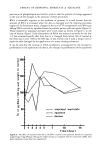
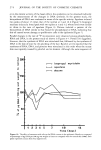
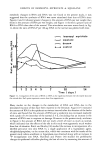
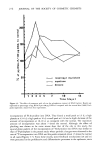
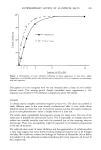
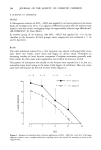
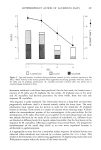
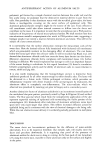
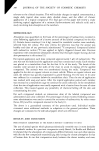
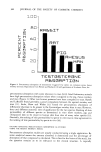
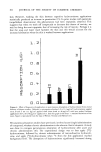
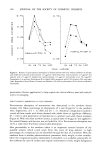
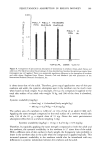
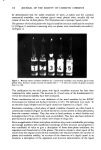
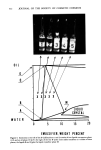
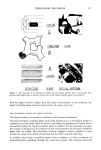
304 JOURNAL OF THE SOCIETY OF COSMETIC CHEMISTS [] [] F[]RMULSTI[]N 8 [] .BE I I F[]RMULRTIDN b I TIME (HF•URS) Figure 5. Kinetics of percutaneous absorption of hydrocortisone with and without addition of salicylic acid. Solid line indicates hydrocortisone 13.3 •g/cm2 dash-dotted line, hydrocortisone, 13.3 •g/cm 2 and salicylic acid, 13.3 •g/cm2 dashed line, hydrocortisone, 13.3 •g/cm 2 and salicylic acid, 133.3 •g/cm2 Formulation A is acetone. Formulation B is ethanol (60%), propylene glycol (5%), glycerin (5%), and water (30%). Reproduced from Wester, Noonan and Maibach (15) with the permission of the American Medical Association. penetration (chronic application) to help explain the clinical efficacy seen with salicylic acid is encouraging. PERCUTANEOUS ABSORPTION IN THE NEWBOl•N Percutaneous absorption of testosterone was determined in the newborn rhesus monkey (20). Mean percentage of absorptions of 4 and 40 /.tg/cm 2 in the newborn were, respectively, 22.5 _+ 2.2 (SD) and 6.8 _+ 2.1. Statistical comparisons (student's t-tests) of these results with those obtained with adults show no significant difference (P 0.05) in skin penetration of testosterone in newborn and adult rhesus monkeys (Figure 6). With one other newborn rhesus, a topical dose of 40/.tg/cm 2 was applied to the ventral forearm and the area was occluded for 24 hr. Percutaneous absorption was 14.7%, a value twice that from nonoccluded absorption. Skin permeability in the newborn infant is an important concern because of the possible toxicity which could result from this route of drug delivery. A high percentage of a compound can be absorbed through the skin of a newborn. With the newborn there is another pharmacokinetic parameter, body weight, to also consider. Once the compound (and/or metabolites) is absorbed, it is available systemically. In the newborn the ratio of surface area (square centimeters) to body weight (kilograms)

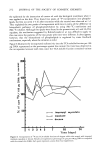
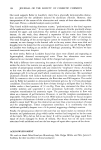
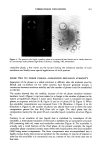
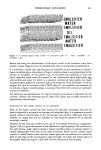
PERCUTANEOUS ABSORPTION IN RHESUS MONKEY 305 R•ULT R•DLT NEN•DRN •RN RHESDS RHESUS R•ULT R. M•N RF TBPZERL •BSE UG/Er Figure 6. Comparison of percutaneous absorption of testosterone in newborn rhesus, adult rhesus, and adult man. The black bars show the percentage of dose absorbed (and standard deviation) per topical dose (micrograms per cm 2) applied. There is no statistically significant difference in the absorption of newborn and adult rhesus. Reprinted from Wester, Noonan, Cole and Maibach (20) with permission of the International Pediatric Research Foundation, Inc. is three times that of the adult. Therefore, given equal application area of skin per newborn and adult, the systemic absorption seen in the newborn can be much more when based on body weight. As an example, if 0.1 g of a compound is applied to the total skin surface of an adult who weighs 70 kg, and 20% of the dose is absorbed, them: Systemic availability (mg/kg) = dose (rag) x % absorbed/body weight (kg) = 100 mg x 0.2/70 kg = 0.28 mg/kg The surface area of a newborn is 2,200 cm 2, or 13% of that of an adult (17,000 cm2). Applying the same strength compound to the total surface of a newborn would take only 13% of the 0.1 g, a topical dose of 13 mg. Given the same percutaneous absorption (20%), then in a newborn weighing 3.4 kg: Systemic availability (mg/kg) = 13 mg x 0.2/3.4 kg = 0.76 mg/kg Therefore, by topically applying the same strength compound to both the adult and the newborn, the systemic availability in the newborn is 2.7 times that of the adult. With a different ratio of skin surface to body weight, the therapeutic ratio probably is lower in the newborn than in the adult when the compound is applied topically. This increased systemic availability in the newborn would also be interrelated with any differences in systemic metabolism between the newborn and the adult.
Purchased for the exclusive use of nofirst nolast (unknown)
From: SCC Media Library & Resource Center (library.scconline.org)