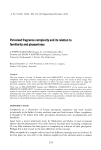
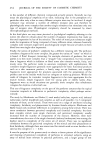
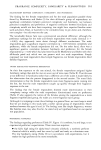
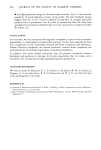
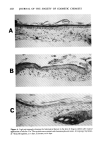
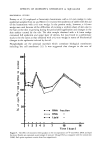
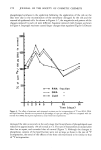
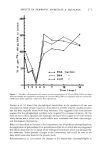
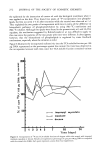
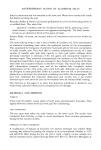
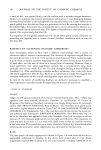
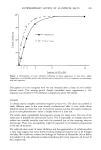
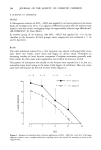
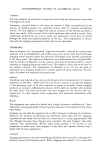
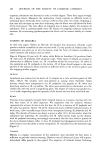
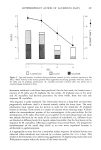
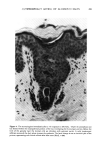
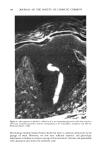
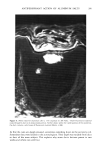
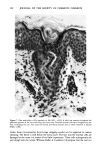
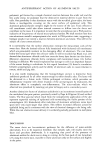
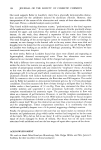
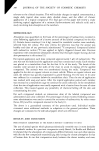
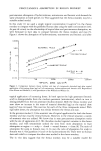
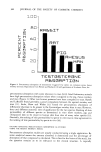
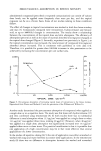
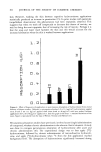
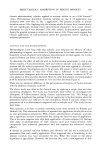
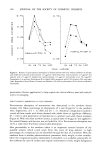
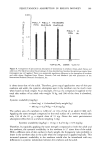
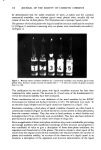
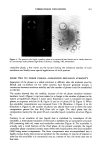
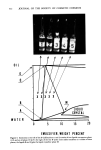
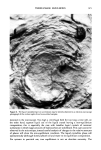
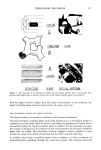
THREE-PHASE EMULSIONS 311 Figure 2. The presence of a liquid crystalline phase in a commercial hand lotion can be clearly observed in a microscope under polarized light (left). (Courtesy L. Rydhag, YKI, Stockholm). crystalline phase, a few words on the factors behing the enhanced stability of such emulsions and finally some special applications of such systems. FROM TWO TO THREE PHASESwENHANCED EMULSION STABILITY Separation of the phases in a stable emulsion is difficult after the methods used by Ekwall and co-workers (7) for other systems had become generally known, a connection between emulsion stability and the number of phases could be established in 1969 (8). The results showed that the stability increase of the oil phase emulsion between numbers 2 and 3 (Figure 3, top) was related to a change in the number of phases in the system at equilibrium (Figure 3, lower part). Emulsions 1 and 2 contained two liquid phases, an aqueous solution (A-B, Figure 3) and an oil phase (O-Q, Figure 3). When th.e-emulsifier concentration was increased from 2.5% (Emulsion 2, Figure 3) to 4% (Emulsion 3, Figure 3), the number of phases was altered from two to three the total composition passed the line B-Q from left to fight. The third phase had the composition marked by the point M and a lameliar liquid crystalline structure (Figure 4). Contrary to an emulsion of two liquids that is stabilized by monolayers of the emulsifier, a three-phase emulsion of this kind is stabilized by an association structure (M) containing both oil, water and emulsifier molecules (Figure 4). The emulsifier is actually only a small fraction of the third phase. In the present example the liquid crystalline phase contained mostly water (85%) with hydrocarbon (5%) and emulsifier (10%) being minor components. The three components were accommodated into a highly viscous body that served as stabilizer for the emulsion. It may be of interest to note that this emulsifier is a commercial one as a matter of fact, the most used one at that time.

312 JOURNAL OF THE SOCIETY OF COSMETIC CHEMISTS Ol L X XX X X B M A WATE• IQUID CRYSTAL 0 5 10 15 20 EMULSIFIER, WEIGHT PERCENT Figure 3. Emulsions to the left of line B-Q (Emulsions 1 and 2) consist of two liquids: an aqueous phase, A-B, and an oil phase, O-Q. To the right of the line B-Q the more stable emulsions 3-5 consist of three phases, the liquids B and Q plus the liquid crystalline phase M.
Purchased for the exclusive use of nofirst nolast (unknown)
From: SCC Media Library & Resource Center (library.scconline.org)