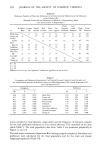
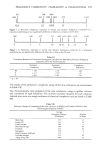
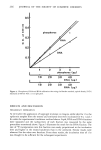
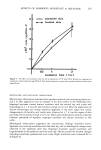
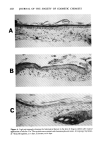
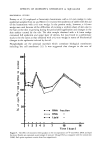
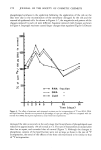
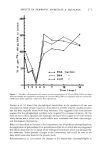
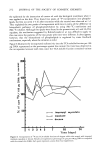
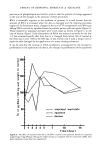
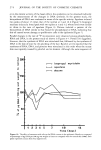
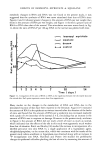
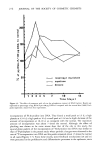
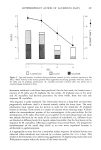
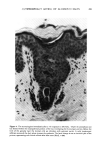
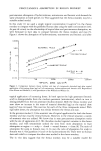
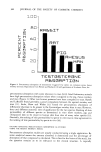
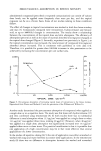
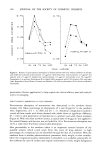
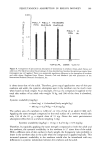
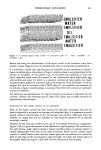
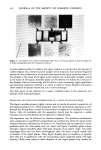
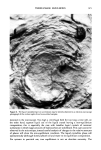
EFFECTS OF ISOPROPYL MYRISTATE & SQUALANE 277 several investigations have suggested the existence of control mechanisms and substances like chalones (20, 22), cyclic nucleotides (22, 23) and others (20, 24). Figures 4-12 indicated that the effects of squalane, isopropyl myristate and decane on rabbit skin increased in this order, but the irritation potentials of these oils were found to be significantly weak as compared with those of carcinogens (16, 25) or physical damages like plucking (19) and abrasion (17). In terms of the ratio of RNA to DNA, the oils in the present study increased the ratio in rabbit skin to twice the normal at best, while methylcholanthrene (25) or physical abrasion (17) induced an increase of 3-4 times in the epidermis of mice. The magnitude of the effect of vitamin A acid, when topically applied on the ear skin of guinea pig daily for 6 d (23), was found to be similar to that of these oils in terms of the stimulation of DNA synthesis. Skin is a metabolically vigorous tissue, with continuing multiplication of cells in the basal layer and exfoliation of cornified cells in the stratum comeurn. It possesses a great ability for healing the damaged epidermis by a highly active regeneration process. When chemical or physical treatments are applied to the skin, therefore, significant changes in proliferative activity will occur biochemically even though irritation potentials are weak as indicated by squalane. This finding indicates that care should be given to selection of cosmetic ingredients, even though they show low irritation potentials macroscopically or histologically, since cosmetics are applied repeatedly on the skin for many years. CONCLUSION A very sensitive method was employed to study the changes in the epidermis caused by cosmetic oils. In our previous paper (5), it was found that histological changes in the skin induced by a chemical irritant after percutaneous absorption bear no relation to the fate of the irritant in the skin. In the present study, more subtle changes in epidermis could be detected blocheroically, especially for squalane which caused changes in 32p incorporation periodically even after histological changes disappeared. The magnitude of the biochemical effects for the three oils in this study was found to be weak in comparison with other chemical and physical irritations and to increase in the order of squalane, isopropyl myristate and decane, which was consistent with the results of macroscopic and histological observations. Some feedback mechanisms were suggested to control the processes of repairing the damaged skin. REFERENCES (1) K. Aso and T. Okazaki, Effect of 0.1% vitamin A acid ointment on the metabolism of epidermis,Jap. J. Dermatol., 82, 72-82 (1972). (2) C. Prottey, P. J. Hartop and T. F. M. Ferguson, The effect of soap upon certain aspects of skin biochemistry,J. Soc. Cosmet. Chem., 24, 473-492 (1973). (3) M. Mezei, Effect of polysorbate 85 on human skin,J. Invest. DermatoL, 64, 165-168 (1975). (4) S.J. Stegman, K. Fukuyama and W. L. Epstein, Inhibition of the in vivo effects of concanavalin-A on mammalian epidermis by c•-methyl-D-glucopyranoside,J. Invest. Dermatol., 66, 17-21 (1976). (5) M. Suzuki, K. Asaba, H. Komatsu and M. Mochizuka, Autoradiographic study on percutaneous absorption of several oils useful for cosmetics,J. Soc. Cosmet. Chem., 29, 265-282 (1978). (6) K. Asaba, H. Komatsu and M. Suzuki, unpublished data. (7) M. Mezei and G. White, Dermatitic effect of nonionic surfactants III: Incorporation of 32p into

278 JOURNAL OF THE SOCIETY OF COSMETIC CHEMISTS phospholipids and acid soluble material of normal and surfactant-treated rabbit skin in vitro, J. Pharm. Sci., 58, 1209-1213 (1969). (8) R.J. Santen and B. W. Agranoff, Studies on the estimation of deoxyribonucleic acid and ribonucleic acid in rat brain, Blochim. Biophys. Acta, 72, 251-262 (1963). (9) J. C. Turner, Triton X-100 scintillant for carbon-14-1abeled materials, Int. J. Applied Rad. Isotopes, 19, 557-563 (1968). (10) G. R. Bartlett, Phosphorus assay in column chromatography,J. Biol. Chem., 234, 466-468 (1959). (11) M. Mezei, Dermatitic effect of nonionic surfactants V: The effect of nonionic surfactants on rabbit skin as evaluated by radioactive tracer techniques in vivo,J. Invest. Dermatol., 54, 510-517 (1970). (12) M. S. Bretscher, Membrane structure: some general principles, Science, 181,622-629 (1973). (13) L. R. Rohrschneider, D. H. O'Brien and R. K. Boutwell, The stimulation of phospholipid metabolism in mouse skin following phorbol ester treatment, Biochim. Biophys. Acta, 280, 57-70 (1972). (14) G. Stein and R. Baserga, Nuclear proteins and the cell cycle, Adv. Cancer Res., 15,287-330 (1972). (15) C. S. Potten, Tritiated thymidine incorporation into hair follicle matrix and epidermal basal cells after stimulation, J. Invest. Dermatol., 56, 311-317 (1971). (16) W. M. Baird,J. A. Sedgwick and R. K. Boutwell, Effects of phorbol and four diesters of phorbol on the incorporation of tritiated precursors into DNA, RNA and protein in mouse epidermis, Cancer Res., 31, 1434-1439 (1971). (17) T. S. Argyris, Unbalanced RNA accumulation in regenerating mouse epidermis following abrasion, J. Invest. Dermatol., 67, 718-722 (1976). (18) A. N. Raick and K. Burdzy, Ultrastructural and biochemical changes induced by a hyperplastic agent, ethylphenylpropiolate, Cancer Res., 33, 2221-2230 (1973). (19) E. Hamilton and C. S. Potten, Influence of hair plucking on the turnover time of the epidermal basal layer, Cell Tissue Kinet., 5, 505-517 (1972). (20) W. S. Bullough, The control of tissue growth, in "The biological basis of medicine," E. E. Bitter and N. Bitter, Eds., Academic Press: London, 1968 Vol. 9, Chapter 1, pp 311-333. (21) S. K. Olvey and C.J. McDonald, The in vivo cell cycle of adult mammalian epidermis: a preliminary study,J. Invest. Dermatol., 58, 175-179 (1972). (22) K. Elgjio, Epidermal chalone and cyclic AMP: an in vivo study,J. Invest. Dermatol., 64, 14-18 (1975). (23) K. Aso, I. Rabinowitz and E. M. Farber, The role of prostaglandin E, cyclic AMP and cyclic GMP in the proliferation of guinea pig ear skin stimulated by topical application of vitamin A acid,J. Invest. Dermatol., 67, 231-234 (1976). (24) P. D. Mier, J. j. M. A. van den Hurk, F. W. Bauer, R. M. de Grood and H. Roelfzema, Mitotic activity and acid hydrolase level in human epidermis following a single dose of ultraviolet radiation, Brit. J. Dermatol., 96, 163-165 (1977). (25) T. S. Argyris, C. Nevar, S. Mueller, L. deYoung and G. Gorden, Ribosome fractions from normal and methylcholanthrene-treated mouse epidermis,J. Invest. Dermatol., 63, 262-267 (1974).
Purchased for the exclusive use of nofirst nolast (unknown)
From: SCC Media Library & Resource Center (library.scconline.org)