j. Soc. Cosmet. Chem., 30, 309-319 (September/October 1979) Three-phase emulsions STIG FRIBERG Chemistry Department, University of Missouri, Rolla, MO 65401. Received August 1, 1978. Synopsis An emulsion is traditionally considered to consist of TIVO LIQUIDS of which one is dispersed in the other in small droplets. To stabilize these droplets an emulsifier, a surfactant, is added that is believed to form a MONOMOLECULAR LAYER at the interface. However, in many stable and commercially important emulsions the emulsifier, water and oil molecules form regular structures of MULTIMOLECULAR LAYERS. These layers actually are a distinct PHASE, that can exist independently after separation from the emulsion by centrifugation. The structure of this separate phase may be determined by X-ray diffraction, optical and electron microscopy. This article discusses the features and the structure of these three-phase emulsions and describes the means of their identification. Finally new possibilities for the practical use of these kind of emulsions are indicated including enhanced solubility of compounds otherwise only sparingly soluble in hydrocarbon or water and slow release of active substances from the emulsion droplets. INTRODUCTION Emulsions have traditionally been treated as two-phase systems of one liquid dispersed in another liquid, the interface being stabilized by a monomolecular layer of surfactant molecules. The properties of such emulsions have been well described Becher's book (1) being the classical treatment later bibliographies (2) have added detailed knowl- edge of specific parts of the field. However, many properties such as sudden changes of stability and viscosity of emulsion simply could not be fully explained by the two-phase concept as pointed out by Sherman as early as 1964 (3). This led to several studies on such multi-phase emulsions during the late 1960's, and attempts were made to examine the number of phases and their structure in practical emulsion systems (4-6). The methods to separate highly viscous phases from an emulsion had not been evaluated by that time and the problems with establishing equilibrium between the separated phases not fully realized. As a result the phase diagrams of these early investigations do probably not reflect equilibrium conditions. The problems of equilibria in soap-water systems was extensively studied by Ekwall and co-workers their painstaking efforts to establish equilibrium between different liquid crystalline phases have been described in detail (7). The methods by Ekwall were successfully applied to emulsions and in 1969 (8) it could 3O9

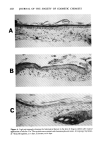
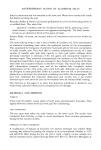
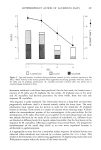
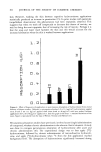
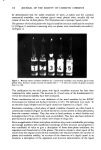
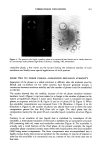
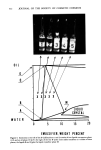
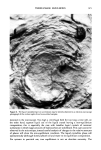
310 JOURNAL OF THE SOCIETY OF COSMETIC CHEMISTS be demonstrated that the stable emulsions of water, p-xylene and the common commercial emulsifier, octa ethylene glycol nonyl phenol ether, actually did not consist of two, but of three phases. The third phase was a lyotropic liquid crystal. The presence of this third phase with liquid crystalline structure stabilized the emulsion (3-5) (Figure 1) emulsions containing only two phases were considerably less stable (1, 2,) (Figure 1). 3 Figure 1. Water/p-xylene emulsions stabilized by a commercial emulsifier, octa ethylene glycol nonyl phenol ether, showed a sudden increase of stability (Em 2 ---• 3) when the number of phases increased from 2 to 3 (8). This stabilization by the third phase with liquid crystalline structure has later been confirmed for other systems. The structure (9-11) and some of the fundamentals (12, 13) for the enhanced stability have been evaluated. These contributions led to a new definition of the word emulsion by the IUPAC Commission for Colloid and Surface Chemistry in 1972. The definition now reads, "In an emulsion liquid droplets and/or liquid crystals are dispersed in a liquid." (14). Emulsions containing a third phase of liquid crystalline character are often found in commercial cosmetics (Figure 2), which has led to a recent interest in these phenomena from the cosmetic industry. They also exist in food products in which lecithin and monoglycerides (15) are commonly used as emulsifiers. They have also been utilized in pharmaceutical preparations to obtain slow release of drugs (16). Since an application of these multi-phase emulsions may cause considerable processing and storage problems with insufficient knowledge of their structure and properties it was considered of value to give a description of these three-phase emulsions, the separation and characteristics of the phases. This article contains a short report of the results from the original article (8) that established the relation between the number of phases and emulsion stability, an account of the detection of a liquid crystal in an emulsion, a description of the separation and structure determination of the liquid
Purchased for the exclusive use of nofirst nolast (unknown)
From: SCC Media Library & Resource Center (library.scconline.org)