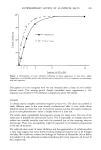
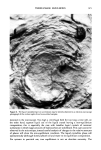
ANTIPERSPIRANT ACTION OF ALUMINUM SALTS 281 leaky by aluminum and was resorbed at the same rate. Water never reached the nozzle but leaked out along the way! Recently, Shelley & Hurley (13) seemed predisposed to revive the horny plug theory in a modified form. They stated that "... aluminum combines with the intraductal keratin fibrils, producing a func- tional closure, a supercontraction not apparent histologically. The fixed keratin remains as an obstructive block to free egress of sweat .... " Keratin fibrils, of course, are encased within cell membranes and not free within the ducts. The most edifying work to date is that of Reller & Luedders (14). They demonstrated an aluminum-containing mass within the epidermal portion of the acrosyringium. They postulated the formation of polymeric hydroxide gels by the slow neutralization of acidic metallic salts. They were able to correlate antiperspirant activity of a large number of metallic salts with their capacity to form gels within millipore filters previously immersed in solutions of the test agents and subsequently exposed to ammonia vapor. They measured manometrically the resistance to the flow of water through the treated filters. A gel was presumed to have formed in the pores of the filter when there was increased resistance to the flow of water. They found that salts whose pK's (dissociation constants) were well on the alkaline side, completely lacked antiperspirant activity. Only acidic salts could form gels. Although our observations are divergent in some particulars, Relier & Luedders were the first to demonstrate an obstruction in the form of an aluminum-containing cast within the acrosyringium. We have fully confirmed this important observation and wonder how it has eluded detection up to now, since the cast can be visualized even by ordinary H&E staining. Our intention in this paper is to show that aluminum anhidrosis is distinctive and results from a physical obstruction accompanied by cell damage. MATERIALS AND METHODS SUBJECTS These were 60 healthy, young adults of both sexes, predominantly Caucasian. They signed informed consent forms and were paid for volunteering. TEST CONDITIONS The test areas were either the volar forearm or the lower back. The studies were conducted from October to May to avoid interference from excessive perspiration during the hot summer months. APPRAISAL OF SWEAT INHIBITION A modification of Sarkany & Gaylard's (15) imprint technique was utilized. Brisk sweating was induced by putting the subjects in an environmental chamber at 55øC and 30% R.H. After drying the test site with a cloth, a highly viscous mixture of a silicone monomer and a catalyst (Syringe Elasticon ©, Kerr Co., Romulus, Michigan), at

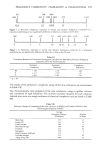
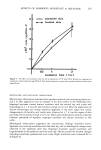
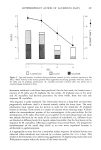
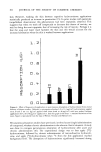
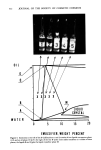
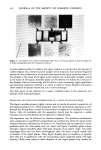
282 JOURNAL OF THE SOCIETY OF COSMETIC CHEMISTS a ratio of 40:1, was spread thinly over the surface with a wooden tongue depressor. Under our conditions the mixture polymerizes within about 5 min. Emerging droplets of sweat form bubbles in the hydrophobic silicone after which the rubber sheet can be gently pulled from the skin and kept as a permanent record. By viewing the imprints in transmitted light, the proportion of nonpatent ducts can be estimated in relation to a nearby control site of untreated skin. The degree of hypohidrosis was assessed to the nearest 25%, as previously described (8). A comparison of this global assessment with actual sweat gland counts, obtained by projecting the imprints onto a screen, showed excellent correlation with an error of less than 10%. KINETICS OF ALUMINUM CHLORIDE ANHIDROSIS Each investigator seems to have used a different methodology with a variety of aluminum salts at various concentrations. The duration of exposure ranged from 10 min (16), 30 min (14), 3-24 hr (9,17,18), and up to several days (6). These variations make it quite futile to discern a pattern regarding the time of onset of anhidrosis, the period of peak effect and the rate of decay to a normal level of sweating. However, there is good agreement that sweat suppression persists for a comparatively long time, generally two to four weeks (6,17,19). The only divergent finding is that of Reller & Luedders (14). After establishing complete axillary anhidrosis, they could still show 30% sweat suppression after 20 days. Based on a mathematical model they suggest that complete restoration to the normal sweating state might take up to 78 days! In view of the welter of conflicting findings we deemed it necessary to establish a more rigorously controlled model for appraising the kinetics of anhidrosis. 1. ONSET OF ANHIDROSIS Method 200/21 of a 20% aqueous solution of aluminum chloride hexahydrate, A1CI 3 ß 6H20 , was pipetted into wide-rimmed aluminum chambers [a modification of Frosch & Kligman's (20) Duhring Chamber] containing two snugly fitting layers of nonwoven cotton cloth (Webril ©, KENDALL, Boston, Mass.). The chambers were glued to the skin with a highly adherent adhesive (Duro-Tak © 30-1289, NATIONAL STARCH & CHEMICAL CO., Bridgewater, N.J.). The chambers were further secured by nonocclu- sive adhesive tape (Dermicel ©, JOHNSON & JOHNSON, New Brunswick, N.J.). A set of six chambers was applied to both volar forearms of each of six subjects with an interval of 24 hr between applications on the right and left arms. The exposures on each arm were for 15 min, 1, 2, 3, 6, and 24 hr, layed down so that all could be removed at the same time. The treated sites were water-rinsed and blotted dry. Immediately after removing the second set, sweat suppression was estimated by thermal stress. Results The time pattern of sweat suppression is shown in Figure 1. It took about 60 min for an appreciable anhidrosis to develop. A few ducts were closed after 15 min. Sweat suppression reached 80% in about 6 hr and was invariably complete (100%) by 24 hr.
Purchased for the exclusive use of nofirst nolast (unknown)
From: SCC Media Library & Resource Center (library.scconline.org)