FRAGRANCE COMPLEXITY, FAMILIARITY, AND PLEASANTNESS 91

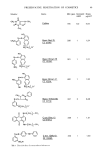
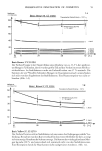
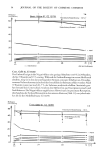
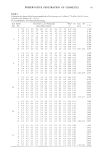
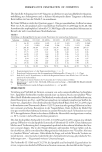
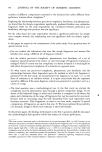
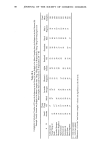
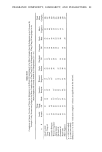
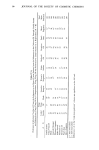
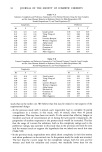
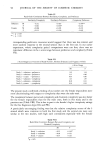
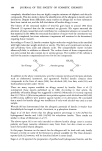
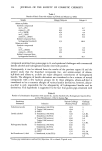
92 JOURNAL OF THE SOCIETY OF COSMETIC CHEMISTS Table V A Solutions: Complexity and Preference, Expressed as Unit Normal Deviates Using the Least Complex and the Least Pleasant Stimulus as Reference Points for Male Respondents (M), Female Respondents (F), and Total Population (T). Complexity Preference M F T M F T 0.19 0.31 0.25 Linalyl acetate 0.38 0.18 0.18 0.22 0.41 0.31 Ylang Ylang oil 0.19 0.00 0.00 0.04 0.11 0.07 Musk 1.12 0.85 0.87 0.16 0.11 0.13 Lavender Bouquet 0.38 0.32 0.26 0.09 0.38 0.24 Women's fragrance 0.81 0.70 0.65 0.00 0.00 0.00 Alpha Ionone 0.49 0.32 0.81 0.20 0.25 0.22 Patchouli oil 0.00 0.36 0.10 0.21 0.39 0.30 Geranium oil 0.35 0.36 0.26 0.16 0.01 0.06 Peach base 0.61 0.33 0.37 0.17 0.41 0.29 Men's fragrance 0.78 0.96 0.77 Table V B Creams: Complexity and Preference, Expressed as Unit Normal Deviates Using the Least Complex and the Least Pleasant Stimulus as Reference Points for Male Respondents (M), Female Respondents (F), and Total Population (T). Complexity Preference M F T M F T 0.13 0.18 0.15 Linalyl acetate 0.19 0.02 0.11 0.36 0.45 0.40 Ylang Ylang oil 0.20 0.15 0.18 0.04 0.07 0.05 Musk 0.44 0.57 0.50 0.00 0.00 0.00 Lavender Bouquet 0.39 0.59 0.49 0.27 0.40 0.33 Women's fragrance 0.65 0.96 0.81 0.25 0.24 0.24 Alpha Ionone 0.02 0.09 0.05 0.20 0.35 0.28 Patchouli oil 0.22 0.00 0.11 0.36 0.18 0.27 Geranium oil 0.00 0.21 0.10 0.22 0.34 0.28 Peach base 0.01 0.09 0.05 0.30 0.34 0.32 Men's fragrance 0.51 0.57 0.54 study than in the earlier one. We believe that this may be related to two aspects of the experimental design: --In the previous study with 9 stimuli, each respondent had to complete 36 paired comparisons in a session in this study, with 10 stimuli, there were 45 paired comparisons. This may have been too much. To the extent that olfactory fatigue or boredom and lack of concentration set in during the later paired comparisons, the proportion of random responses in the present study would be increased. The fact that the range of z-scores for solutions, both in the complexity ratings and in the preference ratings, was narrower in this study than in the previous one both for men and for women tends to support the hypothesis that we asked too much this time (Table VII). --In the previous study, respondents were asked about complexity in their first session and about preference in the second one. In the present study the order was reversed. The fact that the z-score range for the complexity ratings, both for men and for women and both for solutions and creams, was markedly lower than for the
Purchased for the exclusive use of nofirst nolast (unknown)
From: SCC Media Library & Resource Center (library.scconline.org)