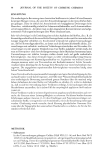
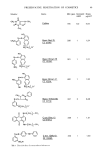
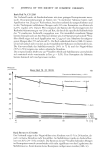
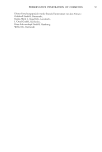
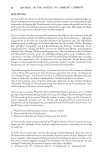
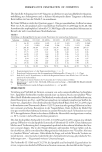
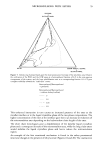
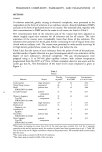
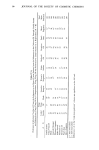
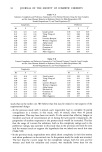
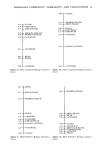
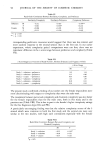
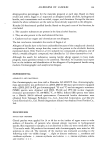
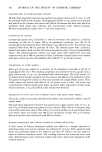
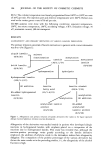
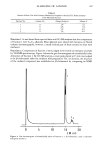
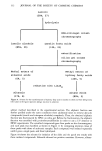
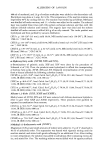
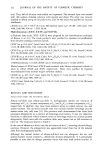
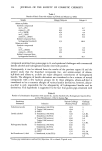
106 JOURNAL OF THE SOCIETY OF COSMETIC CHEMISTS Table I Results of Patch Test with Fractions Obtained by Florisil Column Chromatography from Commercial Hydrogenated Lanolin Sample Content (%) Allergic/Subjects Allergic % Benzene fraction 77 0/9 0.0 Methanol fraction 23 9/9 100.0 preparative TLC on alumina. Chromatograms and patch test results of each fraction are shown in Figure 3 and Table II, respectively. As shown in Table II, all fractions except fraction 1 elicited strong allergic reactions in 6-7 patients, suggesting that the allergens of hydrogenated lanolin are not a single component but a mixture of various components. IDENTIFICATION OF THE COMPONENTS OF EACH ALLERGENIC FRACTION WITH GC-MS Because the components of each fraction mentioned above were relatively polar and non-volatile compounds, derivatization to volatile compounds was required for GC-MS analyses. In mass spectrometry, trimethylsilyl ether derivatives of alcohols and polyols yield parent ion peaks, and their fragmentations have been studied in detail (13). Hence, all GC-MS analyses were done after conversion to trimethylsilyl ethers. Solvent front o 0 o o 1 2 3 4 i Figure 3. Thin layer chromatograms of the methanol fraction in Figure 2 chromatographed by preparative alumina TLC. Adsorbent: alumina, Developer: chloroform-ether (8/2).

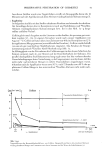
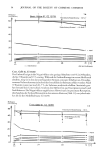
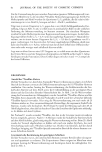
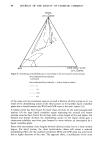
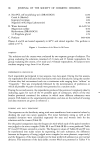
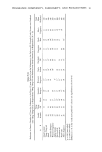
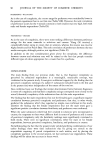
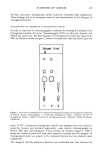
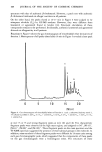
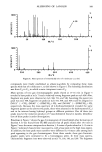
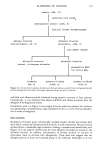
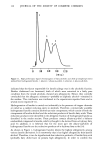
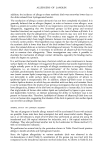
ALLERGENS OF LANOLIN 107 Table II Results of Patch Test with Fractions Obtained by Preparative Alumina TLC Refractionation of the Methanol Fraction Fraction No. Content (%) Allergic/Subjects Allergic 1 15 1/8 12.5 2 51 6/8 75.0 3 21 7/8 87.5 4 12 7/8 87.5 Fraction 1. It was found from spectral data and GC-MS analyses that the components of fraction 1 were C10-C33 alkanols. Most alkanols were eluted with benzene on Florisil column chromatography however, a small residual part of these seemed to elute with methanol. Fraction 2. Components of fraction 2 were judged to be sterols or triterpene alcohols by •H-NMR spectroscopy. Figure 4 shows the gas chromatogram of trimethylsilyl ether derivatives of fraction 2. By GC-MS analysis, a main peak eluted at 15 rain was judged to be/•-cholestanol. After the isolation with preparative TLC on alumina, the structure of the isolated compound was established as/•-cholestanol by comparing its NMR 2 3 I I I II 0 5 10 15 20 (Min) Figure 4. Gas chromatogram of trimethylsilyl ethers of fraction 2. 1. fi-cholestanol, 2 and 3. unknown (triterpene alcohol ?)
Purchased for the exclusive use of nofirst nolast (unknown)
From: SCC Media Library & Resource Center (library.scconline.org)