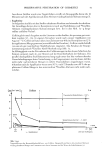
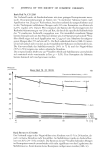
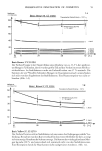
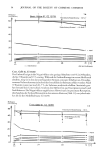
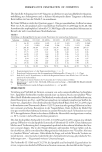
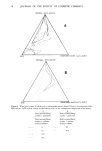
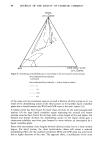
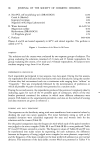
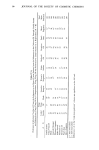
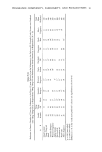
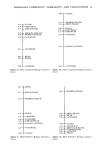
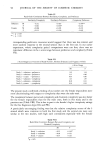
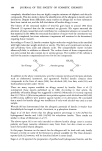
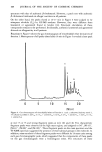
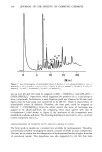
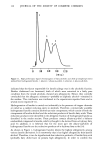
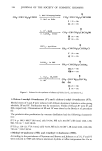
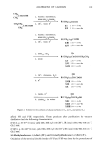
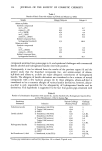
114 .JOURNAL OF THE SOCIETY OF COSMETIC CHEMISTS 2 4 ' ' 6'0 ' ' 0 3O 9O 120 (Min) Figure 11. High performance liquid chromatogram of fatty alcohols and diols (p-nitrophenyl esters) isolated from hydrogenated lanolin. 1. alkanol, 2. alkane-c•,w-diols, 3. unknown, 4. alkane-c•,fi-diols. indicated that the factor responsible for lanolin allergy was in the alcoholic fraction. Neither cholesterol nor lanosterol, both of which were extracted in a fairly pure condition from the mixed alcohols, showed any allergenicity. Hence, they correctly concluded that the allergenic substance--probably an aliphatic alcohol--remained in the residue. This conclusion was confirmed in the experiments reported here and in several recent reports (9--11). Hydrogenation of lanolin is carried out industrially in the presence of copper chromite or nickel as a catalyst reducing esters to alcohols. Therefore, commercially available hydrogenated lanolin contains alcohols as main components, which consist of both the components of lanolin alcohol and the reduction products of lanolin fatty acids. These reduction products were identified in the allergenic fraction of hydrogenated lanolin as described in the results section. These products contain alkane-c•,w-diol a hitherto unidentified compound in lanolin, which is thought to be derived from w-hydroxy fatty acid. In addition, it is believed that for the most part the alkane-c•,fi-diols of hydrogenated lanolin are the reduction products of c•-hydroxy fatty acids (14). As shown in Figure 1, hydrogenated lanolin shows the highest allergenicity among various lanolin derivatives. It is noteworthy that it has higher allergenicity than lanolin alcohol. Therefore, it can be hypothesized that reduction products of lanolin fatty acid (probably fatty diols) have to possess high allergenicity. In order to confirm this

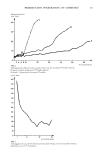
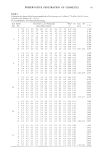
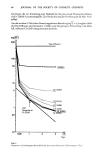
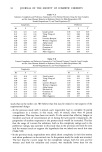
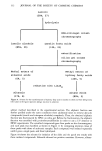
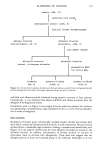
ALLERGENS OF LANOLIN 115 hypothesis, lanolin fatty acid was separated into fatty acid and hydroxy fatty acid, and reduced to fatty alcohols and fatty diols respectively. Reduction of hydroxy fatty acids to fatty diols results in surprisingly high allergenicity (Figure 9). These results led us to isolate alkane-c•,/•-diols and alkane-c•,c0-diols from hydrogenated lanolin. Positive patch test results with these isolated diols (Figure 10) clearly indicate that they are the major allergenic components of hydrogenated lanolin. Because the presence of the alkane-c•,c0-diol is unique to hydrogenated lanolin, it may be why the allergenicity of hydrogenated lanolin is higher than that of lanolin alcohol. Sugai et al. (9) suspected hydrogenation catalysts, such as nickel, copper, and chromium, as the allergens of hydrogenated lanolin. Although hydrogenation of lanolin was carried out with lithium aluminum hydride in the present study, the allergenicity was comparable to commercially prepared hydrogenated lanolin. These results suggest that the hydrogenation catalyst is not an allergen, as already indicated by Kozuka et al. (10). Since it is well known that alkane-c•,/•-diol is present in lanolin, it is believed that the diol is a common allergen among various lanolin derivatives. However, only the free diol in lanolin derivatives seems likely to cause allergic reactions. This hypothesis explains the fact that lanolin and its ester derivatives possess lower allergenicity than lanolin alcohol, and that conversion of lanolin alcohol to acetate or ethoxylate causes a remarkable decrease in the allergenicity. In contrast to the c•,/•-diol, alkane-c•,c0-diol is an allergen only in hydrogenated lanolin and its derivatives. However, a remarkable decrease in the allergenicity of hydrogenated lanolin is observed by conversion of hydrogenated lanolin to its ethoxylate. This suggests that only the free form of alkane-cLc0-diol possesses allergenicity. Truter et al. (11) demonstrated that the causative substance of lanolin allergenicity was a hitherto unidentified alcohol which was isolated as a glassy solid. Subsequently, another weakly allergenic compound was isolated in pure crystalline form it is 7,11-dioxo-lanosta-8-en-3-ol. Kozuka et aL (10) indicated that the allergens are also present in the isocholesterol fraction. In the present study, alicyclic compounds in the allergenic fraction were not thoroughly investigated. However, steroIs and triterpene alcohols are found in the allergenic fraction of hydrogenated lanolin. A main component of alicyclic compounds in the allergenic fraction is fi•-cholestanol, which showed, however, negative reactions in all patients. Therefore, other components, hydroxy steroIs and triterpene alcohols (except lanosterol and agnosterol), might be the allergens of hydrogenated lanolin. Incidentally, these hydroxy steroIs seem to be formed during hydrogenation, since these compounds have been unidentified in lanolin. The allergens of hydrogenated lanolin are isolated and identified however, these diols are a mixture of homologs and have three isomeric series. Hence, it seems desirable to synthesize these diols and to investigate the allergenicity of each isomeric series. This will be described elsewhere (17). REFERENCES (1) R. F. Kirk and D. F. Othmer, Encyclopedia of Chemical Technology (Interscience Encyclopedia Inc., New York, 1956), 15, p. 130.
Purchased for the exclusive use of nofirst nolast (unknown)
From: SCC Media Library & Resource Center (library.scconline.org)