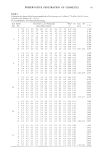
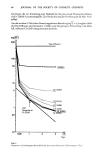
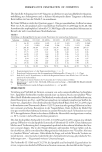
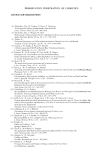
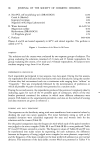
ALLERGENS OF LANOLIN 125 iso-hexadecane-l,2-diol show positive reactions to epidermal challenge with hydrogen- ated lanolin and lanolin alcohol. REFERENCES (1) K. Wereide, Contact allergy to wool-fat ("lanolin"), Acta derm.-venereol., 45, 15-18 (1965). (2) M. A. Ramirez and J.J. Eller, The patch test in contact dermatitis,J. Allergy, 1,489-495 (1929). (3) J. Everall and E. V. Truter, Cutaneous hypersensitivity to lanolin: investigation of one case, J. Invest. Derre., 22, 493-496 (1954) E. V. Truter, 1Vool 1Vax (Cleaver-Hume Press Ltd., London, 1956), pp 31-64. (4) S. Takano, M. Yamanaka, K. Okamoto, and F. Saito, Allergens of lanolin I, isolation and identification of the allergens of hydrogenated lanolin,J. Soc. Cosmet. Chem., in press. (5) P. E. Pfeifer and L. S. Silbert, o•-Anions of carboxylic acids. I: effect of hexamethylphosphoramide on metalation and alkylation, J. Org. Chem., 35, 262-264 (1970) P. E. Pfeifer, L. S. Silbert, and J. M. Chirinko, o•-Anions of carboxylic acids. II: the formation and alkylation of o•-metalated aliphtic acids, Ibid., 37, 451-458 (1972). (6) F. Brody and M. T. Bogert, The synthesis of a pyridine analog of hydnocapric acid and of a lower homolog,J. Amer. Chem. Sot., 65, 1075-1080 (1943). (7) R. F. Nystrom and W. G. Brown, Reduction of organic compounds by lithium aluminum hydride. III: halides, quinones, miscellaneous nitrogen compounds, Ibid., 70, 3738-3740 (1948) J. E. Johnson, R. H. Blizzard, and H. W. Carhart, Hydrogenolysis of alkyl halides by lithium aluminum hydride. Ibid., 70, 3664-3665 (1948). (8) D. Swern, G. N. Billen, T. W. Findley, and J. T. Scanlan, Hydroxylation of monounsaturated fatty materials with hydrogen peroxide, Ibid., 67, 1786-1789 (1945) D. Swern, G. N. Billen, and J. T. Scanlan, Hydroxylation of some 1-olefins with per-acids, Ibid., 68, 1504-1507 (1946). (9) Organic Syntheses, ed. A. H. Blatt, Collective Volume 2 (John Wiley & Sons. Inc., New York 1957), pp 264 and 276. (10) E. Schwenk and D. Papa, o•-Bromination of dicarboxylic acids, J. Amer. Chem. Sot., 70, 3626-3627 (1948). (11) H. C. Brown and G. Zweifel, Bis-3-methyl-2-butylborane as a selective reagent for steric control of the direction of hydroboration, Ibid., 82, 3222-3223 (1960) H. C. Brown and D. B. Bigley, Bis- 3-methyl-2-butylborane as a selective reagent for the reduction of representative functional groups, Ibid., 83,486 (1961) H. C. Brown and B.C. Subba Rao, Hydroboration. II: a remarkably fast addition of diborane to olefins--scope and stoichiometry of the reaction, Ibid., 81, 6428-6434 (1959). (12) E. V. Truter, The activities of some water-in-oil emulsifying agents,J. Soc. Cosmet. Chem., 13, 173-187 (1962) D. T. Downing, Z. H. Kranz, and K. E. Murray, Studies in waxes. XIV: an investigation of the aliphatic constituents of hydrolysed wool wax by gas chromatography, Australian.J. Chem., ! 3, 80-94, (1960). (13) R. F. Kirk and D. F. Othmer, Encyclopedia of Chemical Technology (Interscience Encyclopedia Inc., New York, 1956), 15, p. 130. (14) M. B. Sulzberger, T. Warshow, and F. Herrmann, Studies of skin-hypersensitivity to lanolin,.J. Invest. Derm., 20, 33-43 (1953). (15) N. Nicolaides, Skin lipids: their biochemical uniqueness, Science, 186, 19-26 (1974), and the iiteratures cited in. (16) B. Magnusson and A.M. Kligman, "Allergic contact dermatitis in the guinea pig," in Identification of contact allergens (Charles C. Thomas, Springfield, 1970), pp. 118-119. (17) J. H. Draize, Dermal Toxicity. Appraisal of the Safety of Chemicals in Foods, Drugs and Cosmetics. The Assoc. of Food & Drug Officials of the United States. Texas State Dept. of Health, Austin, Texas, p. 46 (1959).
Purchased for the exclusive use of nofirst nolast (unknown)
From: SCC Media Library & Resource Center (library.scconline.org)