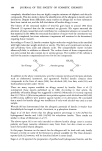
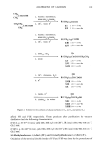
100 JOURNAL OF THE SOCIETY OF COSMETIC CHEMISTS completely identified since they are highly complex mixtures of aliphatic and alicyclic compounds. This also tends to delay the identification of the allergens in lanolin and its derivatives. Despite these difficulties, many studies on allergy due to these substances have been carried out, and the full elucidation of lanolin allergy is near. The history of the structural studies of wool fat goes back to around 1856 when Chevreul (2) reported that the fat contained no glycerin. His report attracted the attention of many researchers and contributed to a substantial advance on research on that material. In the 1960s, the structural elucidation of major wool fat constituents was virtually completed, but some unknown components still remained to be determined, requiring future research. According to Truter (3), lanolin contains higher molecular weight fatty acids esterified with high molecular weight alcohols or sterols. The fatty acid constituents include c•- and w-hydroxy fatty acids and alkanoic acids. The unsaponifiable matter includes alkane-c•,fi-diols, in addition to alkanols. The carbon chains of these compounds are not only normal but also contain iso or anteiso groups. The number of the carbons is odd for the anteiso compounds and even for the iso compounds. CH 3 CH3CH•2 Iso Group •CH-- , Anteiso group •CH- CH 3 CH 3 In addition to the above constituents, wool fat contains steroIs and triterpene alcohols, such as cholesterol, lanosterol, and agnosterol. Purified lanolin contains these compounds in the form of esters (94%), free alcohols (4%), free fatty acids (1%), and hydrocarbons (a little under 1%) (4). There are many reports available on allergy caused by lanolin. Peter et al. (5) summarized those reports published up to 1968. According to their article, the possibility of lanolin allergy was suggested in 1929 (6). Mortensen (7) recently reported that 33 (2.7%) in 1,230 eczema patients were positive against wool alcohols and 60 (6.6%) in 899 eczema sufferers were positive against lanolin or its derivatives. He concluded that a search for lanolin allergy was insufficient if only wool alcohol was used as a test sample. Wereide (8) has demonstrated that the allergenic potential of lanolin is weaker than formaldehyde but equal to nickel, chromium, or p-phenylene diamine. Sugai et al. (9) have shown that the allergy-positive percentage is 5.2% (26/502) for hydrogenated lanolin and 1.99% (10/502) for anhydrous lanolin. These results are similar to those of Mortensen et al. (7). The above report (9) is not only intended to observe lanolin allergy cases in eczema patients and keep causative substances away from them, but also covers an active search for lanolin-related allergens. In this paper, literature on the search for the allergens will be dealt with only briefly because a review on some of the literature is already available (4). The three domestic reports (9,10,11), however, will be described below in some detail. Sugai et al. (9) reported the preparation of purified and hydrogenated lanolin, and the

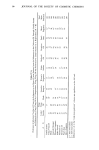
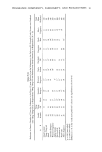
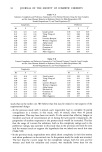
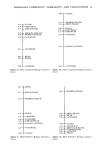
ALLERGENS OF LANOLIN 101 allergy-positive percentages for the materials prepared at each step. Based on these results and others, Sugai et al. suspected as allergens lanolin alcohols, hydrogenated lanolin, and contaminants such as nickel, copper, and chromium. Except for the trace metals the above substances are the same as those already suspected as the allergens. Kozuka (10) fractionated purified lanolin. Based on the patch tests of the fractions, he concluded: 1. The causative substances are present in the fatty alcohol fraction. 2. They are also present in the isocholesterol fraction. 3. Catalysts such as copper and chromium are not allergens. The last conclusion contradicts the results of Sugai et al. Allergens of lanolin have so far been unidentified because of the complicated chemical composition of lanolin, except that they seem to be present in the alcoholic fraction mentioned above. Only Truter et al. (11) isolated two compounds as allergens, one of which, a weakly allergenic compound, was identified as 7,11-dioxo-lanosta-8-en-3-ol. Although the search for substances causing lanolin allergy appears to have made progress, many questions remain to be answered. Therefore, we examined and report here on the isolation and identification of the allergens of hydrogenated lanolin using modern chromatographic and analytical techniques. EXPERIMENTAL APPARATUS AND MATERIALS Gas chromatography was done with a Shimadzu GC-4CM PF. Gas chromatography- mass spectrometry was performed on a JEOL JMS-D 300 mass spectrometer equipped with a JEOL JGC-20 KP gas chromatograph. •H- and •3C-nuclear magnetic resonance (NMR) spectra were obtained with JEOL PS-100 and PFT-100 nuclear magnetic resonance spectrometer (•H, 100 MHz •3C, 25 MHz). Infrared (IR) spectra were taken on a Hitachi 260-50 infrared spectrometer. Commercial lanolin derivatives were obtained from Takasago Perfumery Co., Ltd., Amerchol Corporation, and Dai-ichi Croda Chemicals Co., Ltd. Florisil (magnesium silicate) was obtained from Floridin Co., Ltd. PROCEDURES PATCH TEST METHOD Closed patches were applied for 24 or 48 hrs to the insides of upper arms or volar surfaces of forearms, of patients who showed allergic reactions to hydrogenated lanolin. Skin responses to samples, as is or dissolved in olive oil, were noted after 24, 48, 72 hrs and a week. All products fractionated with chromatography were tested as 10% solutions in olive oil. The intensity of the reaction was evaluated according to the following scale--no visible change: -, slight or discrete erythema: +, moderate and confluent erythema: +, intense erythema and edema: q- q-, intense erythema, edema and vesicles: + + +.
Purchased for the exclusive use of nofirst nolast (unknown)
From: SCC Media Library & Resource Center (library.scconline.org)