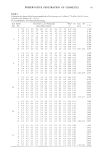
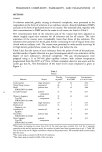
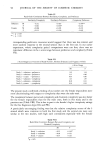
ALLERGENS OF LANOLIN 123 addition, the incidence of allergy to these synthetic diols was somewhat lower than to the diols isolated from hydrogenated lanolin. The mechanism of allergic contact dermatitis has not been completely elucidated. It is generally believed that an allergen (hapten), in order to become a true allergen, must bind to a protein (or another carrier). In our experiment, only branched isomers elicited allergenicity, suggesting that two functional groups (1,2-diol group and terminal branched structure) are required to bind a protein in the case of alkane-c•,fi-diols. It is also noteworthy that the allergenicity of branched isomers may vary with their total carbon number (alkyl chain length). This tendency may suggest the presence of a sterically favored alkyl chain length (distance between two functional groups) in order to bind a carrier protein. This hypothesis may explain the fact that the allergenicity of the synthetic diols is lower than that of the diols isolated from hydrogenated lanolin, since the isolated diols are a mixture of homologs and isomers. To determine the most favored alkyl chain length, it is necessary to synthesize all alkane-c•,fi-diol homologs, and to examine their allergenicity. These investigations may make it possible to elucidate the mechanism of allergic contact dermatitis, especially the binding mecha- nism of a hapten to a protein. It is well known that lanolin has many chemicals which are also constituents in human surface lipids (13). Sultzberger (14) suggested the possibility that lanolin hypersensitivity might actually prove to be an example of allergic sensitization to autogeneous body substances, i.e., an instance of "auto-sensitization" of the human skin. Alkane- c•,fi-diols, predominantly branched isomers (iso and anteiso series) (15), occur in foetal wax (vernix caseosa lipids) comprising up to 10% of the total lipids. However, they are not detectable in adult surface lipids except when the proportion of sebum to epidermal lipids is exceptionally low. In addition, alkane-c•,fi-diols occur in human surface lipids as diesters, in which they are esterified with two fatty acid moieties. Since it can be surmised from the results of our previous investigation that only the free diols have allergenicity, diesters of the diol have no allergenicity to human skin. It is known that triglycerides of human skin surface lipids are hydrolyzed by lipase to give mono- and diglycerides however, an esterase possessing the ability to hydrolyze wax is not present on human skin. Therefore, hydrolysis of diesters of alkane-c•,fi-diols does not occur on human skin, suggesting that diesters of the diols in patients' skin surface lipids can not elicit an allergic reaction. ANIMAL STUDY ON LANOLIN ALLERGY The rate of progress in lanolin allergy research will be accelerated if tests with animals are possible. Some tests have been attempted, but with unsuccessful results. Magnus- son et aL (16) obtained a result of 0/25 when they performed an animal test using 5% intradermal and 25% topical•solutions for induction, and a 15% topical solution for challenge. They also performed another test by the Landsteiner & Draize method (17), with no sensitization indicated.: '• We performed an animal test by the procedure shown in Table II and found positive allergy to lanolin alcohols and hydrogenated lanolin. Since the highest allergenicity to various synthetic diols was observed in the iso-hexadecane-l,2-diol (Table I), sensitization of the guinea pig was tried with this compound by the intradermal injection method (induction). As shown in Table II, this

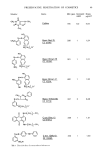
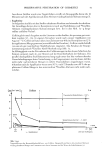
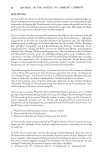
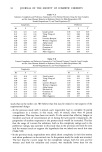
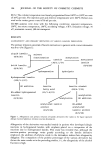
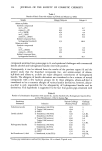
124 JOURNAL OF THE SOCIETY OF COSMETIC CHEMISTS Table I Results of Patch Tests with Alkane-c•,/•-Diols and Alkane-•x,00-Diols Sample Allergic/Subjects Allergic % Alkane-c•,/5-diols Synthetic compounds iso-C•2 (IX) 1/6 16.7 anteiso-C• (X) 0/6 0.0 n-C,6 (XXIII) 0/4 0.0 iso-C,6 (XXI) 2/4 50.0 anteiso-C•7 (XXII) 1/4 25.0 Isolated compound from hydrogenated lanolin (4) 4/4 100.0 Alkane-c•,w-diols Synthetic compounds n-C•2 0/5 0.0 iso-C,2 (XXIX) 2/8 25.0 anteiso-C•3 (XXX) 0/8 0.0 Isolated compound from hydrogenated lanolin (4) 4/6 66.7 compound sensitized two guinea pigs in 14, and epidermal challenges with commercial lanolin alcohol and hydrogenated lanolin were both positive. Consequently, it can be inferred from the results of the previous report (4) and the present study that the branched compounds (iso- and anteiso-series) of alkane- c•,/•-diols and alkane-c•, co-diols are major allergenic constituents of hydrogenated lanolin. The allergens of lanolin derivatives are considered to be a mixture of several compounds with a few hydroxy groups (4). In these allergens, alkane-c•,/•-diol is considered to be a common allergen of various lanolin derivatives however, alkane- c•,co-diol is only responsible for the allergenicity of hydrogenated lanolin and its derivatives. This hypothesis is supported by the fact that guinea pigs sensitized with Table II Results of a Sensitization Experiment with Lanolin (L), Lanolin Alcohol (LA), Hydrogenated Lanolin (HL), and Iso-Hexadecane-l,2-Diol in Guinea Pigs Sensitizing Topical Challenge Challenge Substances Induction (Positive/Total) Substances Anhydrous lanolin 1) Intradermal, 10% (FCA) 0/10 L 2) Topical, 30% (acetone) 0/10 L 3) GMT* 0/5 L Lanolin alcohol 1) Intradermal, 10% (FCA) 3/10 LA, HL Intradermal, 2% (FCA) 1/5 LA, HL 2) Topical, 50% (acetone) 0/10 LA Topical, 30% (acetone) 0/10 LA 3) GMT* 1/10 LA, HL Hydrogenated lanolin 1) Intradermal, 10% (FCA) 0/10 HL Intradermal, 2% (FCA) 0/6 HL 2) Topical, 30% (acetone) 0/10 HL 3) GMT* 1/17 HL, LA Iso-Hexadecane-l,2-diol 1) Intradermal, 0.25% (FCA) 2/14 HD, HL, LA *Guinea pig maximization method (16), (Injection: 1% in ethanol, Topical: as is)
Purchased for the exclusive use of nofirst nolast (unknown)
From: SCC Media Library & Resource Center (library.scconline.org)