170 JOURNAL OF THE SOCIETY OF COSMETIC CHEMISTS study. The formation of a reservoir has been attributed simply to poor solubility and slow diffusion within the stratum corneum (5). However, the concentration of five chemicals in vitro in human epidermal samples has been shown to involve either revers- ible binding to specific tissue sites or a partitioning from the external buffer into tissue components (lipids, membranes, etc.) (6). It has been postulated that rapidly absorbed compounds may be less likely to form a skin depot (7). We have developed a method for measuring reservoir formation in vitro in conjunction with percutaneous absorption studies. We have examined 17 heterogenous compounds in an attempt to determine the importance of solubility, protein binding, and percuta- neous absorption on reservoir formation. MATERIALS AND METHODS MATERIALS The radiolabeled test compounds used are listed with specific activity (mCi/mmole) in parentheses. NEN (Boston, MA) supplied [•4C]acetylsalicylic acid (55.8), [•4C]benzoic acid (19.3), [•4C]caffeine (47.5), [3H]dihydroxytestosterone (135,000), [•4C]glycerol (55.1), [•4C]salicylic acid (53.8), [3H]testosterone (58,000), [3H]triamcinolone ace- tonide (43,600), [•4C]urea (54.0), and [3H]water (1.0 mCi/g). Amersham Corp. (Ar- lington Heights, IL) was the source of [3H]cortisol (86,000) and [•4C]fumaric acid (110). ICN PharmaceutiCals supplied [•4C]nicotinamide (15.3), [•4C]nicotinic acid (15.3), and [•4C]propylene glycol (49.0). HRI Associates (Emeryville, CA) synthesized [3H]5-methoxypsoralen (5-MOP) (2,900) and [3H]8-methoxypsoralen (8-MOP) (1000). Arthur D. Little (Cambridge, MA) was the source of [•4C]acetylethyl tetra- methyl tetralin (AETT) (2.4). The radiochemical purity of all compounds was greater than 97% as determined by TLC. Radioactivity was quantitated in a Beckman LS9000 liquid scintillation counter (Beckman Instuments, Irvine, CA). PARTITION COEFFICIENT AND SOLUBILITY Octanol/water partition coefficients were measured at 25øC by adding 1 !xCi of com- pound to a mixture of equal volumes of octanol and 0.06 M HC1-KC1 buffer, pH 2. The water was acidified to prevent ionization of the five acidic compounds. After shaking for one hr, the amount of material in each phase was determined by liquid scintillation counting and the partition coefficient expressed as the ratio of these values. Octanol solubility values were calculated from the known water solubility of the com- pounds and their partition coefficients. PROTEIN BINDING The protein affinity was determined by equilibrium dialysis techniques. Bovine serum albumin (fatty acid and globulin free, Sigma Chemical, St. Louis, MO) was utilized as a model for skin protein. Previous work has shown that human serum albumin could serve as a suitable model for 5-MOP and 8-MOP binding to human epidermis (8). The bovine serum albumin (10 mg/L) and serial dilutions of the test compounds (10-3 to

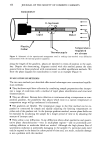
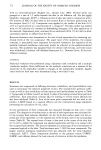
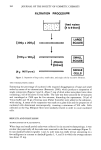
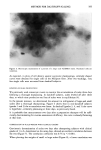
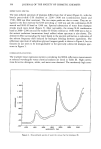
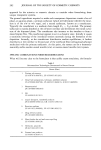
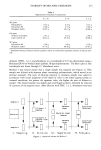
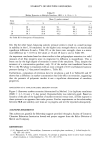
RESERVOIR FORMATION IN SKIN 171 10 -7 M) were prepared in 0.05 M sodium phosphate buffer, pH 7.4. Approximately 1 •Ci of radiolabeled ligand was added to each dilution of the unlabeled test compound. Equal amounts (1 ml) of the albumin solution and ligand solution were added to oppo- site halves of a dialysis cell (Spectrum Medical Industries, Los Angeles, CA) separated by a cellulose acetate membrane (molecular weight cut-off, 12- 14,000). The cells were rotated at 10 rpm for six hr at room temperature (25øC) to achieve equilibrium (verified in preliminary experiments). The radioactivity in each cell half was then determined by scintillation counting. For compounds where binding was observed, association constants were calculated by preparation of Scatchard plots (9) with r = [bound ligand]/[protein] and r/c = r/[free ligand]. As illustrated in Figure 1 for 8-MOP, the plot allows calculation of the associa- tion constant (Ka) from the negative slope of the line. In instances where the plot results in a curved line, more than one binding site is indicated. A Ka value for the primary binding site was calculated according to the method of Rosenthal (10) by resolution of the curved line into its linear components. ABSORPTION AND RESERVOIR FORMATION Percutaneous absorption was measured using flow-through diffusion cells as previously described (11). Skin was obtained from the dorsal region of Osborne-Mendel rats 3-6 months of age. The hair was lightly shaved and a 350-•m section of skin was prepared $.0 5.0 4.0 3.0 2.0 1.0 0 I 0.2 0.4 0.6 0.8 R Figure 1. Scatchard plot of 8-methoxypsoralen binding data. 1.2
Purchased for the exclusive use of nofirst nolast (unknown)
From: SCC Media Library & Resource Center (library.scconline.org)