J. Soc. Cosmet. Chem., 39, 211-222 (May/June 1988) Assessment of stability in water-in-oil-in-water multiple emulsions JOEL L. ZATZ and GARY H. CUEMAN, Department of Pharmaceutics, Rutgers University College of Pharmacy, P.O. Box 789, Piscataway, NJ 08855-0789. Received January 19, 1988. Synopsis An absolute technique for determination of oil film integrity is described. The amount of a water-soluble polymeric dye marker, polyporphyre, released from the internal aqueous (W 1) phase of a multiple emulsion to the external aqueous (W2) phase is determined and related to the amount originally entrapped as a function of time. This marker is insoluble in mineral oil and is not transported through the oil layer by diffusion. The appearance of dye in the W2 phase is therefore an indication of disruption of the oil film separating internal and external water phases. Two analytical methods have been developed the first is based on a scheme in which duplicate emulsion samples are diluted with buffer and a buffer solution of the marker, respectively. The second method, requiring but a single sample, uses a different polymeric dye as an external standard. For each method the separated W2 phase from each sample is clarified and evaluated spectrophotometrically. Both methods are reproducible and yield essentially identical results unaffected by diffusional transport of water between the two aqueous emulsion phases. The presence of marker appears to have no significant effect on emulsion stability. Oil film integrity was reduced by an increase in ionic strength of the buffer. INTRODUCTION Water-in-oil-in-water emulsions, sometimes abbreviated WOW, are perhaps more ra- tionally designated as W1/O/W2 systems (1). This nomenclature takes account of the fact that an oil phase separates an encapsulated, discontinuous aqueous phase (W 1) from a continuous aqueous phase (W2) which may or may not have exactly the same compo- sition. In fact, these phases generally differ in make-up in two respects. Due to the method of manufacture, usually by a two-step procedure (2), the two water phases and their respective oil/water interfaces have different surfactant concentrations. Secondly, since the rationale for these multiple emulsion systems depends on extended release of water and/or water-soluble compounds (3,4), the concentration of active solutes is gen- erally higher (at least initially) in the internal water phase. Several types of instability in multiple emulsions may be identified. These include coalescence of a) droplets of the W! phase b) oil phase globules and c) the two water phases (5). Of these, coalescence of W! droplets is least likely to affect either gross 211

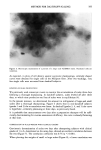
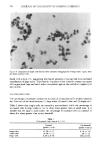
212 JOURNAL OF THE SOCIETY OF COSMETIC CHEMISTS physical characteristics or system functionality. Coalescence of the two aqueous phases leads to a loss of multiple character thus any advantage the system may have had over a conventional emulsion in terms of sustained delivery is negated. CHARACTERIZATION Microscopy has been used to visually document the existence of an encapsulated water phase and to size oil globules. Another approach to demonstrating multiple character involves entrapment of a marker in the W1 phase. The extent to which the marker is localized provides information about multiple emulsion yield its ability to be retained over time is a measure of stability of the oil film separating the two aqueous phases, provided that the marker is not diffusionally transported. In general, the particle size of oil globules containing entrapped water is larger than that of oil globules without multiple character in an emulsion containing both (5,6). Direct measurement by microscopy or electronic counting and sizing techniques yields a distribution that includes all of the oil globules, simple and those with multiple character within an emulsion. By resolving the complete size distribution into two components, Davis and Burbage (6) were able to obtain the size distribution of W1/O and simple oil globules. Viscosity measurement can be used as a non-specific means of characterizing changes in phase-volume ratio. The.Mooney equation, Equation 1, relates the natural logarithm of relative viscosity (Xlre) tO phase volume of the dispersed phase (0)- In Tlrel = aqb/(1 - b0). (1) The two constants, determined experimentally for each system, are a, a shape factor, and b, a crowding factor. A limitation of this approach is that Newtonian flow is required. The phase-volume ratio is thus restricted to low values. This approach was used to show that there was negligible change in several prototypical multiple emulsions during a one-month period (7). WATER FLUX By subjecting a multiple emulsion system to an osmotic gradient, water is transported and its movement can be monitored. Particle size distributions determined over time with the Coulter Counter were used to calculate the rate of water loss from the W1 phase (6). A threshold osmotic gradient was required to initiate water flow. In another study, the diffusion coefficient of water was calculated from the kinetics of water flux, measured by a microscopic method (5). The value determined, 5 x 10 -8 cm2s - 1, was about 1000 times smaller than the expected value for isotropic diffusion in a nonpolar liquid, but was comparable to literature values for inverse micelie diffusion. This suggested that water transport is mediated by inverse micelies. A viscometric technique utilizing Equation 1 was applied by Matsumoto and Kohda (8) to measure osmotically-driven water flux a water permeation coefficient was deter- mined from this data. The values obtained from this study were in agreement with those obtained later from microscopy (5).
Purchased for the exclusive use of nofirst nolast (unknown)
From: SCC Media Library & Resource Center (library.scconline.org)