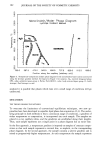
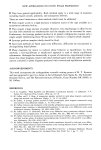
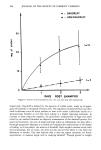
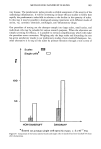
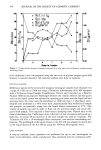
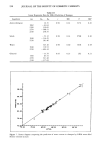
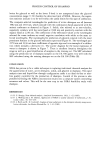
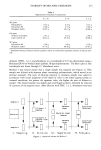
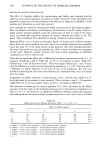
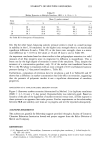
METHOD FOR DANDRUFF SCALING 189 tory disease. The parakeratotic index provides a reliable assessment of the severity of the underlying inflammation. It will be interesting in future efficacy studies to follow how rapidly the parakeratotic index falls in relation to the decline in the quantity of scales. In this way it may be possible to distinguish among treatments with different modes of action, viz, cytostatic chemicals, antifungals, anti-inflammatory drugs. Our procedure of sorting out the shampoo sample into large scales, small scales, and individual cells may be valuable for various research purposes. When the objectives are simply screening for efficacy, it is possible to envision simplifications which will make the procedure more convenient. Weighing only the large scales and discarding the rest has given satisfactory results in our preliminary studies of anti-dandruff shampoos. An- other alternative is to trap all the scales by pressure filtration through a wire screen of 100 5O Scales • Single cells © NON-DANDRUFF DANDRUFF ß Based on a mean single cell specific mass - 5x10 -?rag Figure 9. 'Comparison of the horny material (scales and single cells) in dandruff and non-dandruff two days after shampooing.

190 JOURNAL OF THE SOCIETY OF COSMETIC CHEMISTS 100-p• pore size. Indeed, with sufficient pressure one could collect all the horny cells on a large Millipore filter. Sink shampooing with sodium lauryl ether sulfate could be replaced by flushing the scalp with a liter or two of ethanol similar to our previous use of ethyl ether to collect total scalp sebum (9). Other workers in our laboratory will report on this procedure. We hasten to point out that shampooing also delivers some hairs on the filter these obviously have to be removed before weighing. REFERENCES (1) R. W. Vanderwyck and F. C. Roia, The relationship between dandruff and microbial flora of the scalp, J. Soc. Cosmet. Chem., 15, 761-768 (1964). (2) P. Finkelsrein and K. Laden. An objective method for evaluation of dandruff severity, J. Soc. Cosmet. Chem., 19, 669-673 (1968). (3) K. Schrader, Comparative experimental research on dandruff through quantitative image analysis, J. Appl. Cosmetol., 4, 153-170 (1986). (4) K.J. McGinley, R. R. Marples, and G. Plewig, A method for visualizing and quantiraring the desquamative portion of the human stratum corneum, J. Invest. Dermatol., 53, 107-112 (1969). (5) K. Yoshie, E. Shinraku, M. Tobari, and M. Nagayama, The development of instrument measuring dandruff and its application, Jap. Journal of Dermatology, 11, 245 - 251 (1987). (6) J. J. Leyden, K. J. McGinley, and A.M. Kligman, Role of microoganisms in dandruff, Arch. Der- matol, 112, 333-338 (1976). (7) G. Plewig, E. Scheuber, B. Reuter, and W., Waidelich, "Thickness of Corneocyres," in Stratum Comeurn, R. Marks and G. Piewig, Eds. (Springer-Verlag, Berlin, Heidelberg, New York, 1983). (8) A. B. Ackerman and A.M. Kligman, Some observations on dandruff, J. Soc. Cosmet. Chem., 20, 81-92 (1969). (9) A. M. Kligman, K. J. McGinley, and J. J. Leyden, in Hair Research, C. Orfanos, W. Montagna, and G. Srurrgen, Eds. (Springer-Verlag, Berlin, Heidelberg, New York, 1981), pp. 592-601.
Purchased for the exclusive use of nofirst nolast (unknown)
From: SCC Media Library & Resource Center (library.scconline.org)