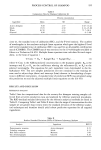
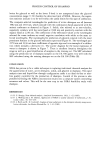
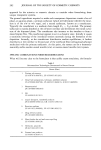
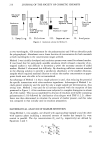
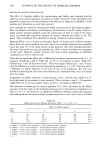
202 JOURNAL OF THE SOCIETY OF COSMETIC CHEMISTS approach for the scientist or cosmetic chemist to consider when formulating these unique transparent systems. The general ingredients required to make such transparent dispersions consist of an oil phase, an aqueous phase, a primary surfactant (which will determine whether the emul- sion is of the o/w or w/o type), and a second surfactant, known as a cosurfactant. Typically the cosurfactant is a medium chain length (C 5 - C•o) alcohol. The primary surfactant is mainly absorbed at the oil/water interface and determines the initial curva- ture of the dispersed phase. The cosurfactant also interacts at the interface to form a mixed duplex film. The cosurfactant appears to act in a dynamic state. Initially it causes a transitory lowering of the interfacial tension necessary during the formation of the dispersion. Secondly, as the cosurfactant distribution reaches equilibrium, it further distributes at the interface to become part of the interfacial film (oil/aqueous/surfactant molecules) with the primary surfactant. At this point, the system can be a thermody- namically stable swollen mixed micelie (o/w) or inverse mixed micelie (w/o) system. SPECIFIC COMBINATIONS FORM MICROEMULSIONS What will become clear to the formulator is that unlike coarse emulsions, the formula- Table I Microemulsion Technologies Documented in Recent Patents Patent (Date) 1. Tertiary oil recovery US 4587879 (860701), US 4556495 (851203). 2. Diesel fuel composition, lubricant, antifreeze solution US 4599088 (860708), US 4605422 (860812), 4610222 (860909) 3. Pharmaceutical JP 61044809 (860304) 4. Ink US 4409039 (831011) 5. Liquid detergent, household products JP 60106898 (850612), GB 2144763 (850313) 6. Reaction medium US 4611055 (860909), US 4521580 (850313) 7. Drug delivery system Jp 61044809 (860304) 8. Fiber finishes for soil and water repelling US 4566981 (860128) 9. Herbicide, pesticide JP 60231604 (851118) 10. Personal care products US 4460570 (840717)

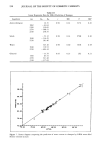
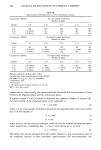
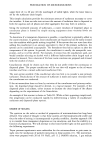
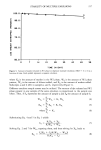
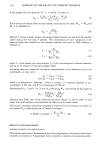
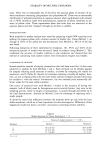
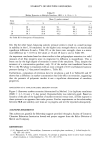
PREPARATION OF MICROEMULSIONS 203 tion of a stable microemulsion is more specific and thus greatly limited in variety. Coarse emulsions can be stabilized by a wide variety of surfactants, application of high- energy apparatus (turbine mixers, sonicators, etc.), and excipient ingredients to alter viscosity and separation (gums, gelling agents). In general, stable microemulsions are very specific in the ratio of surfactant/cosurfactant used to disperse phase A in a contin- uous phase B. Six systems are described in Table II. An example of this specificity is the emulsion system consisting of 2 X 10 -3 mole stearic acid, 2 ml oil, and 16 ml 0.375 N KOH (System 5, Table II). The authors (3) reported that out of fifty-two alcohols, only five were suitable cosurfactants capable of producing transparent o/w systems. More recently, Rosano and coworkers (4) have made a systematic study on the formation of microemulsions prepared with alkyl sodium sulfate (with the alkyl chain containing 12 to 16 carbon atoms) as the surfactant, and alkanes (octane through hexadecane) as the oil, an aqueous solution of alkyldimethylamine oxide (dodecyl through hexadecyl) as the cosurfactant, and aqueous 5% NaC1, pH 12 brine solution as the continuous phase. Table III summarizes the systems studied. It is readily seen that out of the forty-five combinations, only fifteen resulted in the formation of transparent micro- emulsions, demonstrating the highly specific nature of the process. THE METHOD A recognized and classical approach to microemulsion formulation is to utilize phase diagrams. Friberg et al. have been great supporters of this technique and have eluci- dated the methodology in numerous papers (5-8). A major drawback to this approach is the time it takes to develop the phase diagram, especially when one has a variety of surfactants and cosurfactants and oils at his disposal for use and evaluation. Recently, automated systems have been commercialized to offset the laborious titrations to deter- mine the various phases. The chief drawback at the present time is the cost of such instrumentation, as well as accuracy. An alternative simpler approach is discussed below. Rosano (9) suggested a way to determine the minimum amount of primary surfactant needed for a particular system. In this theoretical calculation, the minimum amount of primary surfactant required for the microemulsion is calculated by determining the Table II Microemulsion Systems Continuous Dispersed Systems phase phase Surfactant Cosurfactant 1 X ml water 2 ml n-octane 0.5 ml C9Phenol-1.5-EO Csphenol-9-EO + 0.5 ml C9phenol-4-EO 2 X ml water 2 ml n-decane 0.5 ml C9Phenol- 1.5-EO C9Phenol- 10-EO + 0.5 ml C9phenol-4-EO 3 X ml water 2 ml n-hexadecane 0.5 ml C9Phenol-1.5-EO C9Phenol-9-EO + 0.5 ml C9Phenol-4-EO 4 X ml toluene 2 ml water 1.98 X 10⁻³M SDS 1-pentanol 5 X ml 0.375 N KOH 2.3 ml n-hexadecane 2.3 X 10⁻³M stearic acid 1-pentanol 6 x ml 5% NaC1 saline 1 ml n-decane 1 gm SDS DDAO
Purchased for the exclusive use of nofirst nolast (unknown)
From: SCC Media Library & Resource Center (library.scconline.org)