STABILITY OF MULTIPLE EMULSIONS 213 Tomita et al. (9) used low shear viscometry on non-Newtonian systems to compare relative rates of water transport in multiple emulsions containing several entrapped low- molecular-weight solutes. The change in viscosity over time was a function of the entrapped solute. This led to the inference that water was not the only substance being transported the various solutes migrated at different rates. OIL FILM INTEGRITY Several months can be used in an attempt to validate the retention of multiple char- acter. A lack of change in certain physical properties such as particle size and viscosity over time would lead to the supposition that the system was stable. Monitoring the degree of retention of a marker in the W 1 phase is a popular method of determining resilience of the oil film. The validity of such studies, if carried out over a period of time, depends on a lack of diffusional transport on the part of the marker. Magdassi and Garti (10) measured the release of entrapped ions from the W1 phase of multiple emulsions by potentiometric titration. Sodium chloride, potassium thio- cyanate, and ephedrine hydrochloride were among the salts studied. The anions were released at different rates. The highest rate of release of chloride ion from sodium chlo- ride occurred at the lowest concentrations. The amounts released did not correlate with loss of multiple character, as shown by microscopy. These results were interpreted in terms of diffusion of ions through the oil layer. Therefore, typical low-molecular-weight solutes such as glucose and simple salts are inadequate as markers (9, 10). OBJECTIVES Our overall goal was to develop suitable methodology for evaluating the oil film integ- rity in W1/O/W2 emulsions. Our approach involved selection of a marker compound with the following requisite properties: a) aqueous solubility b) negligible oil solu- bility c) negligible diffusivity through the emulsion's oil layer d) easily analyzed e) no significant effect on emulsion properties. The marker was encapsulated in the W1 phase and its appearance in the W2 phase monitored over time. Appreciable marker release indicated significant instability stable systems released relatively small amounts of marker over time. Since water migration between the aqueous phases is possible, we developed methods in which the amount of marker in the external phase, rather than its concentration, was determined. Two methods, one based on standard addition of the marker and the other on addition of an external standard, are reported. EXPERIMENTAL MATERIALS All of the emulsions contained light mineral oil (Drakeol #7, Penreco, Butler, PA). Aqueous phases were buffered to a pH of 7.0 with a phosphate buffer (ionic strength = 0.01 unless otherwise specified). Surfactants used were commercial grades of polysor- bate 80 and sorbitan mono-oleate (ICI Americas, Wilmington, DE). The polymeric

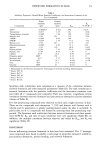
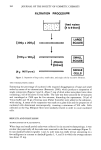
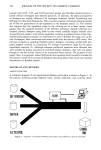
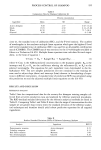
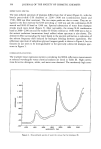
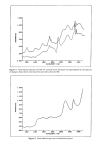
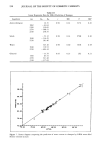
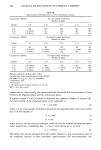
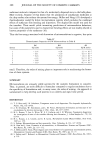
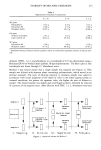
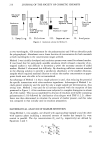
214 JOURNAL OF THE SOCIETY OF COSMETIC CHEMISTS markers employed were polyporphyre (Poly R-478 ©, Sigma Chemical, St. Louis, MO, Catalog No. P1900), which has a polyvinylamine sulfonate backbone and anthra- quinone chromophore, and mean molecular weight of 50,000 g/mol (11), and polytar- trazine (Poly T-128 ©, Sigma Chemical, St. Louis, MO, Catalog No. P1026), which has a polyvinylamine backbone with a tartrazine chromophore, and mean molecular weight of 150,000 g/mol (11). EMULSION PREPARATION All emulsions were prepared on a weight basis. The two-stage process was employed (2,4). The water phase used to prepare the W/O emulsion contained polyporphyre marker, 0.5 %, and phosphate buffer (pH 7). Sorbitan mono-oleate was dissolved in the oil, and polysorbate 80, if present, was dissolved in the aqueous phase. Formation of the primary (W/O) emulsion was accomplished using a Gifford-Wood homogenizer- mixer at room temperature. The aqueous phase was pumped into the oil phase at a constant rate (approximately 23 g/minute) with mixing. This was followed by homoge- nization for three minutes. The same batch of primary emulsion (500 g) was used to prepare a series of multiple emulsions whose final HLB varied. The primary emulsion was pumped into a beaker containing the W2 phase at a con- trolled rate (20 g/minute) while a constant speed propeller mixer provided agitation at 500 rpm to form the multiple emulsion. Agitation was increased to 1000 rpm after completion of addition of the primary emulsion. Mixing was continued for the same time period (maximum of three minutes) in all experiments within a series. The relative phase volumes for W1, O, and W2 phases in the finished multiple emul- sions were 1:1:2. Approximately 200 g of each emulsion were prepared at one time. Emulsifier composition was identified by two HLB numbers, the first signifying the HLB of the W1/O emulsion, the second describing the composite HLB calculated for all of the emulsifiers in the system. Thus, a multiple emulsion identified as 6,10 would contain an emulsifier combination for the W1/O emulsion with an HLB of 6 and an overall HLB (taking into account any emulsifier in the W2 phase) of 10. Surfactant concentrations were calculated with reference to the 1ow-HLB surfactant (sorbitan mono-oleate in these systems) and the primary emulsion. Thus, a 2% emulsi- fier concentration means that 2% of the weight of the primary emulsion was sorbitan mono-oleate. Other surfactant concentrations were determined by the HLB values that were required. All of the results described in this report were obtained on emulsions containing 2% emulsifier, as defined above. The composition of representative emul- sions is given in Table I. MARKER DETERMINATION Two procedures were developed in the first (Method 1), a standard addition technique using the same dye (polyporphyre) was utilized. Two emulsion samples of approxi- mately the same weight were required per analysis. Figure 1 is a flow chart outlining the procedure. Sample a was diluted with aqueous phase, sample b with aqueous phase containing additional marker. Both samples were shaken, and gently centrifuged for three to five minutes at 1000 rpm. A portion of the separated aqueous layer from each sample was withdrawn. An aliquot of each was then clarified by dilution with tetrahy-
Purchased for the exclusive use of nofirst nolast (unknown)
From: SCC Media Library & Resource Center (library.scconline.org)