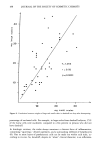
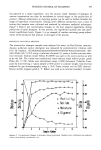
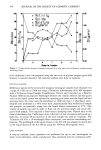
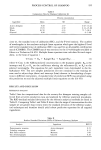
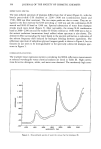
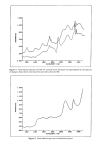
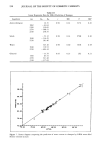
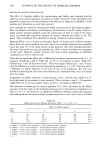
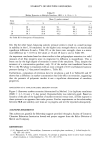
PROCESS CONTROL OF SHAMPOO 199 lation for glycerol as well as the lower F-level is not unexpected since the glycerol concentration range ( 1%) borders the detection limit of NIRA. However, the regres- sion statistics indicate it to be well within the useful limits for this type of calibration. The computer-selected wavelengths for prediction of active detergent are all between 1982 nm and 2310 nm, which coincide with the combination bands associated with the anionic surfactant as observed in Figure 5. Solids, also referred to as non-volatiles, negatively correlate with the water band at 1940 nm and positively correlate with the organic band at 2230 nm. The coefficients of the reflectance values at the wavelengths selected for water indicate an overall negative correlation with solids at the same se- lected wavelengths. The wavelengths for prediction of glycerol coincide with the most prominent features in the glycerol reflectance spectrum (Figure 6). The wavelength pair 2270 nm and 2336 nm have coefficients of opposite sign and is an example of a calibra- tion which includes a derivative (1). The scatter diagram for the linear regression of water in shampoo is shown in Figure 7. There is excellent linearity throughout the range as well as a good distribution of samples in the training set. The SEP calculated using the prediction set of shampoo samples on the I/A 450 agrees very well with the SEC calculated using the training shampoo set on the I/A 500 (Table III). CONCLUSION NIRA has proven to be a viable technique in replacing traditional chemical analyses for the quantitation of water, active detergent, solids, and glycerol in shampoo. The rapid analysis time and liquid flow through configuration make it an ideal on-line or near- line quality controller for the production of shampoo. Control of the process is also possible by feeding the NlRA concentration results into a computer system controlling actuators and valves. This will be the next step in our NlRA feasibility study with shampoo. REFERENCES (1) D. E. Honigs, Near infrared analysis, Analytical Instrumentation, 14(1), 1-62 (1985). (2) P. L. Walling and J. M. Dabney, Application of NIRA to quality assurance of surfactants, J. Soc. Cosmet. Chem., 37, 445-459. (3) B. J. Birch and R. N. Cockcroft, Analysis of ionic surfactants in the detergent industry using ion-se- lective electrodes, Ion-Selective Electrode Rev. 3, 1-41 (1981).

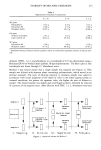
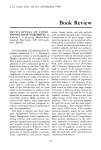
j. Soc. Cosmet. Chem., 39, 201-209 (May/June 1988) Microemulsions: A commentary on their preparation HENRI L. ROSANO, JOHN L. CAVALLO, DAVID L. CHANG, and JAMES H. WHITTAM, Department of Chemistry, City University of New York, New York, NY 10031 (H. L. R. ), Clairol Research Labs, Stamford, CT (D. L. C. ), and Shaklee U.S., Inc. San Francisco, CA 94111 (J.H.W.), General Foods USA, Tarrytown, NY 10625 (J.L.C.). Received February 24, 1987. Synopsis A detailed description on the concept of microemulsions, how they can be formed, factors which affect stability, and recent applications are the focus of this commentary. A simple method for determining the amount of primary surfactant for a given microemulsion is shown, as well as data which emphasize the importance of the order of mixing based on thermodynamic calculations for six different microemulsion systems. We conclude that the formation reactions of these microemulsions studies are entropy-driven reactions and thus quite different from the formation of coarse emulsions in their thermodynamic proper- ties. INTRODUCTION Emulsions play a key role in many of the cosmetics we use today. Through the years much has been written on the formation and stability of these oil-dispersed-in-water (o/w) or water-dispersed-in-oil (w/o) systems. Nevertheless, the cosmetic formulator still seeks to understand and create the most favorable cosmetically eloquent and func- tional products possible. Aesthetically appealing products can be formulated as trans- parent o/w or w/o dispersions called microemulsions. The possible application for these systems range from products with an extended shelf life to delivery systems for active ingredients. The pioneering work on microemulsions started in 1943 (1). It was only in 1959 that Schulman and coworkers (2) coined the word microemulsion for these clear transparent dispersions. These systems offer a great deal of uniqueness, not only because of their novel transparency, but also because of the small dispersed phase, usually having a droplet diameter between 50-400 fk. Today there are numerous theories on the nature of their formation and stability, yet the practical aspects of their preparation are still vague. Nevertheless, as can be seen by some recent patents (Table I), specific applica- tions for microemulsions are being recognized. This review will elucidate one practical 201
Purchased for the exclusive use of nofirst nolast (unknown)
From: SCC Media Library & Resource Center (library.scconline.org)