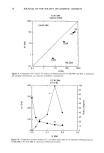
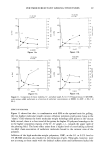
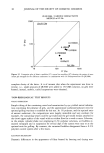
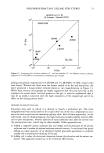
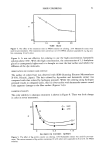
j. Soc. Cosmet. Chem., 42, 35-44 (January/February 1991) Relationship between collagen hydrolysate molecular weight and peptide substantivity to hair GILBERT R. MINTZ, GALE M. REINHART, and BRUCE LENT, CalBiochem Corporation, La Jolla, CA 92037 (G.R.M.), Revlon, Edison, NJ (G.M.R.), and VideoJet Systems, Inc., Chicago, iL (B.L.). Received October 1990. Synopsis Cosmetic grade collagen hydrolysates were incubated with virgin (natural) and bleached/waved (damaged) hair tresses. The bound collagen peptides were removed by both a high-temperature (50øC) and a high-salt (0.5 M NaCI) soak. As much as four times more fluorescamine reactive and hydroxyproline-containing peptides are removed from damaged than from natural hair. Gel filtration shows differences in the molec- ular weight (MW) distribution of peptides present in the high-temperature and high-salt soakings. These results demonstrate two distinct types of proteins that bind to hair: high-molecular-weight (30,000 daltons) and low-molecular-weight (1,000 to 3,000 daltons). The majority of the hydroxyproline-con- taining peptides •at bind to bleached/waved hair is in the lower molecular weight range and is probably composed of more basic amino acids. INTRODUCTION Previous studies indicate that cosmetic grade protein hydrolysates are complex mixtures of various molecular weight (MW) polypeptides (1). The capacity of a substance to absorb/adsorb to a surface is referred to as substantivity. The substantive nature of collagen-derived peptides to human hair has been demonstrated (2-4). Typically, pep- tide substantivity has been shown by monitoring the presence of the amino acid hy- droxyproline (which is a component of collagen but absent in hair) absorbed on hair after a series of water rinsings to remove non-specific peptides. Radiolabeling studies have demonstrated that small quantities of amino acids (5) and alkyl-dimethyl quater- nary derivatives of hydrolyzed collagen peptides (4) are absorbed to hair. In all of the studies to date, no information is available on the selective removal and subsequent characterization of peptides from the complex hydrolysates applied to hair. Methods used to manufacture protein hydrolysates typically yield a broad MW distribution of peptides (1,000-30,000 daltons). Accordingly, it was of interest to characterize the collagen peptides that were removed from the protein hydrolysate solution by specifi- cally binding to the hair. We have extended previous observations regarding the binding of collagen protein hy- drolysates (peptides) to hair by characterizing the MW of the hydroxyproline-con- 35

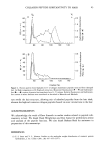
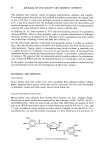
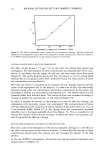
36 JOURNAL OF THE SOCIETY OF COSMETIC CHEMISTS taining peptides substantive to hair. Using two different soaking methods--high-tem- perature (50øC) and high-salt (0.5 M NaCl)--we have removed hydroxyproline-con- taining peptides bound to hair. Quantitative and qualitative differences in both peptide fractions were characterized using various analytical techniques. MATERIALS AND METHODS PRETREATMENT OF HAIR TRESSES Hair tresses of virgin brown DeMeo human hair were made in 7-inch lengths weighing approximately 3 grams. After the tresses were prepared and prior to treatment, they were washed by immersion in a 1% solution of Triton X-100 solution, rinsed thor- oughly with warm tap water, and allowed to dry in a 48øC oven as described previously (6,7). Damaged hair tresses were prepared by immersing hair tresses in an alkaline solution of hydrogen peroxide at 32øC for 30 minutes. They were then washed and immersed for 20 minutes at room temperature in a 5% thioglycollate solution, water rinsed, and neutralized with a solution of 3% hydrogen peroxide by soaking for 12 minutes. Each hair tress was rinsed and allowed to dry. Both the virgin (natural) and bleached/waved (damaged) hair were washed with a 1% solution of Triton X-100 and dried as above before each treatment with protein. ABSORPTION AND REMOVAL OF PROTEIN/PEPTIDES FROM HAIR TRESSES Each hair tress (approximately 3 g) was soaked in a 5% (wt/vol) solution of collagen protein hydrolysate (LEXEIN © X-250, a registered trademark for an aqueous solution of hydrolyzed collagen protein) for 10 minutes at 25øC. To remove nonspecifically adsorbed protein, the hair was rinsed with warm running tap water for 1 minute and squeezed to remove excess water. Removal of bound collagen peptides from the hair tresses was accomplished by sequential steps in the following solutions: 1) each swatch (3 g) was placed in 30 ml of deionized water and then put in a 50øC water bath for 45 min 2) the hair swatches were subsequently soaked overnight at 25øC in 30 ml ofa 0.5 M NaCI solution to remove any remaining peptides. Both virgin and bleached/waved hair tresses were subjected to the high-temperature and 0.5 M NaCI soakings in tripli- cate to compare variations from one tress to another. No experiments were done re- versing the sequence of the soaking conditions. CONCENTRATION OF REMOVED PEPTIDES The separate fractions of high-temperature- and 0.5 M NaCl-removed peptides were concentrated by lyophilization. The dried powders were resuspended in deionized water to small volumes (1- 2 ml) and stored in a freezer at - 4øC prior to further characteriza- tion and analysis. GEL FILTRATION The molecular weight distribution of peptides removed from the hair tresses was deter- mined by standard gel filtration procedures on Sephadex G-50 and G-15 sizing columns. The columns were equilibrated in 0.15 M NaCI and 0.1% SDS, and fractions
Purchased for the exclusive use of nofirst nolast (unknown)
From: SCC Media Library & Resource Center (library.scconline.org)