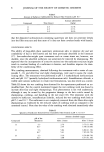
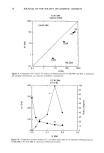
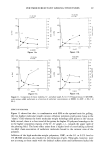
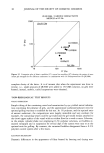
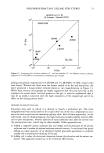
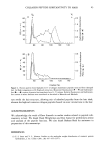
COLLAGEN PEPTIDE SUBSTANTIVITY TO HAIR 37 of 1 ml were collected. The MW standards for the G-50 column were as follows: ovalbumin (43K), cytochrome C (12K), bradykinin (1,250) and glycyl-glycyl-glycine (171) and for the G-15 column: insulin B-chain (3,500), bradykinin (1,250), glycyl- glycyl-glycine (171). The void volumes and included volumes were determined with blue dextran, and phenol red or tyrosine, respectively, under identical column condi- tions. The presence of peptides (amino groups) at specific MW ranges was determined by fluorescamine labeling of the columns' fractions (1 ml) after chromatography of the peptides. Similarly, the MW distribution of peptides derived from collagen was deter- mined by hydrolyzing select fractions (1 ml) and quantitating the hydroxyproline con- tent (9). Approximately 1,000-1,500 relative fluorescent (RF) units of the high-tem- perature soaking and the 0.5 M NaCI soakings were chromatographed on both the G-50 and G-15 Sephadex columns. FLUORESCENT DERIVATIZATION OF PEPTIDES The presence of primary amine groups in the high-temperature and high-salt soaked fractions from the lyophilized and gel filtration columns was determined by fluoresca- mine reaction with samples accoMing to previous procedures (10-13). The relative fluorescence was measured on a Gilford Fluoro IV fluorometer. The excitation and emission wavelengths were set at 390 nm and 480 nm, respectively. A freshly prepared solution of fluorescamine was used for all amino group derivatizations. HYDROXYPROLINE ASSAY Hydroxyproline assays of individual column fractions or of the substantive peptides removed from the hair tresses were determined by base hydrolysis of the collagen pep- tides followed by hydroxyproline analysis as described previously (8,9). Select column fractions were lyophilized to concentrate the material prior to hydrolysis and subsequent hydroxyproline analysis. The relative hydroxyproline content of the various peptide fractions was determined relative to a standard curve for hydroxyproline. Absorbance measurements for the quantitation of hydroxyproline levels were done on a Gilford Spectrophotometer Model 260. To determine the background absorbance (hair tress never treated with the protein hydrolysate) and demonstrate that no hydroxyproline remained on hair tresses soaked in high temperature and 0.5 M NaCI, samples of hair tresses (10 mg) before and after the protein hydrolysate were hydrolyzed and assayed for hydroxyproline. MATERIALS Fluorescamine and all other reagents were obtained from Sigma Chemical. The lyophi- lizer was a Virtis Model 112920 Bench Top 3 from American Scientific Products. Sephadex G-50 and G-15 were purchased from Pharmacia. RESULTS AND CONCLUSIONS REMOVAL OF PEPTIDES FROM HAIR Virgin (natural) and bleached/waved (damaged) hair tresses were incubated with a cos-

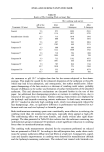
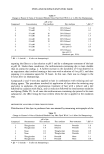
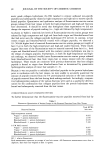
38 JOURNAL OF THE SOCIETY OF COSMETIC CHEMISTS metic grade collagen hydrolysate (X-250) (washed to remove unbound non-specific peptides) and subsequently treated at high temperature and high salt to remove specific bound peptides. Quantitative and qualitative analyses of fluorescamine-reactive amino groups released from hair tresses in both the high-temperature and high-salt fractions were determined. It should be noted that throughout these experiments we did not change the sequence of peptide soaking (i.e., high salt followed by high temperature). As shown in Table I, relatively low levels of fluorescamine-reactive amino groups were released by high temperature and high salt from both virgin and bleached/waved hair that had never seen the collagen peptides hydrolysate (5% wt/vol). In contrast, in hair tresses (virgin and bleached/waved) treated with collagen peptides, we observed a 10-50-fold higher level of removed fluorescamine-reactive amino groups per weight of hair (3 g) in both the high-temperature and high-salt soaked fractions. These results suggest that most of the fluorescamine-reactive material removed from hair (i.e., both virgin and bleached/waved) treated with the cosmetic protein hydrolysate was due to the release of collagen peptides. Furthermore, in both the high-temperature and high- salt soakings, we observed twofold more fluorescamine-reactive amino groups released from bleached/waved hair than from virgin hair in tresses treated with the collagen hydrolysate. These results are consistent with previous observations that less collagen peptide is bound to virgin than bleached/waved hair as determined by quantitative hydroxyproline analysis of intact hair samples (1-3). Because it was not possible to radiolabel individual peptides in the protein hydrolysate prior to incubation with the hair tresses, we were unable to accurately quantirate the amount of peptide removed from the 5% protein/peptide solution or the exact amount of peptide removed from the hair during both soaking methods. Accordingly, compara- tive hydroxyproline analyses of the various fractions were used as a qualitative determi- nation for the confirmation that collagen peptides from the protein hydrolysate were bound and subsequently removed from the hair tresses. HYDROXYPROLINE ASSAY OF REMOVED PEPTIDES To further demonstrate that the fluorescamine-reactive peptides removed from hair by Table I Fluorescent Quantitation of Amino Groups in the Removed Fractions From Hair Tresses Total RF/Wt Removed fraction hair tress High-temperature removal Virgin (- protein hydrolysate) Virgin (q- protein hydrolysate) Bleached/waved (- protein hydrolysate) Bleached/waved (q- protein hydrolysate) 0.5 M NaCI removal Virgin (- protein hydrolysate) Virgin (q- protein hydrolysate) Bleached/waved (- protein hydrolysate) Bleached/waved (q- protein hydrolysate) O.O92 2.O3O 0.078 5.39O 0.097 1.090 0.090 3.47O RF ---- relative fluorescence. Each measurement represents an average of two hair tresses. All fluorescent measurements were done in duplicate. Each hair tress weighed at least 3.0 grams.
Purchased for the exclusive use of nofirst nolast (unknown)
From: SCC Media Library & Resource Center (library.scconline.org)