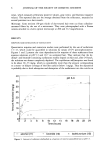
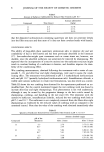
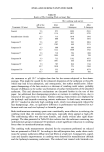
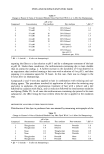
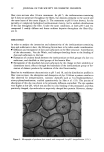
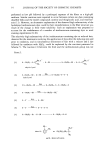
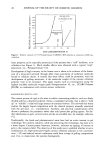
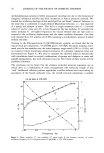
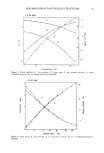
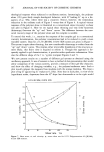
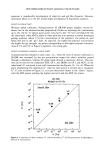
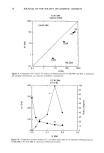
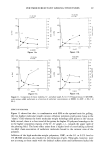
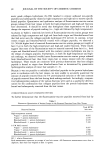
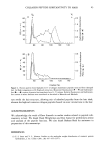
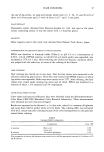
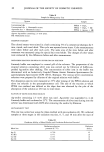
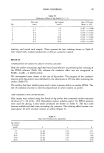
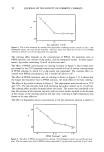
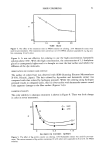
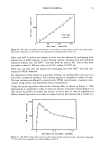
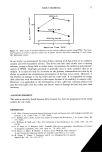
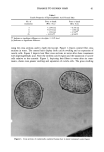
COLLAGEN PEPTIDE SUBSTANTIVITY TO HAIR 39 both high temperature and high salt were derived from collagen, aliquots of each frac- tion were hydrolyzed and assayed for hydroxyproline. As shown in Table II, no hy- droxyproline was detectable after both soaking conditions on virgin or bleached/waved hair tresses not treated with the collagen hydrolysate. It is generally known that hair (keratin) protein does not contain hydroxyproline (14). In contrast, hair tresses treated with the collagen hydrolysate and subjected to both soaking conditions had hydroxy- proline-containing peptides in each fraction (see Table II). As indicated in Table II, about twice as much hydroxyproline-containing peptides were released from virgin hair in the high-temperature soaking than from the high-salt soaking, whereas, in the bleached/waved hair, about fourfold higher levels of hydroxy- proline were present in the high-temperature soaking fractions than in the high-salt conditions. Similar results were obtained with different preparations of protein hydrol- ysate. Our observations support earlier results that bleached/waved hair binds more hydroxyproline-containing peptides than virgin hair (1,2,6). Furthermore, the total hydroxyproline released from the same weight of hair in both soakings was approxi- mately the amount observed in previous work quantitating hydroxyproline-containing peptides bound to hair (2). In separate experiments, we assayed base-hydrolyzed samples of hair tresses for residual hydroxyproline after both the high-temperature and high-salt soakings. The results demonstrate that no detectable hydroxyproline remained on the hair, implying that the soaking conditions were sufficient to remove quantitatively all of the bound hydroxy- proline-containing collagen hydrolysate (see Table II). MW CHARACTERIZATION OF PEPTIDES REMOVED FROM BLEACHED/WAVED HAIR To further characterize the substantive collagen peptides removed from hair tresses, we first chromatographed the intact solution of the collagen hydrolysate on a Sephadex G-50 column prior to incubation with the hair tress. As shown in Figure 1A, there was a wide distribution of peptides between MWs of 1,000-30,000, as indicated by fluo- rescent labeling of the peptide amino groups in select fractions. Also shown are select Table II Quantitation of Hydroxyproline in Peptide Fractions Removed From Hair Tresses Hair tress Temp. Hydroxyproline (txg) Removed peptides 0.5 M NaC1 Virgin (- protein hydrolysate) Bleached/waved (- protein hydrolysate) Virgin (+ protein hydrolysate) Bleached/waved (+ protein hydrolysate) Bleached/waved hair tress treated with protein hydrolysate, washed/removed N.D. N.D. N.D. N.D. 41.5 •g 25 •g 153.0 •g 4O •g N.D. N.D. = not detected. The hydroxyproline assay was done on the concentrated and lyophilized fractions as described in Materials and Methods. Each point represents an average of duplicates at two different concentrations and quantified relative to a standard curve for hydroxyproline. Each hair tress was approximately 3.0 grams.

40 JOURNAL OF THE SOCIETY OF COSMETIC CHEMISTS 70 60 50 10 60 80 100 120 140 160 0.8 0.6 0.4 0.2 70 60 50 10 60 80 100 120 140 160 0.6 0.4 0.2 o x • 70 60 50 10 60 80 100 120 140 160 o ._ x 9o Fraction No. Figure 1. Elution profile from Sephadex G-50. A) Protein hydrolysate solution B) Heat-extracted hydrol- ysate from bleached/waved hair C) High-salt-extracted hydrolysate from bleach/waved hair. Protein ex- traction and detection as described in Materials and Methods. Fluorescamine-reactive amino groups (© -- ©) and hydroxyproline (& - &) were monitored as described. Arrows ( •' ) in Part C indicate location of fractions with low levels of hydroxyproline.
Purchased for the exclusive use of nofirst nolast (unknown)
From: SCC Media Library & Resource Center (library.scconline.org)