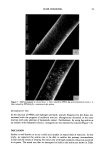
j. Soc. Cosmet. Chem., 42, 45-57 (January/February 1991) Development of safety hair colorants using silver-zeolite as oxidative catalyst YURI OKANO, HITOSHI MASAKI, SUMI MINESHITA, MASASHI FUJII, KEN-ICHI SAKON, and KAZUSHIGE SUZUKI, Noevir Co. Ltd., Shiga Central Research Laboratory, Japan. Received October 8, 1990. Presented at the 16th IFSCC Congress, New York, October 1990. Synopsis The most important hair colorants on the market, because of their effective coloring, are the oxidation dyes. They consist of primary intermediates, oxidants, and couplers. In most cases, hydrogen peroxide is em- ployed as the oxidant, but it can cause damage to hair. Therefore, there has been much hope of finding a better and safer hair colorant. In our studies, we have found a hair colorant in which the primary interme- diates are oxidized in the presence of silver ions used as a catalyst without hydrogen peroxide. In order to dye hair, oxidation of the intermediates must take place within the hair. If the oxidative reaction is completed outside of the hair strand, the enlarged dye molecules will not diffuse within the hair strand. If the reaction proceeds slowly, it is too time-consuming for hair coloring. We have succeeded in controlling the elution rate of silver ion catalyzing the oxidation reaction by holding it within the zeolite. By controlling the pH, the contents of the silver-zeolite, and the composition of the solvent, the elution rate can be best controlled for dyeing the hair. Furthermore, tannin contained in plant extracts has been used as the coupler for increasing safety. The hair coloring products using silver-zeolite as an oxidation catalyst and the plant extracts as a coupler source, were shown to be safer in the Ames mutagenicity tests that we have conducted. We have also found less damage by microscopy than with conventional hair dyes using hydrogen peroxide. INTRODUCTION The coloring of hair has been one of the most important acts of adornment since the origins of man. The usual reasons for coloring the hair are the following: to change the natural color, to change the color of the hair temporarily, or to hide or color the gray hairs that begin to appear with age. In Japan hair colorants for gray hair have been a necessity of life for centuries. Modern systems of hair coloring may be divided into three categories: temporary col- oring, semi-permanent coloring, and permanent coloring, which consists of so-called oxidative dyes. As the name indicates, permanent coloring provides effectively perma- nent coloration and it is the most important hair colorant on the market. 45

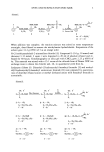
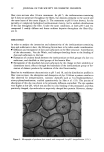
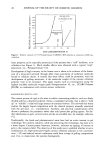
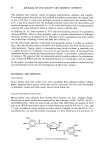
46 JOURNAL OF THE SOCIETY OF COSMETIC CHEMISTS The oxidative hair colorants consist of primary intermediates, oxidants, and couplers. Uncolored primary intermediates are oxidized by oxidants and produce the desired color in situ in the hair. In most cases hydrogen peroxide is employed as the oxidant. How- ever, it has been reported that the hydrogen peroxide reacts with the hair keratin and results in damage to the hair fiber (1-3). It is also well known that a strong peroxide solution will cause dermatitis When it comes in contact with the skin. In addition, B. N. Ames reported in 1975 that the oxidative products of p-phenylene diamine (PPDA), which is most generally used as a primary intermediate by hydrogen peroxide, resulted in mutagenicity (4). Therefore, much investigation has been carried out in the hope of finding a better and safer hair colorant (5). On the other hand, phenolic compounds were generally used as a coupler in oxidative dyes. Not only do they produce desirable color modifications, but they can also serve as color stabilizers. Tannin, which is contained in many kinds of plants, is expected to be a coupler because of its phenolic structures. In our previous study, it was found that hamamelis extract containing hamamelitannin (Figure 1) accelerated a polymerization of melanin. We expected that the hamamelis extract would accelerate the polymeriza- tion of oxidized PPDA and that the hamamelitannin in it would play a role as coupler. In this paper, we report the application of silver-zeolite as an oxidative catalyst and the use of hamamelis extract for the development of safety hair colorant. MATERIALS AND METHODS HAIR TRESSES Intact human gray hair tresses were used, purchased from Okamoto-shokai, Osaka, Japan. Approximately a gram of hair was used for each tress. The hair tress was washed in methanol, rinsed well with water, and air dried before use. ZEOLITE CONTAINING METAL IONS Metal-zeolites were obtained from Sinanen-New Ceramic Co. Ltd., Nagoya, Japan. Four kinds of metal zeolite were examined for hair coloring, Cu(II)-, Fe(III)-, Ag-(I)-, and Zn(II)-zeolite. There are some kinds of zeolite that differ from one another in their pore sizes. We obtained three types of zeolite whose pore sizes are 0.4 nm, 0.7 nm, and 1.3 nm. In addition, metal contents in zeolite may be changed. In the case of Cu-, Fe-, and Zn-zeolite, we used the zeolites containing 2.5 wt% of metal in 0.4-nm pores. In HO II o• •o• •H HO C-- , xOH Figure 1. Structure of hamamelitannin.
Purchased for the exclusive use of nofirst nolast (unknown)
From: SCC Media Library & Resource Center (library.scconline.org)