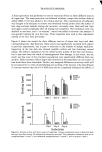
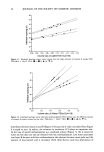
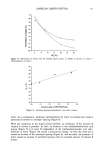
j. Soc. Cosmet. Chem., 46, 1-9 (January/February 1995) Fate of topical hydrocarbons in the skin BARBARA E. BROWN, WALTER DIEMBECK, UDO HOPPE, and PETER M. ELIAS, Department of Dermatology, University of California, San Francisco, and Dermatology Service, Veterans Affairs Medical Center, San Francisco, CA 94121 (B.E.B., P.M.E.), and P. G. Unna Research Center, Beiersdorf AG, Hamburg, Germany (W.D., U.H. ). Received October 12, 1994. Synopsis Very long-chain hydrocarbons, i.e., n-alkanes, are the principal ingredient of such common dermatologic products as mineral oil, petroleum jelly, and aquaphor. Yet, aliphatic hydrocarbons, including n-alkanes, are known tumor promoters. Moreover, recent reports suggest that alkanes in mineral oil-containing oral medications can be absorbed across mucosal epithelia, with accumulation in the liver. To begin to deter- mine whether epicutaneously applied hydrocarbons present a risk of transdermal absorption, we recently showed by fluorescent and electron microscopy that petrolatum, topically applied to intact skin, appears to remain restricted to the stratum comeurn (J. Amer. Acad. Dermatol., 26, 387-396, 1992). In this study, we performed quantitative studies, utilizing radiolabeled hexadecane and docosane, to determine whether n-alkanes of different chain lengths are absorbed across either intact or acetone-treated skin. Neither hexadecane nor docosane, whether applied in solvents or in "neat" petrolatum, penetrated fresh, excised porcine skin. Likewise, labeled docosane did not penetrate below the dermis in either intact or in acetone- treated hairless mouse skin, regardless of the vehicle. Finally, fluorescence microscopy demonstrated that petrolatum remains restricted to the stratum comeurn not only in intact skin, but also after acetone treatment. These studies show that topical hydrocarbons do not penetrate to deeper layers of either intact or damaged skin, regardless of the manner of application. INTRODUCTION Hydrocarbon-containing materials, such as petroleum jelly and mineral oil, are widely used in topical skin and mucosal preparations. Although hydrocarbons are fossil fuel- derived alkanes that are not synthesized normally by mammalian tissues or in the skin (1,2), isozymes of the cytochrome p450 system can metabolize these molecules to more readily excretable forms (3). Because certain hydrocarbons can function as tumor pro- moters, their distribution following topical application becomes of more than theoretical concern. Moreover, recent studies suggest that after repeated, per-oral intake, alkanes in mineral oil-containing oral medications may be absorbed and transported to the liver and lymph nodes (4,5). Our laboratories recently have begun to explore the mechanism of action of topically

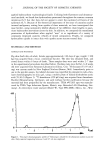
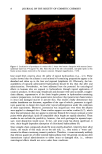
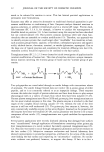
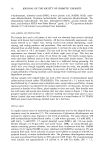
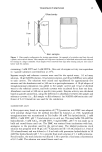
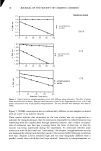
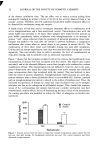
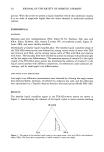
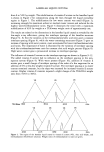
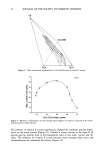
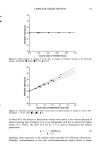
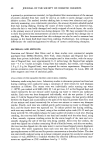
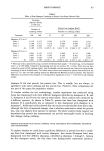
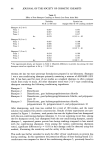
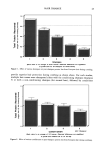
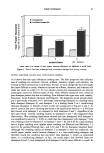
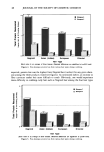
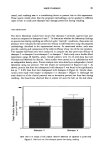
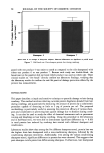
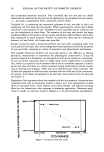
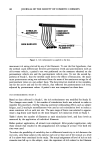
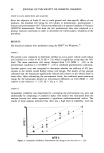
2 JOURNAL OF THE SOCIETY OF COSMETIC CHEMISTS applied hydrocarbons vs physiological lipids. Utilizing both fluorescent and ultrastruc- tural methods, we found that hydrocarbons penetrated throughout the stratum corneum interstices (6,7) but that they did not appear to enter the nucleated cell layers of the epidermis (6,7). Because of the theoretical importance of the issue of cutaneous and/or internal malignancy arising from uptake of these materials, we have investigated this issue further, using isotopically labeled alkanes of two different chain lengths to quan- titate hydrocarbon movement across the skin. In addition, we compared the transdermal penetration of hydrocarbons when applied "neat" or as ingredients of a variety of commonly employed cosmetic vehicles of mixed composition. Finally, we compared hydrocarbon uptake in intact skin with uptake across acetone-treated skin. MATERIALS AND METHODS ANIMALS AND MATERIALS Pig skin (back skin of adult, female pigs approximately 130 days of age weight = 100 kg) was acquired from a local, commercial butcher. The skin was obtained fresh, and stored frozen within 6 hours of death. These samples then were used within 2-7 days in the experimental procedures described below. Hairless male mice (hr/hr), 6-8 weeks old were acquired from Simonsen Laboratories (Gilroy, CA). 3H-docosane (53.97 mCi/ mg) was custom made by New England Nuclear (Boston, MA). Immediately prior to use in the pig skin assays, the labeled docosane was repurified by preparative radio-thin- layer chromatography on silica gel, using a mobile phase of hexane:diethylether:acetic acid (70:30:2) (Figure 1). •4C-hexadecane (250 •tCi/mg) was acquired from Amersham- Buchler (Braunschweig, Germany), and used without further purification because the material had been prepurified by the manufacturer. TESA •53205 tape was manufac- tured by TESA Tape Industries (Sparta, Maine), resp. Beiersdorf AG (Hamburg, Ger- many). An electrolytic water analyzer (Model W, Type SPR-DMU Meeco, Inc., War- 489 1 3 7 [r=] Figure 1. Thin-layer chromatographic profile of 3H-docosane utilized for the absorption studies in porcine skin. Only material migrating between 6 and 8.5 cm was employed.
Purchased for the exclusive use of nofirst nolast (unknown)
From: SCC Media Library & Resource Center (library.scconline.org)