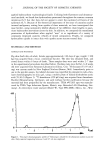
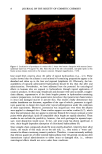
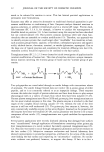
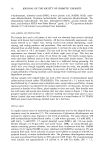
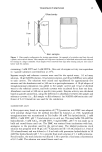
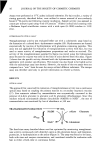
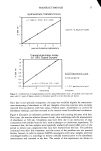
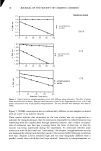
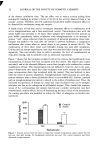
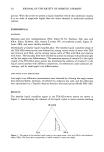
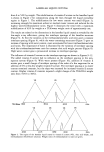
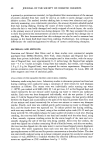
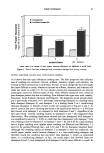
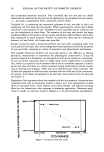
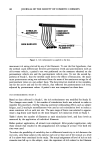
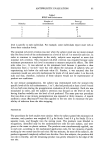
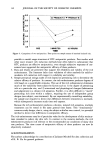
54 JOURNAL OF THE SOCIETY OF COSMETIC CHEMISTS and intradermal histamine injection. They concluded that itch and pain are closely related and are subserved by the same neural apparatus in the peripheral nervous system, i.e., the small, unmyelinated fibers, sometimes called C-fibers. Torebj/3rk (6), in examining the anatomical substrates of itch, was able to elicit itch employing von Frey hairs and itch powder. While supporting the notion that C-fibers contribute to the sensation of itch, Torebji3rk (7) later concluded that he could not rule out the contribution of other fibers. The sensation of itch may also involve the larger myelinated fibers of the somatic nervous system (sometimes called A-fibers), which have been implicated in touch sensation. Further, he noted that there may be a distinction between itch and tickle, itch being more pain-like. Sinclair (1) also has made a distinction between itch and tickle, classifying tickle with touch and itch with pain. Free nerve endings have been implicated in both the sensations of itch and tickle, implying an overlap of anatomical and physiological mechanisms. This possible distinction between itch and tickle points to the difficulty in relating perceptual characteristics to anatomical and physiological characteristics. Using the previous research as a foundation, the perception of itch can be viewed as a continuum. At one end of this continuum there is a slight tickle in the middle there is a moderate itch, which is an episodic tactile sensation that elicits an immediate response to scratch and at the other end there is a chronic sensation having characteristics related to pain, such as burning and stinging, which may elicit additional pain when scratched. The A-fibers are proposed as relatively more involved with the tickle end of the continuum. In contrast, the C-fibers are proposed to be relatively more involved with the pain end (see Figure 1). Regardless of the arguments about the complexity of the itch sensation, histamines have commonly been used in antipruritic studies to induce itch. Two representative studies (8,9) are discussed below. Local redness, local edema (wheal), and adjacent erythema (flare) are the characteristic skin responses to histamine application. Histamine appli- cation is usually via injection however, Magerl et al. (8) used histamine iontophoresis. crj n, uiI m 0 0 rn o uiI Higher A:C Ratio Lower A:C Ratio Touch 4-- Nearly Touch : ß ß ß : ß : ß ,' Nearly Pain ß ß Tickle Moderate Itch : I¾CH PN(3E Figure 1. Perception neural-fiber model. ß ß ß ß ß Severe Itch ,' Pain ß ß ß

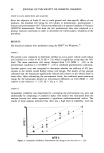
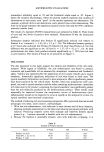
ANTIPRURITIC EVALUATION 55 These authors state that iontophoresis is a less damaging method of histamine applica- tion, and reported that the wheal and flare response was linearly related to dose over a wide range of stimulus strengths. Sensory discrimination of different stimulus levels in this study was demonstrated with visual analog scale ratings. While histamine ionto- phoresis may be less invasive than other methods of histamine application, even the lowest levels of histamine iontophoresis in this study produced visual signs of skin irritation (i.e., wheal). Bjerring and Arendt-Nielsens (9) also induced itch with histamines. The itch was abolished with lidocaine infiltration. They reported, however, that a topical analgesic cream had no effect on the ratings of itch induced by the histamines. Because of the extent of irritation resulting from histamine-induced itch, it is unlikely that a good general model for the testing of OTC antipruritics can be developed on histamine-based or other invasive methods. OTC antipruritics are commonly recommended and used for the relief of itch due to dry skin, winter itch, or minor irritation. The usual signs of non-aggravated dry skin or even minor irritation are often not comparable to the more severe irritation induced by histamines (i.e., showing both wheal and flare). Based on this disparity between histamine-affected skin and skin conditions most relevant to OTC antipruritic agents, a new itch induction method was developed. The objective in developing this new method was to establish a valid and reliable means to determine the efficacy of OTC products in alleviating itch on skin that was mostly devoid of visual erythema and edema. BACKGROUND ON A NEW METHOD TO INDUCE AND TO MEASURE OTC LEVEL ITCH As mentioned previously, researchers have induced itch by dragging hairs or filaments across the skin. This method simulates common itch stimulants, such as clothing fibers on dry skin. In order to provide valid and reliable itch induction, a method was devised to deliver a more consistent stimulus. The itch esthesiometer utilizes modified nylon monofilaments, a patented (U.S. patent number 5316011, others pending) improve- ment of the Semmes-Weinstein esthesiometer (10). Nylon monofilaments have prop- erties consistent with the induction of consistent itch. When placed against the skin and bent slightly, the monofilaments deliver a constant force that is dependent only on the diameter and length of the right-cylindrical monofilament. When applying the mono- filament, the applied force rapidly approaches the constant-characteristic force of the monofilament, and additional bending of the monofilament does not increase the force normal to the skin. Nylon monofilaments also stimulate the cutaneous receptors in a natural fashion, in contrast to electrical and chemical methods that can bypass the primary cutaneous receptors or simultaneously stimulate receptors, afferent and efferent pathways. The Semmes-Weinstein esthesiometer employs a set of monofilaments of different forces, and is used to evaluate tactile sensitivity. Tactile sensitivity is affected by many factors, including neuropathologies, aging, irritation, and the application of anesthet- ics. The Semmes-Weinstein esthesiometer has been applied to the measurement of topical anesthetics (! !) and low-level skin irritation (!2). For example, Weinstein (11) reported that the topical application of anesthetics (benzocaine) increased tactile sensory thresholds as measured at four body locations.
Purchased for the exclusive use of nofirst nolast (unknown)
From: SCC Media Library & Resource Center (library.scconline.org)