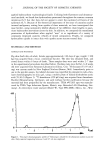
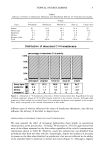
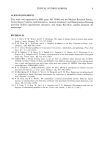
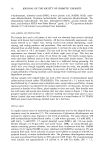
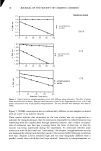
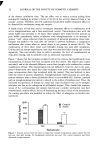
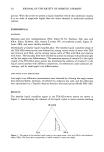
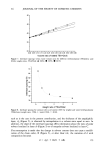
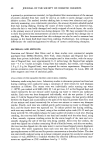
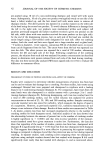
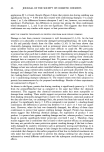
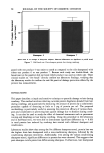
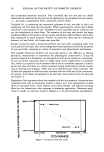
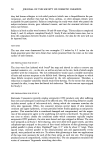
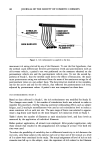
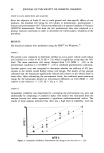
30 JOURNAL OF THE SOCIETY OF COSMETIC CHEMISTS percent. With this article we present a liquid crystalline vehicle that solubilizes vitamin E to an order of magnitude higher than the values obtained in traditional emulsion systems. EXPERIMENTAL MATERIALS Materials used were triethanolamine (TEA, Fisher 99.3%, Fairlawn, NJ), oleic acid (OLA, Fisher, Fairlawn, NJ), vitamin E acetate (VE, ot-tocopherol acetate, Sigma, St. Louis, MO), and water (doubly distilled). Determination of lamellar liquid crystalline phase. The lameliar liquid crystalline phase of the TEA-OLA-water system was obtained by mixing various ratios of water with TEA and titration with OLA, and by mixing various ratios of TEA with OLA and titration with water. The boundary lines were checked by optical microscopy with polarized light and by low-angle x-ray diffractometry. The maximum amount of vitamin E in the liquid crystal of the TEA-OLA-water system was determined by addition of vitamin E to the liquid crystal systems with different composition, by observation under polarized mi- croscopy, and by small-angle x-ray diffractometry. LOW-ANGLE X-RAY DIFFRACTION Low-angle x-ray diffraction measurements were obtained by a Kiessig low-angle camera from Richard Seifert, Germany. Ni-filtered Cu radiation was used, and the reflections were determined by a Tennelec Position Sensitive detectory system (Model PSD-100). RESULTS The lameIlar liquid crystalline region in the TEA-OLA-water system are shown in Figure 1, demonstrating the tolerance of the liquid crystal to water contents reaching WATER TEA OLA Figure 1. The region of the lameliar liquid crystal in the system water, oleic acid (OLA), and triethanol- amine (TEA). The lines show compositions to which vitamin E acetate was added.

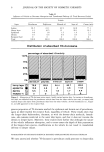
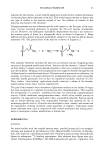
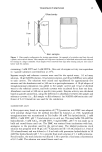
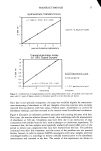
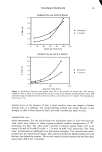
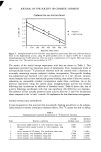
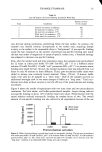
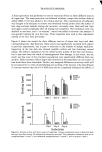
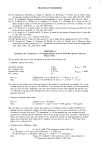
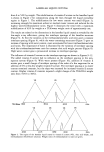
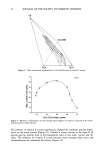
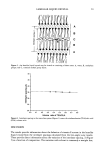
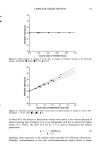
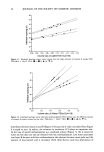
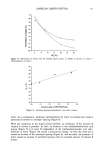
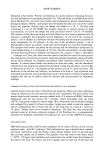
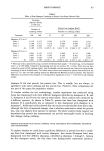
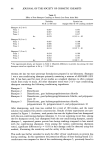
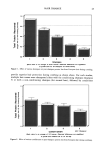
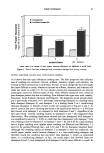
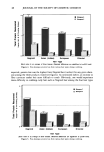
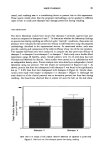
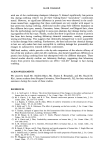
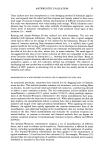
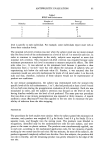
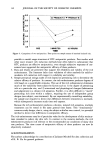
LAMELLAR LIQUID CRYSTAL 31 from 0 to 54% by weight. The solubilization of vitamin E acetate in the lameliar liquid is shown in Figure 2 for compositions along the lines through the liquid crystalline region in Figure 1. The solubilization for low water content was small (Figure 3), increasing strongly for maximum solvent at medium water content and reduced for the highest water/triethanolamine ratios. Figure 4 illustrates the trend with a maximum solubilization of 63% by weight at a TEA/water weight ratio of approximately one. The results are related to the dimensions in the lameliar liquid crystal as revealed by the low-angle x-ray reflections, giving the interlayer spacings of the lamellar structure (Figure 5). At first the variation in the triethanolamine/oleic acid ratio gave a constant interlayer spacing (Figure 6), while the water-containing structures (Figure 7) gave an increase of spacing with water content, more accentuated for lower triethanolamine/oleic acid ratios. The importance of water is illustrated by the variation of interlayer spacing with the triethanolamine/water ratio for constant oleic acid weight percent (Figure 8). High water content gave a pronounced increase in interlayer spacings. The influence of vitamin E acetate on the interlayer spacings are shown in Figures 9-12. The added vitamin E acetate had no influence on the interlayer spacing in the non- aqueous system (Figure 9). With water present (Figure 10), addition of vitamin E acetate gave a small change of interlayer spacing of the order of a few angstrom for an addition of 6% or less (by weight) vitamin E acetate. The interlayer spacing at no water content remained constant, but the slope was increased for increased vitamin E acetate content. Higher vitamin E contents required a slight change of the TEA/OLA weight ratio from 35/65 to 38/62. TEA/Water 100/0 80/20 60/40 OLA VE VE VE VE 40/60 25/75 20/80 18/82 OLA Figure 2. The region of the lamellar liquid crystal in vitamin E acetate (VE), oleic acid (OLA), and triethanolamine (TEA)/water solutions. Weight ratios of triethanolamine to water are given.
Purchased for the exclusive use of nofirst nolast (unknown)
From: SCC Media Library & Resource Center (library.scconline.org)