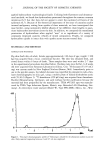
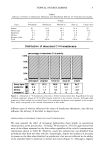
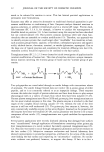
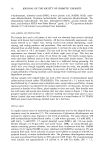
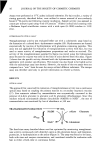
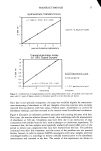
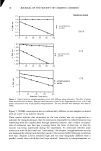
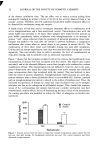
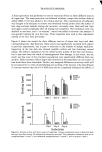
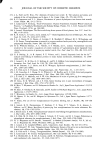
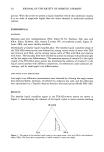
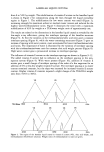
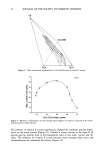
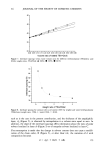
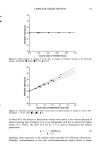
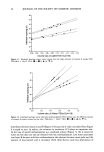
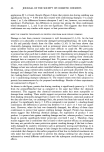
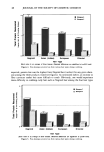
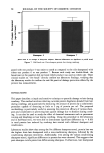
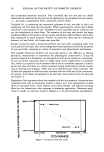
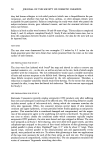
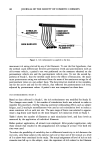
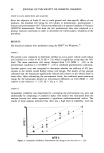
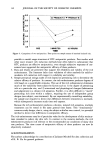
36 JOURNAL OF THE SOCIETY OF COSMETIC CHEMISTS 46- 42. • 4O • 36 L-- • 34 32 30 i ' i ' i i i i i ' i i 0.00 0.02 0.04 0.06 0.08 0.10 0.12 0.14 0.16 0.18 Volume ratio of water/(TEA+OLA+VE) Figure 11. Interlayer spacings versus water volume ratio for large amounts of vitamin E acetate (VE). TEA:OLA = 38:62. VE%: ß 0, ß 8, ß 20, ß 30. 45 4O • 25 I 2O 0.0 Volume ratio of (Water+TEA)/(OLA+VE) Figure 12. Interlayer spacings versus water plus triethanolamine (TEA) volume ratio for different amounts of vitamin E acetate counted on the total. TEA:OLA = 38:62. VE%: ß 0, ß 8, ß 20, ß 30. distributed between layers A and B (Figure 5) because the ot value calculated from Figure 6 is equal to zero. In reality, the variation in ionization (4,5) plays an important role. In the case of water/triethanolamine as a combined solvent (Figure 7), the ot values for water are less than one and are reduced with less triethanolamine. Less water penetrates into layer B because with less triethanolamine the solvents becomes more polar and the amount of non-ionized acid is increased. Both these factors cause less penetration of

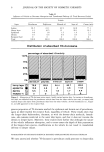
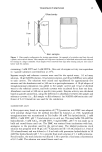
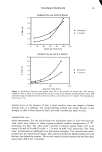
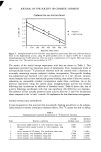
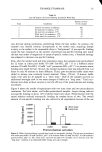
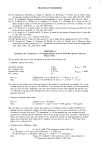
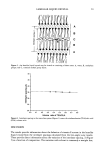
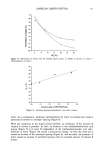
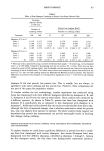
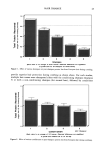
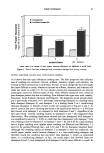
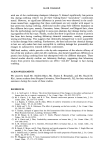
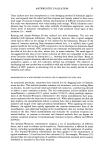
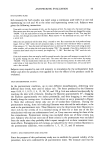
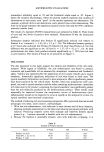
LAMELLAR LIQUID CRYSTAL 37 70- 50- 40 30 20 10 0 -10 -20 -30 VE (%) Figure 13. Penetration of solvent into the lameliar liquid crystal. [•, Water as solvent O, water q- triethanolamine as solvent. 40- 39.• 38 • 37 • 36-' 35 ] 34 ' 33 • 32 • 30 • 0.0 011 012 013 0'.4 0.5 Volume ratio of VE/(TENOLA) Figure 14. Interlayer spacing extrapolated to zero water content. water. As a consequence, replacing triethanolamine by water in extremum also causes a pronounced increase in interlayer spacing (Figure 8). With the conditions in the liquid crystal clarified, an evaluation of the location of vitamin E acetate is possible. At first, its location in the triethanolamine/oleic acid system (Figure 9) is in layer B independent of the triethanolamine/oleic acid ratio. Addition of water (Figure 10) caused a pronounced change. At first the water per se caused an increase of the interlayer spacing (Figure 8), and secondly, the presence of water caused an increase of interlayer spacing with an increased amount of vitamin E acetate.
Purchased for the exclusive use of nofirst nolast (unknown)
From: SCC Media Library & Resource Center (library.scconline.org)