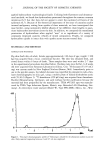
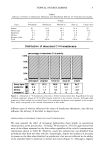
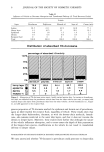
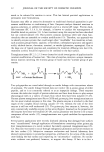
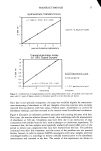
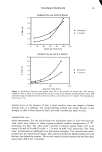
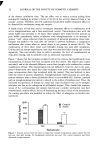
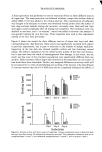
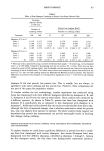
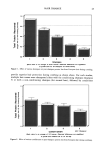
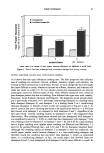
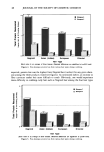
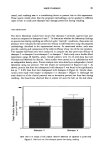
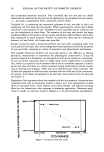
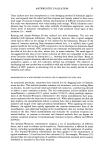
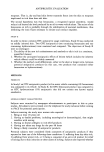
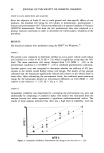
44 JOURNAL OF THE SOCIETY OF COSMETIC CHEMISTS Table II Effect of Post-Shampoo Combing on Protein Loss From Asian Hair Turbidity (O.D. at 600 nm) Protein loss (mg/gm Hair @ 50 combing strokes*) Shampoo A (2-in-1) Tress 1 0.097 0.341 Tress 2 0.067 0.281 Tress 3 0.071 0.337 Av. 0.078 0.319 -+ .02 Shampoo B (2-in-1) Tress 1 0.007 0. 108 Tress 1 0.006 0.104 Tress 3 0.003 0.108 Av. 0.013 0.107 -4-_ .01 Shampoo C (2-in-1) Tress 1 0.054 0. 184 Tress 2 0.053 0. 191 Tress 3 0.062 0.191 Av. 0.056 0. 189 -4-_ .01 * For experimental details, see footnote in Table I. Observed differences in protein loss among the three shampoos tested are significant at the p = 0.05 level. whereas the last two were prototype formulations prepared in our laboratory. Shampoo 1 was a non-conditioning shampoo primarily containing a mixture of ALS/ALES (19% AI). It has been used for most of our studies as a standard shampoo to often compare results from study to study. All other shampoos tested were 2-in-1-type conditioning shampoos containing the following conditioning ingredients: Shampoo 1 None Shampoo 2 Dimethicone Shampoo 3 Dimethicone, guar hydroxypropyltrimonium chloride Shampoo 4 Dimethicone, guar hydroxypropyltrimonium chloride, and polyquater- nium 10 Shampoo 5 Dimethicone, guar hydroxypropyltrimonium chloride, polyquaternium 10, polyquaternium 6, and polyquaternium 16 After shampooing, each tress was combed for a total of 100 strokes, and the water solution was analyzed for protein concentration. Results of these experiments are sum- marized in Figure 1. As shown, total protein loss was the highest from hair shampooed with the non-conditioning shampoo (shampoo 1). It is not surprising to see that, among the five shampoos tested, hair shampooed with the non-conditioning shampoo, namely shampoo 1, experienced greater protein loss during combing compared to hair treated with the conditioning shampoos. Even among the various conditioning shampoos tested, significant differences (p = 0.05) in hair damage could be detected using this method, illustrating the sensitivity and the utility of the method. This work was further extended to study the effect of hair conditioners on protein loss during combing. In this experiment the protection efficacy of three leading-brand U.S. conditioners was compared to that of the conditioning shampoo 5, previously found to

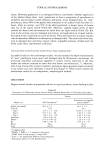
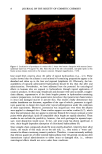
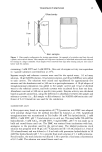
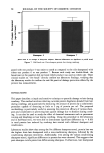
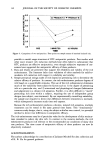
HAIR DAMAGE 45 .:. 0 • ::i::i•.:. '•::.• :i::•ii! :::!•, ' ...:11 :i:!,! .! i74• :.:.i:.! •:•-v. ::i•!•i :ii:! :i : i:. ..:: : 'i'i"• i:i::?. ??i :'.i: o.o '• ........................................................... •',',i,,j :. • :: .................................................... ' i:.•m: !':!i! .................................................... ill m I 2 3 4 5 Shampoo (Each value Is an average of three tressas. Observed diffarances are significant at p=O.05 level for all shampoos as tested above). Figure 1. Effect of various shampoos on post-shampoo protein loss from European hair during combing. provide superior hair protection during combing as shown above. For such studies, multiple hair tresses were shampooed either with the conditioning shampoo (shampoo 5) or with a non-conditioning shampoo (for normal hair), followed by conditioner 2 ... I 2 3 5 CONDITIONER (2in1 Shampoo) (Each value is an average of 3-5 tresses. Obsarved differencas ara significant at p=0.05 level behveen #5 vs. #1 and #2) Figure 2. Effect of various conditioners on post-shampoo protein loss from European hair during combing.
Purchased for the exclusive use of nofirst nolast (unknown)
From: SCC Media Library & Resource Center (library.scconline.org)