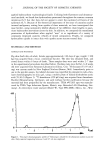
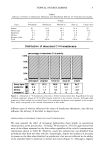
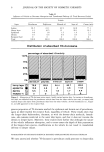
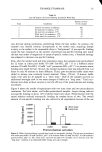
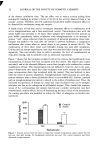
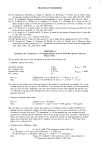
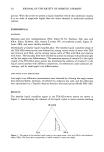
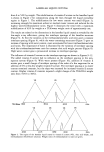
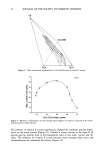
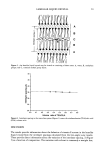
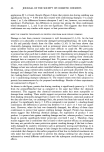
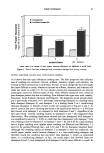
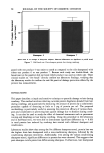
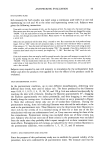
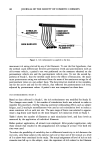
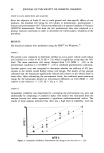
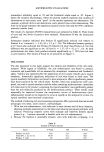
22 JOURNAL OF THE SOCIETY OF COSMETIC CHEMISTS of the shorter incubation time. The net effect was to reduce activity arising from non-specific binding to within a factor of 10-20 of the activity observed from a "no isotope" control. Therefore, the new conditions would allow smaller treatment effects to be observed for incubations using the enzyme. A single source of hair was used to investigate treatment effects in combination with active transglutaminase and a heat-inactivated control. Preincubation time with the amine buffer was extended to 20 hours. Hair samples were rinsed for five minutes in pure buffer immediately before incubation with transglutaminase in an attempt to remove "cold" amine substrate from the proximity of potential glutamine donor sites. Enzyme was added to the vials after the isotope to prevent hydrolysis, a competitive mechanism that occurs when an amine donor is not present in excess (40,41). The combination of three short rinses and overnight rinsing was used after incubation. Unlike previous isotope experiments, hair clips were also saved after rinsing and counted separately. This was initially done in order to ascertain the level of contamination on clips after rinsing, and for possible reuse in additional experiments. Figure 7 shows that hair samples incubated with active enzyme had significantly more incorporation of isotope than hair incubated with the control. The relative data scatter was small, and so the observed difference was at first thought to be evidence for covalent modification of hair. This interpretation was not definitive, however, due to the unex- pected observation that metal hair clips incubated with active enzyme also exhibited more incorporation than clips incubated with the control. This was believed to have been the result of protein adsorption. Transglutaminase itself functions as a poor glu- tamine substrate when a better glutamine donor is not available (42). Further, proteins such as transglutaminase are known to adsorb to the surface of stainless steel. Thus, the increased incorporation of isotope for metal hair clips incubated with active transglu- taminase was due to the adsorption of self-labeled enzyme. This clouded the interpre- tation of the corresponding hair sample data because a similar mechanism may have overwhelmed covalent effects. In lieu of determining the exact nature of the mechanism, the rinsing procedure was modified to reduce the effect of adsorption on further mea- surements. 1200 ,--, [] ConSol 1:• 900 [] AcUve t:zo 600 ,•..•. , ,,• '• 300 o H•r Clips Substrate Figure 7. Enzyme activity with one source of virgin hair. Isotope incorporation (cpm) is shown for both hair and clips after rinsing. No background subtraction was used. The control treatment used heat- denatured transglutaminase.

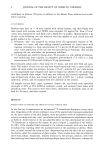
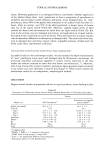
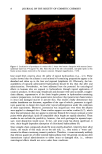
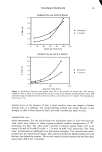
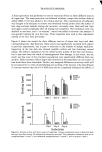
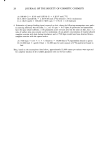
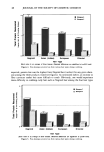
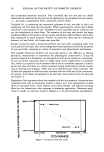
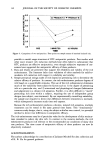
TRANSGLUTAMINASE 2 3 A final experiment was performed to test for treatment effects on three different sources of virgin hair. The same procedure was followed as before, except that sodium dodecyl sulfate (SDS, 0.5%) was added to the rinsing solution. This concentration of surfactant was thought to be adequate to remove non-covalently bound protein from the surface of hair clips and hair samples during the extensive, overnight rinse. Hair and hair clips were again counted separately after all rinsing was completed. The incubation time was doubled to one hour, and a "no enzyme" control was added to ascertain the amount of non-specific binding for each hair type. Three replicates were used in this experiment instead of the four used previously. Figure 8 shows the results for three different sources of virgin hair (top) and their corresponding hair clips (bottom). Data scatter was significantly increased with respect to previous experiments, due in part to reduction in the number of sample replicates. Inspection of the raw data also showed possible outliers and less clustering around means. No definite explanation for the overall poorer quality of the data was obvious, but it may have been the result of inhomogeneous fiber damage. In any event, the net result was that none of the treatment populations were significantly different from one another. Only treatment effects larger than observed in the experiment on one source of hair would have been observable. Further, any marginal differences in activity could still be accounted for in terms of self-labeling and sticking of the enzyme. Clip data (Figure 8, bottom) showed that the 0.5 % SDS rinse did not completely eliminate the effects of 2000 1500 lOOO 500 Hair 1 Hair 2 Hair 3 [] Active [] Control [] None 1200 800 400 o Clip 1 Clip 2 Clip 3 Substrate [] Active [] Control [] None Figure 8. Enzyme activity with three sources of virgin hair. Isotope incorporation (cpm) is shown for both hair and clips after rinsing. No background subtraction was used. The comparative treatments were active transglutaminase ("active"), heat-denatured transglutaminase ("control"), and no enzyme ("none").
Purchased for the exclusive use of nofirst nolast (unknown)
From: SCC Media Library & Resource Center (library.scconline.org)