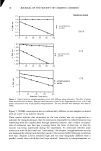
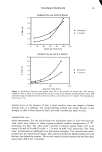
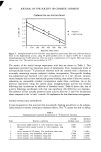
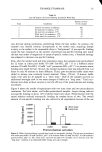
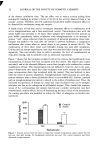
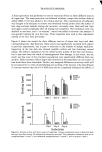
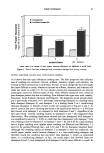
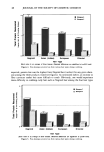
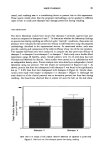
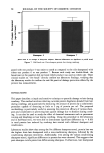
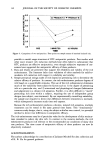
24 JOURNAL OF THE SOCIETY OF COSMETIC CHEMISTS adsorption, at least on stainless steel. Thus, interference with the hair measurement could not be ruled out. DISCUSSION An optical and an isotope assay were developed in an effort to determine if human hair was recognized by guinea pig liver transglutaminase as a glutamine donor substrate. No conclusive evidence was found using either assay to show that virgin hair was modified by transglutaminase. This result appears to contradict previous work in which it was asserted that transglutaminase cross-links endogenous glutamine and lysine residues on hair surfaces (31). The process tested in the present work involved reaction with a solution phase amine donor, and so only one reactant was in the nonsoluble, less-mobile phase. Probability would seem to dictate that reaction with a solution-phase donor would be more favorable than with a bound reactant, because diffusion would allow more orientations and events to be sampled than chain-to-chain proximity limitations existing between endogenous sites. Endogenous cross-linking that still did occur would reduce the number of glutamine sites that could be labeled with [•4C]-amine and subsequently detected, but it is unlikely that this was a significant mechanism. There- fore, the most realistic interpretation of the data is that virgin hair is not a glutamine donor substrate for transglutaminase. This implies that previous observations (31) may have been based on non-catalytic effects. A calculation was performed in an effort to estimate the amount of covalent binding required to give rise to a measurable signal using the more sensitive isotope assay. A comparison was made based on data from experiments using rat cauda sperm cells (43). No other example was found in the literature in which binding with a nonsoluble glutamine substrate was characterized. Appendix A shows the data and assumptions used to compare sperm and hair data. From these calculations it was estimated that approximately 32,000 cpm should have been detected in our experiment if hair was as good a substrate as the rat cauda sperm surface. This number is nearly two orders of magnitude greater than the detection limit for the current experimental conditions. This implies that if hair had been recognized as a even a mediocre substrate, the results should have been detected. Thus we conclude, as before, that virgin hair is not a glutamine substrate for transglutaminase. Human hair was a good candidate for solution-phase modification by this enzyme. Hair has a large abundance of glutamine residues, and there was evidence in the patent literature suggesting that it was recognized as a substrate. Examples in the broader transglutaminase literature show, however, that all glutamines are not substrates for the enzyme (44). This is due to the chemical sequence of residues around glutamine, the structure of the immediate site, and whether the site is accessible to the enzyme under normal conditions. The exact nature of the hair surface is still a subject of debate, and an abundance of glutamine does not ensure that the surface will be recognized by transglutaminase. There is evidence to suggest that the outermost 1-2 nm of the virgin hair surface is a covalently bound layer of fatty acid, known in the wool literature as the F-layer (45-47). Such a layer would probably restrict access to candidate glutamine sites though hydrophobic repulsion or steric interactions. This theory could be tested by

TRANSGLUTAMINASE 2 5 removal of the F-layer (45) and incubation with the enzyme. However, this procedure would likely have only academic importance, unless consumer habits, weathering, or normal chemical processing were found to similarly destroy or disrupt the F-layer. Transglutaminase remains an interesting enzyme for investigation of personal care prod- uct applications. Its enzymology is well understood, and an inexpensive bacterially expressed industrial source has recently become available (48). One possible personal care application might be a hair conditioning treatment that did not require hair to donate endogenous residues to the reaction, as in the present case. The enzyme could be used to cross-link soluble protein or modified protein films co-deposited on hair. In this strategy the enzyme would cross-link itself into the protein film, as it does in food product applications (49,50), and remain on the hair. Observable effects on hair might include semipermanent shine enhancement, damage alleviation, or hydration control. The minimum course of action would probably require little or no engineering of the protein film components. Finally, as stated previously, covalent attachment of solution- phase amine donors and multisite bridging might still be possible on hair where the proposed F-layer was removed or damaged through normal processes. However, the effects of these processes on the proposed F-layer would first have to be determined. ACKNOWLEDGMENTS The authors thank M. Busse and R. Zuwala for assistance in sample preparation, R. Solberg for supplying the child's hair, Dr. Martin Griffin, University of Nottingham, UK, for supplying our initial stock of the enzyme, and J. Kissel, B. Kisting, V. T.- L6pez, and D. Moyer, for donating hair. REFERENCES (1) (2) (3) (4) (5) (6) (7) (8) (9) (10) (11) (12) (13) (14) C. R. Robbins, Chemical and Physical Behavior of Human Hair (Springer-Verlag, New York, 1988), pp. 8-13. Z. K. Draelos, Hair cosmetics, Derm. Clin., 9, 19-27 (1991). J. A. Swift and A. C. Brown, The critical determination of fine changes in the surface architecture of human hair due to cosmetic treatment, J. Soc. Cosmet. Chem., 23, 695-702 (1972). E. Tolgyesi, Weathering of hair, Cosmet. Toiletr., 98, 29-33 (1983). V. N. E. Robinson, A study of damaged hair, J. Soc. Cosmet. Chem., 27, 155-161 (1976). J. A. Swift, Fine details on the surface of human hair, Int. J. Cosmet. Sci., 13, 143-159 (1991). Private communication, H.-D. Weigmann, Textile Research Institute, December 1992. K. Yahagi, Silicones as conditioning agents in shampoos, Comun. Jorn, Com. Esp. Deterg., 23, 181- 193 (1992). E. D. Goddard, J. A. Faucher, R.J. Scott, and M. E. Turney, Adsorption of polymer JR on keratinous surfaces--Part II, J. Soc. Cosmet. Chem. 26, 539-550 (1975). R. Y. Lockhead, Conditioning shampoos, Soap Cosmetics/Chem. Spec., 42-49 (October 1992). A. K. Puri and R. T. Jones, An approach to permanent hair conditioning, Proc. of the 14th IFSCC Congress, 2, 1153-1175 (1986). S. Naito and K. Ooshima, Sorption of keratin hydrolyzate to hair and the cosmetic effect, Proc. of the 14th IFSCC Congress, 2, 1177-1193 (1986). N. Lambert and R. B. Freedman, Structural properties of homogeneous protein disulphide-isomerase from bovine liver purified by a rapid high yielding procedure, BiochemJ., 213, 225-234 (1983). University of Reading of Whiteknights House, U.S. Patent 4,853,315 (1989).
Purchased for the exclusive use of nofirst nolast (unknown)
From: SCC Media Library & Resource Center (library.scconline.org)