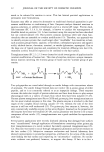
12 JOURNAL OF THE SOCIETY OF COSMETIC CHEMISTS needs to be reduced for reaction to occur. This has limited practical applications to permanent wave formulations. Enzymes may offer an attractive alternative to traditional chemical approaches in per- manent modification or conditioning of hair. Enzymes catalyze chemical reactions in aqueous solutions, at ambient temperatures and in a neutral pH range. Protein disul- fide-isomerase (EC 5.3.4.1), for example, is known to catalyze the rearrangement of disulfide bonds in proteins (13). A hair treatment using this enzyme has been described but not commercialized (14). Hair protein contains numerous other side chain func- tionalities that are amenable to covalent modification (15). Therefore, our approach was to identify enzyme systems that could target other "modifiable" functionalities in hair, such as amino groups (lysine, arginine, or histidine), carboxylates (glutamic and aspartic acids), alcohols (serine, threonine, tyrosine), or amides (glutamine, asparagine). Due to the large size of typical enzymes and constraints for materials diffusing into hair (16), treatment activity would be expected to be confined to the hair surface. Transglutaminases (EC 2.3.2.13) were chosen for initial investigation of applications for covalent modification of human hair. This class of enzymes catalyzes a unique transami- dation reaction involving the e-amino group of lysine and the •-amide group of glu- tamine: O Protein Backbone O '•L3•s +NH3 (1) Two polypeptides are cross-linked through an amide linkage with concomitant release of ammonia. The amide linkage formed does not involve the e•-amino group of either peptide, and so it so commonly referred to as an isopeptide linkage. These enzymes increase the molecular weight of protein substrates and have been shown to play unique physiological roles in a variety of tissues from which they have been isolated (17-25). Human plasma transglutaminase (Factor XIII) and guinea pig liver transglutaminase are the two most studied enzymes in this class. The plasma enzyme is involved in the final stages of the complex blood clotting cascade (17-19), whereas the role of the liver enzyme is still not well understood (25). The guinea pig liver enzyme is, however, the only commercially available enzyme in this series (Sigma). Inasmuch as the properties of this enzyme have been well studied (26-28), and as glutamine was known to be a major component of hair cuticle (15), transglutaminase was a good candidate for experiments with hair. Several patent applications were recently disclosed claiming that damaged hair surfaces were "reconditioned" through application of formulations containing either guinea pig liver transglutaminase or a newly isolated, bacterially expressed transglutaminase (29- 32). Reaction was stated to occur through endogenous glutamine and lysine residues on the hair surface (31). Subjective consumer evaluations and limited laboratory data showed improvements in several hair properties, attributed to the action of the enzyme cross-linking the hair surface and improving its "microsurface" condition. No mecha- nistic evidence was produced, however, to support this theory. If hair is in fact a

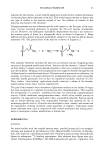
TRANSGLUTAMINASE 13 substrate for the enzyme, a more versatile application would involve covalent attachment of solution-phase donor substrates to the hair. This would require the hair to donate only one type of residue to the reaction instead of two. No evidence of research in this direction was found in the literature. Transglutaminases are very substrate-specific with respect to the first part of the enzy- matic reaction involving glutamine to generate the thio-acyl enzyme intermediate (25,33). However, the subsequent nucleophilic displacement reaction is not limited to the E-amino group of lysine in a polypeptide chain, as shown in Equation 1. Many different primary amines with good nucleophilic character at the reaction pH are known substrates (34). The general form of the reaction is shown in Equation 2: Gin NH 2 + R -- NH 2 • Gin NI-I - R (2) This substrate flexibility provided the basis for our research concept of applying these enzymes to the general modification of hair. Amines could be chosen or "tailored" based on their ability to impart various desired properties to hair once covalently incorporated into the backbone. Bridging of several glutamine sites-might be feasible through the use of bifunctional or multifunctional donors. Diamines such as putrescine or cadaverine, for example, are known to be good substrates for transglutaminases and could conceivably cross-link nearby glutamine sites on hair via sequential enzymatic reactions (35,36). Thus, surface "cross-linking" applications would constitute a subset of the broader, solution-phase amine donor concept explored here. The goal of this research was to determine if glutamine residues on the surface of virgin hair were recognized as a substrate for guinea pig liver transglutaminase. This required the development of a sensitive, nondestructive assay for monitoring transglutaminase activity. Unlike traditional transglutaminase assays, which utilize soluble proteins as substrates, the assay had to be applicable to hair, a nonsoluble substrate. Both an optical and an isotope labeling assay were sequentially developed and explored for use in monitoring specific activity. Protocols were developed to treat, sample, and mount hair for experiments utilizing extremely small quantities of reagents. Traditional amine donor substrates were used in conjunction with control treatments and rinsing proce- dures to investigate covalent modification of human hair. EXPERIMENTAL MATERIALS For initial studies with the coupled enzyme assay, purified guinea pig liver transglu- taminase was prepared by the laboratory of Dr. Martin Griffin, University of Notting- ham, UK, based on a described procedure (26). Purified enzyme was later obtained from Sigma for subsequent •4C labeling experiments. Also obtained from Sigma were glu- tamate dehydrogenase (G1DHase), Nc•-CBZ-L-glutaminyl-L-glycine, L-glutamic acid
Purchased for the exclusive use of nofirst nolast (unknown)
From: SCC Media Library & Resource Center (library.scconline.org)