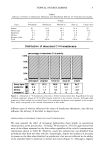
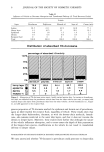
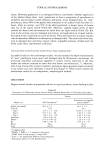
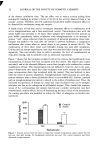
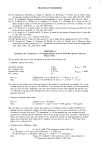
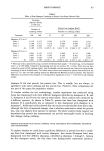
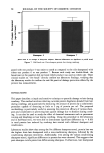
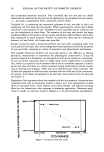
42 JOURNAL OF THE SOCIETY OF COSMETIC CHEMISTS pre-washed using 10 ml of a non-conditioning shampoo and rinsed well with warm water. Subsequently, 10 ml of a given test product was applied evenly to one side of the head, a lather worked up, and the hair rinsed well with warm water to remove all shampoo residue. The above process was repeated in a similar manner on the other side of the head using the second test product. To avoid inherent differences in damage from the left to the right side, test products were randomized within each subject (all panelists previously assigned odd subject numbers received a given test product on the left side, while those with even numbers received the same product on the right side). At the end of the shampooing process, hair on each side of the head was combed the entire length using a fine-toothed comb designated for each side. After ten combing strokes, both the comb and hair were dipped into a large stainless steel or glass bowl, "'9 inches in diameter, l-liter capacity, containing 200 ml of distilled water, to recover loose cuticle fragments from the hair. The excess water from the hair was squeezed out into the dish. The above process was repeated for a total of 100 strokes, alternating between the left and right side of the head. Following completion of the combing process, the solution from each side was analyzed for protein concentration (as described above) to determine total protein released from each side of the head during combing. The data was then statistically analyzed [Wilcoxon signed rank test (15)] to evaluate the difference in treatment effects. RESULTS AND DISCUSSION PRELIMINARY STUDIES ON PROTEIN LOSS FROM HAIR--EFFECT OF COMBING Studies were conducted to determine whether measurements of protein loss from hair can be used to evaluate hair damage due to combing. For these studies, hair tresses using undamaged Oriental hair were prepared and shampooed in triplicate with a leading brand 2-in-1 conditioning shampoo (shampoo A). For comparison, hair tresses from the same batch were also shampooed in a similar manner with a prototype 2-in-1 condi- tioning shampoo (shampoo B). Following shampooing, each tress was combed (wet) for a total of 200 combing strokes, and the turbid solution was analyzed for protein concentration at the end of 25, 50, 100, and 200 combing strokes. Samples containing cuticular material were also tested for turbidity, which measures the degree of opacity of a suspension. However, as previously reported (12), turbidity measurements are not always a true indicator of hair damage. Results of these studies are summarized in Table I. As shown, protein loss from hair increased progressively relative to the number of combing strokes for both shampoos tested. Statistical analysis of the data showed that the relationship between the amount of protein loss vs the number of combing strokes is highly significant (p = 0.0001) and that tress-to-tress variability of the measure- ments (standard error) for a given treatment is rather low. Furthermore, the data also show that regardless of the number of strokes, protein loss from hair, shampooed with shampoo B is significantly less (p = 0.05) than that from hair shampooed with shampoo A. This suggests that shampoo B is more effective in protecting hair against combing damage as compared to shampoo A and that this protection was not lost during repeated combing. In separate studies, rank combing scores comparing these two shampoos in triplicate using multiple combers showed that hair washed with shampoo B did comb significantly more easily than hair washed with shampoo A, and as mentioned above,

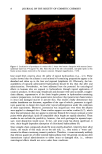
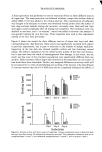
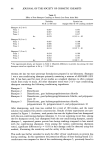
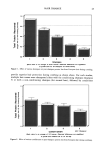
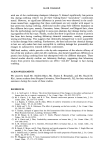
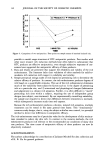
HAIR DAMAGE 43 Table I Effect of Post-Shampoo Combing on Protein Loss From Oriental Hair Turbidity (Optical density at 600 nm) Number of combing strokes Protein loss (mg/gm Hair*) Number of combing strokes Treatment 100 200 25 50 100 200 Shampoo A (2-in-1) Tress 1 0.178 0.315 0.243 0.376 0.824 1.614 Tress 2 0.189 0.371 0.219 0.464 0.949 2.133 Tress 3 0.199 0.442 0.215 0.461 1.058 2.149 Av. 0.189 0.376 0.226 + .01 0.433 + .03 0.944 + .07 1.965 + .17 Shampoo B (2-in-1) Tress 1 0.042 0.123 0.115 0.269 0.511 1.096 Tress 2 0.067 0.181 0.101 0.269 0.502 1.238 Tress 3 0.093 0.202 0.139 0.333 0.623 1.514 Av. 0.067 0.169 0.118 + .01 0.290 +- .02 0.545 -+ .04 1.283 -+ .12 * Three-gm tresses, prepared by using a commercial Oriental hair sample -- 10 inches long, were prewashed with 1 cc of 20% SLES, followed by shampooing with the test product @ 1 cc/tress. Each tress was then combed for a total of 200 combing strokes, and the abraded cuticular material was collected in a glass beaker containing 50 ml of distilled water. The turbid water solution was analyzed for protein concentration at the end of 25, 50, 100, and 200 combing strokes (see Materials and Methods section for details). The observed differences in protein loss for shampoo A vs shampoo B are significant at the p = 0.05 level for all combing strokes. shampoo B did also provide less protein loss. This is usually, but not always, in agreement with easier combing and less protein loss. However, these comparisons are not part of this paper for proprietary reasons. To further validate the test methodology, another experiment was conducted using Asian hair shampooed with three different shampoos identified as shampoos A, B, and C shampoos A and B were the same as tested above. These studies were conducted by a_different operator. As shown in Table II, protein loss from hair shampooed with shampoo B is significantly less as compared to hair shampooed with shampoo A or shampoo C. Additional studies showed that the results are reproducible from day to day, although the level of measured damage, that is absolute quantitative values for protein loss, may vary slightly from operator to operator. The above studies clearly support our hypothesis that protein loss measurements can provide meaningful results in studying hair damage during combing. PROTEIN LOSS FROM HAIR DURING COMBING AFTER TREATMENT WITH DIFFERENT SHAMPOOS AND CONDITIONERS To explore whether we could detect significant differences in protein loss due to comb- ing from hair shampooed with various shampoos, hair tresses (European hair) were shampooed with five different shampoos, identified as shampoos 1 through 5. Among the five shampoos tested, the first three were leading-brand commercial products,
Purchased for the exclusive use of nofirst nolast (unknown)
From: SCC Media Library & Resource Center (library.scconline.org)