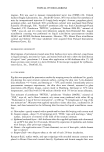
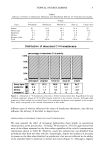
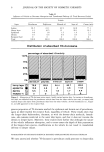
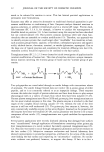
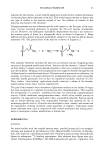
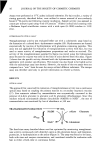
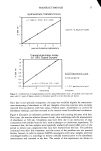
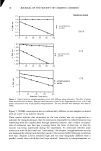
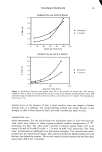
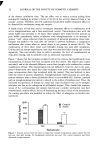
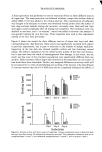
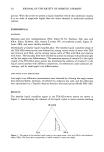
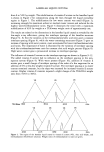
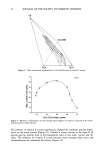
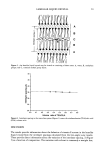
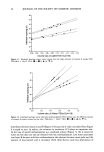
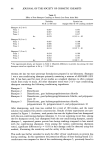
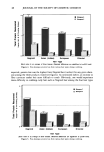
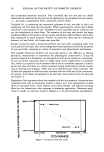
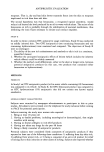
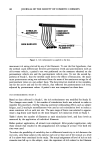
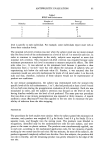
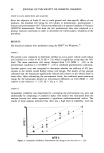
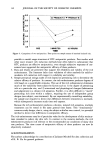
16 JOURNAL OF THE SOCIETY OF COSMETIC CHEMISTS Assays were performed at 37øC unless indicated otherwise. For hair studies, a variety of rinsing protocols, described below, were utilized to ensure removal of non-covalently bound [•4C]-putrescine following enzyme incubation. Sample activity was assessed in counts per minute (cpm) using 4 ml of Cytoscint (Fisher) cocktail and counting with a Beckman liquid scintillation counter with a wide open (0-1000) window to 1.0% error. HYDROXAMATE OPTICAL ASSAY Transglutaminase activity was evaluated before use with a colorimetric assay based on the formation of a colored ferric-hydroxamate complex (39). Hydroxamates are formed enzymatically by reaction of hydroxylamine with glutamine-containing peptides. This assay was not applicable for evaluation of transglutaminase activity with hair, but was used to assess activity of transglutaminase preparations and stocks as received. The activity of the transglutaminase supplied by Sigma was tested using the hydroxamate assay because the enzyme was sold on the basis of units derived from this assay. Figure 2 shows that the specific activity obtained with the hydroxamate assay was in excellent agreement with product specifications. The enzyme was also found to be highly active with the radioisotope assay (not shown). However, the results of the two assays were not compared on a "unit" basis because the assays utilized different substrates. The isotope assay was therefore used only to provide information on relative activities. RESULTS OPTICAL ASSAY The approach first conceived for evaluation of transglutaminase activity was a continuous optical assay based on coupling the primary reaction to a secondary enzymatic reaction (37). Free ammonia released by transamidation was enzymatically converted in the presence of ot-keto glutarate to glutamic acid by glutamate dehydrogenase. Since this oxidizes reduced nicotinamide adenine dinucleotide (NADH) to NAD +, the rate of transamidation was monitored by loss of absorbance at 340 nm: TRANSAMIDATION REACTION L•340 { • NH 3 NADH )• tz-Ket)Glut NAD + Glutamate The fixed-time assay described above was first optimized by monitoring transglutami- nase activity continuously with dimethyl casein as the glutamine donor, and histamine, putrescine, or hydroxylamine as the amine (Figure 3). The assay was found to be linear, both with time and enzyme concentration, and considered suitable for evaluation with hair in either a fixed-time or continuous format.

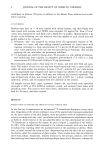
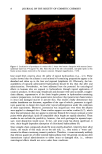
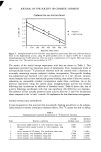
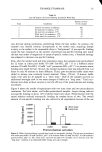
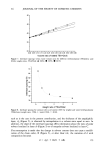
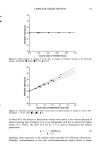
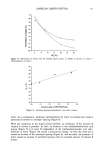
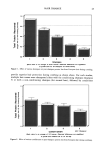
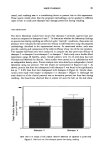
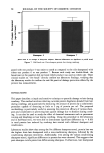
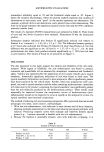
TRANSGLUTAMINASE 17 Hydroxamate Standard Curve 2 0 I ' I ' I ' I ' I ' 0 I 2 3 4 5 pmoles Glutamine Hydroxamate 1 I•mole = z• A525 of 0.528 Transglutaminase Assay 0.1 Unit Sigma Enzyme 1.6 1.4 1.2 1.0 0.8 0.6 0.4 0,2 0.0 , ß , ß , ß 0 10 20 Time (rain) 0.05374 6A/min/O.1 unit 0.528 z•A/l•m ol e 3o = 1.017 i•moles/min/unit of enzyme Figure 2. Confirmation of transglutaminase activity using hydroxamate assay. A standard curve (top) and assay with 0. ! units of Sigma enzyme to determine specific activity (bottom) are shown. Since hair is not optically transparent, the assay was modified slightly for semicontin- uous monitoring of absorbance at 340 nm. Samples of reaction solution were routinely removed from incubation with hair using a Pasteur pipet, transferred to a cuvette for absorbance readings, and then returned to the reaction vessel for additional incubation. Figure 4 illustrates an unforeseen problem associated with running the assay with hair. Over time, the reaction solution became cloudy, thus interfering with the measurement of absorbance at 340 nm. Cloudiness may have been due to an interaction of assay components with residue from the hair, such as shampoo or conditioner ingredients. To counteract this, the hair samples were repeatedly washed with assay buffer over a 24-hr period to remove any components that may have leached from the hair. The problem continued even after this treatment, and the source of the problem was not pursued further. Instead, in order to measure NADH consumption with time, samples were first centrifuged briefly in a microfuge to remove colloidal material prior to the absorbance measurement and returned to the hair. The results of this experiment are shown in
Purchased for the exclusive use of nofirst nolast (unknown)
From: SCC Media Library & Resource Center (library.scconline.org)