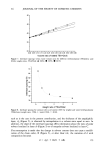
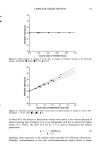
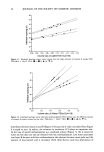
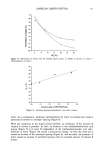
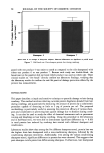
58 JOURNAL OF THE SOCIETY OF COSMETIC CHEMISTS they had known allergies to itch-relief products (which was a disqualification for par- ticipation), and whether they had hay fever, asthma, or other allergies (which were acceptable for participation). Subjects completing the study were those who passed the subject-inclusion criteria, gave informed consent, and met the minimal itch-level cri- terion (see below). Subjects in both studies were between 18 and 60 years of age. Thirty subjects completed Study I, and 43 subjects completed Study II. Study II also included some men, but to keep the comparison between Studies I and II consistent, the data for the men will not be reported here. TEST SITES The test sites were demarcated by two rectangles 2.5 inches by 4.5 inches (on the distal-proximal axis) that were drawn four inches proximal from the wrist on the volar surface of each forearm. SITE PREPARATION FOR STUDY I The sites were first lathered with Ivory © bar soap and shaved in order to remove any residual cosmetics, etc., on the site, as well as any hair on the site, both of which might interfere with the evaluation. The itch esthesiometer would cause a variable movement of hairs and activate receptors at the follicle level. Shaving reduces the degree to which these follicle receptors would be stimulated by the itch esthesiometer. Therefore, a reduction in response variability should result from shaving. To the extent that shaving irritated the skin, it may have facilitated itch induction. The skin was not tape stripped for Study I. SITE PREPARATION FOR STUDY II Rationale: Consumers typically employ antipruritic OTC products only after suffering from itch and subsequent scratching of the affected area. The scratching behavior usually includes several cycles of itch-scratch-itch, during which the consumer scratches the itchy skin rigorously. Often, the consumer removes several layers of skin (stratum corneum and upper epidermis, at least partially) before finally applying an antipruritic product. This scratched skin is considered damaged and compromised, and the migra- tion of the antipruritic agent to the underlying itch nerves is facilitated. To prepare the test sites to mimic closely the conditions under which consumers typically employ antipruritic OTC products, the sites were shaved and tape stripped as follows: The sites were prepared as in Study I. After shaving, sites were dried with paper towels, and then cellophane-tape stripped to the point of first visual indication of skin glistening (tape pulled parallel to plane of skin Highland © tape, 0.5" wide by about 4" long). Three spaced strips, oriented parallel to the distal-proximal axis and approximately evenly spaced, were produced on each site. To achieve skin glistening at least two applications of the tape were necessary for each of the three strips on each test site. The stripping produced areas of compromised, mildly irritated skin. The site preparation emulated the action of consumers' fingernails scratching their skin.

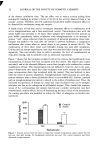
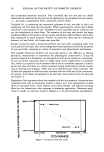
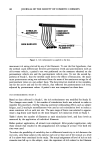
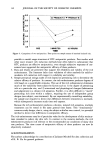
ANTIPRURITIC EVALUATION 59 ITCH RATING SCALE Itch intensity for both studies was rated using a continuous scale with 0 at one end representing no itch and 10 at the other end representing severe itch. Subjects were given the following instruction: Your task is to rate the intensity of itch, not the duration of itch. To create itch, the tester will drag fibers across your skin near your wrist. The tester will alert you each time fibers are dragged by saying "NOW." Use the scale below to help you determine how to rate the degree of itch. You may feel no itch, even though you easily feel the fiber. Please reserve "0" for absolutely no itch, and "10" for a severe itch. Often the itch produced will be short lived, a second or two. But sometimes the itch produced may linger. Tell us "OK" when the itch sensation stops, so that the tester will know when to proceed. If the rating is "0," then the tester will proceed since no itch was felt. But if your itch rating is some other number, tell us when the itch stops by saying "OK." For example, if you felt a moderate itch sensation that lasted only for a second, you might say: "5, OK." But don't say "OK" until the itch stops. If the itch sensation does not stop by itself in several seconds, the tester will attempt to erase the itch by gently wiping the site with a cotton ball. The tester will alert you to this action by saying "ERASE." The test works better when you do not look at the site being tested. So either look at the scale below or look away from the test site. If you need time out to reconcentrate, tell us and we'll wait a few seconds. Subjects were required to rate itch intensity to stimulation by the esthesiometer both before and after the products were applied so that the effects of the products could be evaluated. ITCH ESTHESIOMETER: STUDY I In the pretreatment condition, up to nine different monofilaments, delivering nine different force levels, were used to induce itch. The forces produced by the filaments were: 0.04, 0.1, 0.25, 2, 4, 12, 20, 50, and 150 g. Itch was induced mechanically by touching the skin with a filament, bending the filament approximately 45 ø, dragging the filament approximately two inches proximally, and then dragging it two inches distally along the testing sites. A schematic of the device in use is presented in Figure 2. Note that schematic shows only one set of similar-force filaments. During the pretreatment testing, three itch-inducing filaments were selected for each subject, to be used in the posttreatment tests. These filaments were the three lowest force filaments to elicit itch by the criteria of 1) a minimal rating of three for at least one of the five stimulations with any one esthesiometer level, or 2) any non-zero rating for three of the five stimulations. Pretreatment testing was concluded when one of these criteria was met. Subjects who did not meet one of these criteria in the premeasures were excluded from the study since they probably didn't report enough itch to show consistent treat- ment effects. Postapplication itch ratings, as induced by the three criterion filaments in the pretreatment condition, were recorded at 1, 5, 15, 25, and 35 minutes. STUDY I: DATA REDUCTION AND ANALYSIS Since the purpose of this preliminary study was to establish the general validity of the procedure, data were combined for all posttreatment times. The measure used was the
Purchased for the exclusive use of nofirst nolast (unknown)
From: SCC Media Library & Resource Center (library.scconline.org)